Financial Breakdown
Asset Distribution
Assets vs Liabilities
Assets
Disclaimer: These financial estimates are based on publicly available information and should be considered approximate. Last updated: 12/29/2025
Biography
Introduction: The Architect of a Nation
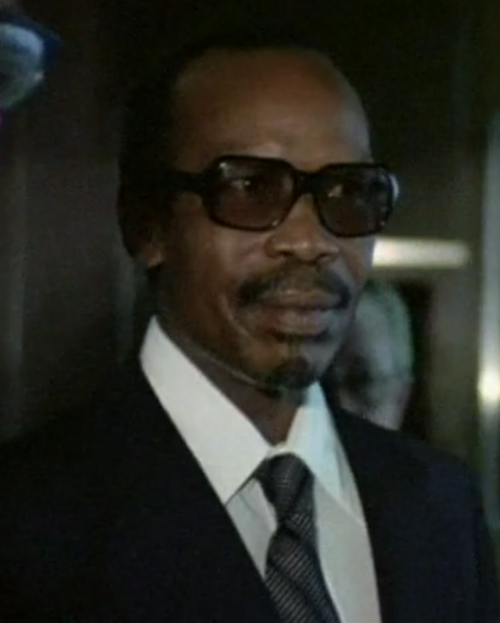
Sir Seretse Khama† stands as one of Africa's most revered statesmen, the visionary First President & Founding Father of the Republic of Botswana. His leadership transformed a neglected, arid British protectorate into one of the continent's most stable, democratic, and prosperous nations. Born into royalty but exiled for love, Seretse Khama† returned to lead his people to independence on September 30, 1966. His most notable achievement was forging a national identity rooted in democracy, social harmony, and prudent economic management. At independence, Botswana was among the world's poorest countries; under Khama's presidency (1966-1980), it achieved remarkable economic growth and unwavering political stability, setting a gold standard for governance in post-colonial Africa. His legacy is a testament to integrity, foresight, and unwavering commitment to the rule of law.
Early Life & Education: From Tribal Royalty to Global Citizen
Seretse Khama† was born on July 1, 1921, in Serowe, then part of the Bechuanaland Protectorate. He was the grandson of Kgosi Khama III, a legendary king who had unified the Bangwato people and sought British protection. Seretse's destiny was shaped early; at the age of four, he was designated Kgosi (chief) following his father's death, with his uncle Tshekedi Khama acting as regent. This royal background instilled in him a deep sense of duty and connection to his people.
His education bridged traditional African life and the Western world. After initial schooling locally and in South Africa, he attended Fort Hare University College, graduating with a BA in 1944. He then traveled to the United Kingdom to study law at Balliol College, Oxford, and later at the Inner Temple in London. It was during this period in England that his life took a decisive turn. In 1947, he met and fell in love with Ruth Williams, a white English clerk. Their 1948 marriage sparked an international controversy, confronting the racial prejudices of apartheid South Africa and the colonial anxieties of the British government. Despite immense pressure, the couple stood firm, a testament to their personal conviction and a preview of Khama's steadfast character.
Career & Major Achievements: Building a Democratic and Prosperous Botswana
The backlash to his marriage led the British government, succumbing to pressure from South Africa, to exile Seretse Khama† from Bechuanaland in 1950. This unjust act, however, galvanized his people and forged his political resolve. After the exile was lifted in 1956, he returned home not as a traditional king but as a modern political leader. He renounced his claim to the chieftainship to enter politics full-time, founding the Bechuanaland Democratic Party (BDP) in 1962.
The Path to Independence
Khama's BDP won the first general elections in 1965, and he became Prime Minister of the self-governing protectorate. He skillfully negotiated a peaceful transition to full independence. Unlike many liberation struggles, Botswana's journey was marked by dialogue and constitutionalism. On September 30, 1966, Bechuanaland became the independent Republic of Botswana, with Seretse Khama† as its first Executive President.
Presidential Leadership and Economic Transformation
As President, Khama's achievements were foundational. He established a robust multi-party democracy, insisting on accountability and transparency. His government crafted a model constitution with strong protections. However, his most celebrated accomplishment was the visionary management of Botswana's newfound mineral wealth. The 1967 discovery of diamonds at Orapa could have led to the "resource curse" seen elsewhere. Instead, Khama and his government, notably Vice President Quett Masire and Minister Festus Mogae, established a framework that became a global benchmark.
- Prudent Fiscal Policy: He negotiated a groundbreaking agreement with De Beers, ensuring a 50/50 profit-sharing venture, Debswana, which gave the state significant control and revenue.
- Reinvestment in Development: Diamond revenues were reinvested into national infrastructure, education (achieving nearly universal primary enrollment by 1980), healthcare, and sustainable rural development.
- Zero Tolerance for Corruption: He instilled a culture of integrity in public service, famously stating, "A nation without corruption is a nation with a future."
Under his 14-year presidency, Botswana's annual economic growth averaged over 9%, one of the highest rates in the world. He also pursued a principled foreign policy, advocating for liberation in Southern Africa while maintaining crucial economic ties and avoiding confrontation.
Personal Life & Legacy: The Man Behind the President
The personal story of Seretse Khama† and Lady Ruth Khama is integral to his legacy. Their union, initially a source of conflict, became a powerful symbol of racial harmony and human dignity for the new Botswana. Ruth became a beloved figure, deeply involved in humanitarian work. Together, they had four children, including the future President Ian Khama. Seretse was known for his quiet dignity, humility, and unwavering moral compass. His interests were deeply tied to the well-being of his nation; he was a cattle farmer at heart, connecting him to Botswana's agrarian traditions.
His philanthropic spirit was channeled through state policy, focusing on uplifting all citizens from poverty. Sir Seretse Khama† passed away from pancreatic cancer on July 13, 1980, in office, mourned nationally and internationally. His legacy is immense. He left behind a nation that defied all post-colonial odds: a continuous multi-party democracy, a thriving economy, and a cohesive society. Botswana's stability, its status as a middle-income country, and its reputation for good governance are the direct results of the foundations he laid. He is rightly celebrated as the father of the nation, and his principles continue to guide Botswana's Politics & Government.
Net Worth & Business: Stewardship Over Personal Wealth
Unlike many leaders, Seretse Khama† was not a man of vast personal fortune. His wealth was rooted in the traditional assets of his family and community. He was a successful cattle rancher, an enterprise of significant cultural and economic value in Botswana. However, his focus was overwhelmingly on national, not personal, enrichment. His "business venture" was the nation itself. The diamond agreement he championed generated billions for the state, but he ensured these funds were channeled into national development accounts, not private pockets. His estate at his death was modest, especially compared to the national wealth he helped create and safeguard. This personal financial probity was central to his credibility and his government's success. He demonstrated that true leadership in the Independence Era was about stewarding a country's resources for the benefit of all its people, a principle that defined his presidency and continues to influence Botswana's economic policies today.
For further reading on the life of Seretse Khama, credible sources include the Encyclopædia Britannica, the official Government of Botswana portal, and historical texts on Southern African politics.
Frequently Asked Questions
What is Seretse Khama†'s estimated net worth?
Net worth details for Seretse Khama† are currently being updated.
What is Seretse Khama†'s role and nationality?
Seretse Khama† is a First President & Founding Father from Botswana.
How did Seretse Khama† make their money?
Seretse Khama† built their fortune primarily through Seretse Khama was a political leader who served as President from 1966 to 1980 and was not a business figure; he died in 1980 and did not accumulate significant personal wealth..
How old is Seretse Khama†?
Seretse Khama† was born in 1921 (105 years old).
Which category is Seretse Khama† listed under?
Seretse Khama† is featured under the Politics & Government category on NetWorth Africa.
How is Seretse Khama†'s net worth calculated?
NetWorth Africa estimates financial valuations using publicly available stock equity holdings, company ownership records, real estate assets, and verified market data.
Net Worth Analysis
Seretse Khama was a political leader who served as President from 1966 to 1980 and was not a business figure; he died in 1980 and did not accumulate significant personal wealth.
Quick Stats

Related People

Aaron Motsoaledi
LP; Minister of Home Affairs • South Africa

Abane Ramdane†
FLN Leader & Strategist • Algeria

Abdalla Hamdok
Ex-Prime Minister • Sudan

Abdallah Kigoda
Ex-Minister of Natural Resources • Tanzania