Financial Breakdown
Asset Distribution
Assets vs Liabilities
Assets
Liabilities
Disclaimer: These financial estimates are based on publicly available information and should be considered approximate. Last updated: 12/29/2025
Biography
Introduction: A Leader in a Time of Transition
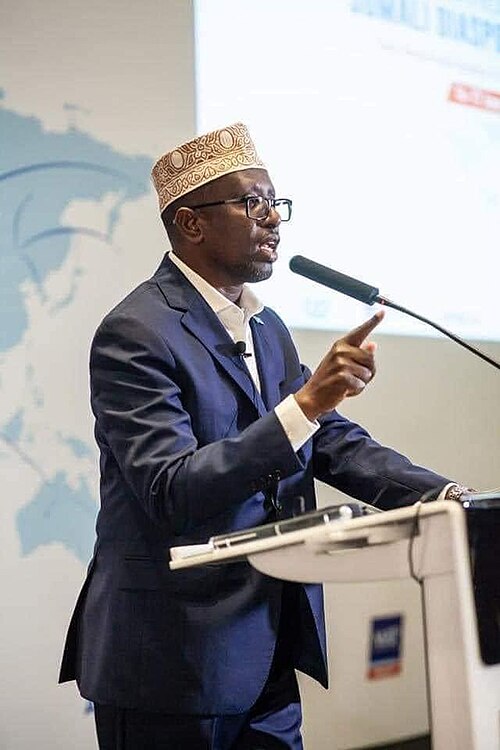
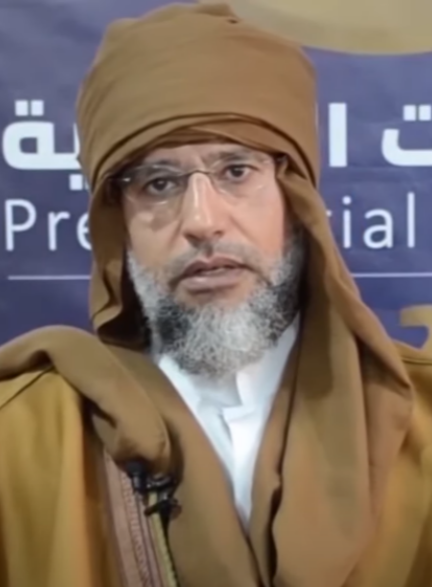
Sharif Sheikh Ahmed is a pivotal figure in modern Somali history, having served as the President of the Transitional Federal Government (TFG) of Somalia from 2009 to 2012. His tenure represents a critical juncture in the nation's long and arduous journey toward stability and governance after decades of civil war and statelessness. A former teacher and Islamic scholar, Sharif Sheikh Ahmed emerged as a unique leader, initially as a key figure in the Islamic Courts Union (ICU) before transitioning into the internationally recognized transitional government. His most notable achievement was arguably his election itself, which symbolized a fragile consensus among Somalia's fractured political factions and offered a glimmer of hope for national reconciliation. As an Ex-President (2009-2012), his legacy is deeply intertwined with the complex challenges of rebuilding a state amidst insurgency, famine, and international intervention.
Early Life & Education: The Making of a Scholar
Sharif Sheikh Ahmed was born in 1964 in the town of Mahadday Weyne, located in the Shabelle region of Somalia. Hailing from the Abgaal subclan of the Hawiye clan, his early life was rooted in the traditional Somali pastoral and agricultural society. From a young age, he demonstrated a keen interest in Islamic studies, a path that would define his early career and worldview. For his formal education, Ahmed traveled to Sudan and Libya, where he immersed himself in Islamic jurisprudence and Arabic language studies. These formative years abroad exposed him to various currents of Islamic thought within the Sunni tradition.
Returning to Somalia, Sharif Sheikh Ahmed did not initially pursue a path in Politics & Government. Instead, he dedicated himself to education and community service. He worked as a secondary school teacher of Arabic and Islamic studies, earning widespread respect as a moderate and learned scholar. This period was crucial in building his reputation as a man of integrity and religious knowledge, separate from the militant factions that would later emerge. His deep community ties and scholarly background provided the foundation for his later political legitimacy, positioning him as a figure who could potentially bridge the gap between religious identity and modern state-building in Somalia.
Career & Major Achievements: From Courts to Presidency
Sharif Sheikh Ahmed's entry into national politics was catalyzed by the rise of the Islamic Courts Union (ICU) in the mid-2000s. As a moderate leader within the ICU, he served as the Chairman of the Executive Council, a role that saw him overseeing the administration of law, order, and basic services in Mogadishu and surrounding areas during the ICU's brief control in 2006. Following the ICU's dispersal by Ethiopian military intervention, Ahmed participated in the Djibouti Peace Process, a UN-backed initiative aimed at creating a more inclusive government.
Election and Tenure as President
On January 31, 2009, Sharif Sheikh Ahmed was elected as President of Somalia by the expanded Transitional Federal Parliament meeting in Djibouti. He secured 293 votes out of 423, defeating the incumbent, President Abdullahi Yusuf. His election was hailed internationally as a breakthrough, as it brought a former opposition figure into the formal political process. Key achievements and events during his presidency included:
- Expansion of the Government: He successfully oversaw the integration of some moderate members of the Alliance for the Re-liberation of Somalia (ARS) into the TFG, broadening its base.
- Implementation of the Djibouti Agreement: His presidency was the direct outcome of this agreement, and he worked, albeit with limited success, to implement its provisions for peace and power-sharing.
- Declaration of Sharia Law: In an effort to undercut the appeal of the militant Al-Shabaab group, his government passed a bill in April 2009 making Sharia the national law, a significant political and symbolic move.
- Facing the Al-Shabaab Insurgency: His tenure was dominated by a brutal war against the Al-Shabaab insurgency, which controlled vast swathes of the country and most of Mogadishu for much of his term.
- International Engagement: He actively sought and received support from the international community, including the African Union Mission in Somalia (AMISOM), which began to deploy during his presidency, and the United Nations.
Challenges and End of Term
The presidency of Sharif Sheikh Ahmed was marked by immense challenges. Corruption, infighting within the TFG, the persistent strength of Al-Shabaab, and a devastating famine in 2011 severely constrained his administration's effectiveness. The political process culminated in the "Kampala Accord" of 2011, which ended his dual role as head of state and government and set the stage for the end of the transitional period. On August 20, 2012, with the adoption of a new provisional constitution and the establishment of the Federal Government of Somalia, his transitional mandate ended. He contested but lost the first post-transition presidential election to Hassan Sheikh Mohamud.
Personal Life, Legacy, and Lasting Impact
Known for his modest and scholarly demeanor, Sharif Sheikh Ahmed is often described in contrast to the more militant warlord figures in Somali politics. He is married and has several children. His personal interests have remained closely tied to his academic roots in Islamic scholarship. While not known for large-scale business-driven philanthropy, his life's work has been one of political and religious engagement aimed at national stabilization.
The legacy of Sharif Sheikh Ahmed is complex. As the Ex-President (2009-2012), he is credited with legitimizing the peace process by bringing opposition elements into the government and maintaining international diplomatic engagement during an extremely volatile period. Critics point to the continued insecurity and governance failures under his watch. However, his presidency is best understood as a necessary, though turbulent, phase in Somalia's political evolution—a bridge between the era of warlordism and the later, more permanent (though still fragile) federal institutions. His continued involvement in politics, including subsequent runs for the presidency, underscores his enduring role as a significant stakeholder in the Somali political landscape.
Net Worth and Business Ventures
Unlike many political figures in the region, Sharif Sheikh Ahmed is not widely reported to have amassed significant personal wealth or engaged in major business ventures. His financial background appears to be modest, consistent with his career as a teacher and religious scholar prior to entering high-level politics. In the context of Somalia's political economy, where allegations of corruption and embezzlement of public funds have been rampant, Ahmed has generally maintained a reputation for personal integrity in financial matters. There is no credible public documentation of a substantial net worth, and his economic interests seem to be secondary to his political and religious activities. His primary "capital" has historically been his scholarly credibility and his political constituency, rather than commercial enterprise.
For further reading on the political context of his presidency, credible sources include the United Nations reports on Somalia and archives from the African Union concerning the AMISOM mission.
Frequently Asked Questions
What is Sharif Sheikh Ahmed's estimated net worth?
Sharif Sheikh Ahmed has an estimated net worth of $1.0 Million.
What is Sharif Sheikh Ahmed's role and nationality?
Sharif Sheikh Ahmed is a Ex-President (2009-2012) from Somalia.
How did Sharif Sheikh Ahmed make their money?
Sharif Sheikh Ahmed built their fortune primarily through As a former political leader from Somalia, a country with significant poverty and instability, his wealth is not from major business holdings and he is not on any billionaire list. Estimates for such figures typically range in the low millions..
How old is Sharif Sheikh Ahmed?
Sharif Sheikh Ahmed was born in 1964 (62 years old).
Which category is Sharif Sheikh Ahmed listed under?
Sharif Sheikh Ahmed is featured under the Politics & Government category on NetWorth Africa.
How is Sharif Sheikh Ahmed's net worth calculated?
NetWorth Africa estimates financial valuations using publicly available stock equity holdings, company ownership records, real estate assets, and verified market data.
Net Worth Analysis
As a former political leader from Somalia, a country with significant poverty and instability, his wealth is not from major business holdings and he is not on any billionaire list. Estimates for such figures typically range in the low millions.
Quick Stats
Related People
Aaron Motsoaledi
LP; Minister of Home Affairs • South Africa
Abane Ramdane†
FLN Leader & Strategist • Algeria
Abdalla Hamdok
Ex-Prime Minister • Sudan
Abdallah Kigoda
Ex-Minister of Natural Resources • Tanzania