Biography
Introduction: The Architect of Libya's Modern Oil Policy
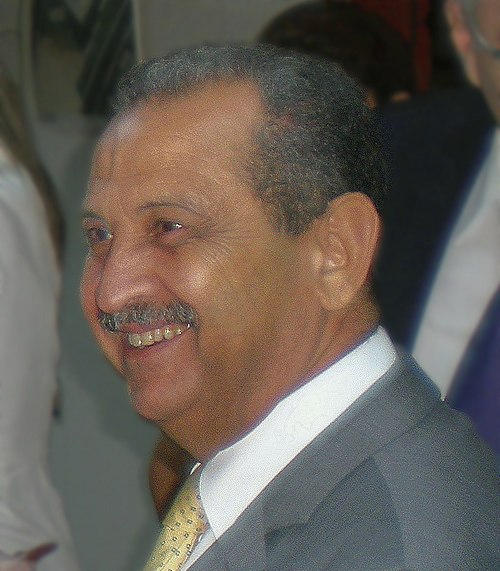
Shukri Ghanem† was a pivotal figure in modern Libyan history, serving as both the nation's Prime Minister and its influential Oil Minister. As a key technocrat in Colonel Muammar Gaddafi's government during a period of significant transition, Shukri Ghanem is best known for masterminding Libya's return to the global energy stage after years of international isolation. His tenure from 2003 to 2006 was marked by ambitious economic reforms and the successful negotiation of major exploration contracts with Western oil companies, which revitalized Libya's crucial oil & gas sector. Operating within the complex and often opaque Politics & Government of Gaddafi's Libya, Ghanem navigated a path between reformist pragmatism and the demands of a revolutionary regime, leaving a lasting legacy on the country's economy and its role in global energy markets.
Early Life & Education: Forging a Technocratic Mindset
Shukri Ghanem was born in 1942 in the coastal city of Misrata, Libya. Details of his early childhood are sparse, but his academic trajectory pointed toward a future in international economics and policy. He pursued higher education abroad, earning a Bachelor of Arts in Economics and Political Science from the University of Benghazi. His intellectual pursuits then took him to the United States, where he obtained a Master's degree in Economics from the University of Pittsburgh. He capped his formal education with a Ph.D. in International Economics from the Fletcher School of Law and Diplomacy at Tufts University in 1975, a prestigious institution known for grooming diplomats and global affairs experts.
This formidable educational background, particularly his focus on international economics, equipped Shukri Ghanem with a technocratic, analytical approach to governance. It set him apart from many of his contemporaries in the Libyan leadership, who often rose through military or revolutionary ranks. His formative years in academia and early career were spent largely outside of the direct political spotlight, working for the Libyan government in research and planning roles. This period honed his skills in economic analysis and policy formulation, which would later become his primary tools as he ascended to the highest echelons of power during a critical juncture for his country.
Career & Major Achievements: Steering Libya Through Sanctions and Reform
Shukri Ghanem's career was deeply intertwined with Libya's economic fortunes, particularly its hydrocarbon sector. Before his rise to ministerial prominence, he held several important positions, including Chairman of the National Oil Corporation (NOC) in the early 2000s. His true moment of impact, however, began in 2003.
Prime Minister and Economic Reformer (2003-2006)
In June 2003, following Libya's agreement to compensate victims of the Pan Am Flight 103 Lockerbie bombing, Shukri Ghanem was appointed Prime Minister. His selection signaled a shift toward pragmatic, Western-educated leadership aimed at reintegrating Libya into the global economy. As Prime Minister, Ghanem championed a bold program of economic liberalization known as the "Reform and Modernization Program." Key initiatives included:
- Privatization of state-owned companies outside the oil sector.
- Attraction of foreign direct investment.
- Streamlining of bureaucratic processes to improve the business climate.
- Advocacy for joining the World Trade Organization (WTO).
Oil Minister and Energy Strategist (2006-2011)
In a significant reshuffle in March 2006, Ghanem was moved from the Prime Minister's office to the pivotal role of Oil Minister, while retaining his chairmanship of the NOC. This role became the apex of his influence. As the chief architect of Libya's oil policy, Shukri Ghanem achieved several major accomplishments:
- Licensing Rounds: He successfully orchestrated high-profile licensing rounds, notably in 2005 and 2007, which awarded exploration contracts to over 40 international companies from the U.S., Europe, and Asia, committing billions in investment.
- Production Boost: Under his stewardship, Libya's oil production increased from approximately 1.5 million barrels per day (bpd) in the early 2000s to nearly 1.7 million bpd by 2010, with ambitions to reach 3 million bpd.
- Contract Renegotiation: He pursued a controversial but assertive policy of renegotiating older, more favorable production-sharing agreements with foreign firms to secure better terms for Libya.
- Global Voice: He became a respected and frequent speaker at international energy forums, representing Libya within OPEC and advocating for market stability.
Personal Life, Defection, and Legacy
Shukri Ghanem was known as a private, intellectual figure who enjoyed literature and was fluent in English and Arabic. He was often described as a "man of the desk" rather than a revolutionary firebrand, which both enabled his technocratic work and sometimes isolated him within the regime's power structures.
The outbreak of the Libyan Civil War in February 2011 created an irreconcilable crisis for Ghanem. In May 2011, he made the dramatic decision to defect from Gaddafi's government, fleeing to Tunisia and later appearing in Rome. He cited his opposition to the violence used against civilians as the primary reason for his defection, stating he could no longer be part of a "regime that relies on throwing bombs on its people." This move was a significant propaganda blow to the Gaddafi regime.
Tragically, on April 29, 2012, Shukri Ghanem's body was found in the Danube River in Vienna, Austria, where he had been living. Austrian police concluded his death was an accident by drowning, though the circumstances fueled speculation. His sudden death cut short his potential role in post-Gaddafi Libya.
Shukri Ghanem's legacy is complex. He is remembered as the most capable steward of Libya's oil wealth in its modern history, a reformer who understood global markets, and a figure who helped end the country's pariah status. Yet, his legacy is also tied to the regime he served and ultimately abandoned. His technocratic achievements stand in stark contrast to the instability that has plagued Libya's oil & gas sector since his death and the fall of Gaddafi.
Net Worth & Business Ventures
As a high-ranking official in a state-controlled economy centered on hydrocarbons, estimating the precise personal net worth of Shukri Ghanem is challenging and subject to speculation. Unlike some figures in resource-rich nations, Ghanem was not widely known for ostentatious wealth or personal business empires. His career was primarily that of a state-employed technocrat and minister. His income would have been derived from his official salaries as Prime Minister, Oil Minister, and Chairman of the National Oil Corporation. While these positions were undoubtedly powerful, there is no publicly verified evidence of significant personal business holdings or ventures outside his government roles. Any discussion of wealth associated with his office is more accurately attributed to the vast national resources he managed—Libya's oil wealth, which exceeds 40 billion barrels in reserves—rather than to his personal fortune. His defection and subsequent life in Europe suggested he was not among the ultra-wealthy elite of the former regime.
For further reading on the context of his work, credible sources include historical reports from the Organization of the Petroleum Exporting Countries (OPEC), archives from energy news agencies, and biographies of modern Libyan political history.
Frequently Asked Questions
What is Shukri Ghanem†'s estimated net worth?
Net worth details for Shukri Ghanem† are currently being updated.
What is Shukri Ghanem†'s role and nationality?
Shukri Ghanem† is a Ex-Oil Minister & Prime Minister from Libya.
How did Shukri Ghanem† make their money?
Shukri Ghanem† built their fortune primarily through Shukri Ghanem died in 2012, and there are no reliable public estimates of his personal net worth from his time as a public official..
How old is Shukri Ghanem†?
Shukri Ghanem† was born in 1942 (84 years old).
Which category is Shukri Ghanem† listed under?
Shukri Ghanem† is featured under the Politics & Government category on NetWorth Africa.
How is Shukri Ghanem†'s net worth calculated?
NetWorth Africa estimates financial valuations using publicly available stock equity holdings, company ownership records, real estate assets, and verified market data.
Net Worth Analysis
Shukri Ghanem died in 2012, and there are no reliable public estimates of his personal net worth from his time as a public official.
Quick Stats
Related People
Aaron Motsoaledi
LP; Minister of Home Affairs • South Africa
Abane Ramdane†
FLN Leader & Strategist • Algeria
Abdalla Hamdok
Ex-Prime Minister • Sudan
Abdallah Kigoda
Ex-Minister of Natural Resources • Tanzania