Financial Breakdown
Asset Distribution
Assets vs Liabilities
Assets
Liabilities
Disclaimer: These financial estimates are based on publicly available information and should be considered approximate. Last updated: 12/29/2025
Biography
Introduction: The "Victorious Leader"
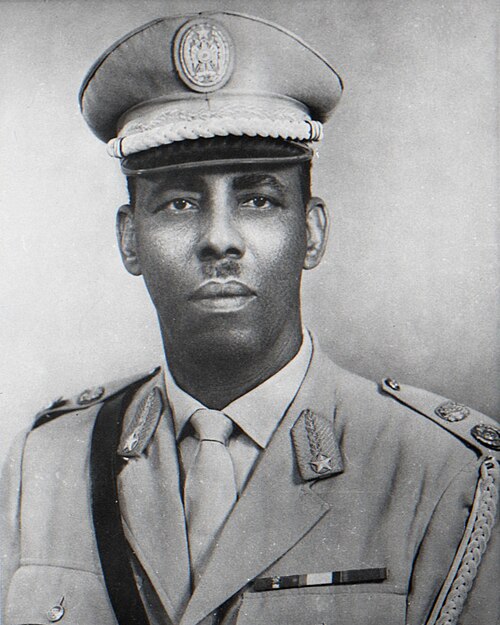
Mohamed Siad Barre† was a Somali military officer and politician who ruled the Somali Democratic Republic as its President from 1969 until his overthrow in 1991. His 22-year tenure represents one of the most defining and controversial periods in modern Somali history. Seizing power in a bloodless coup d'état following the assassination of President Abdirashid Ali Shermarke, Siad Barre† established a military dictatorship that initially promised scientific socialism, nationalism, and pan-Somali unity. He is notable for his ambitious, yet ultimately catastrophic, efforts to modernize Somalia, his strategic Cold War alliances that flipped between the Soviet Union and the United States, and his aggressive irredentist policies that led to the disastrous Ogaden War (1977-1978) with Ethiopia. His legacy is inextricably linked to the centralization of power, the brutal suppression of clan-based opposition, and the state collapse that plunged Somalia into a prolonged civil war following his ouster.
Early Life & Education: From Nomadic Roots to the Military
Siad Barre was born in 1919 in the town of Shilavo, in the Ogaden region (then under Ethiopian administration, later a major flashpoint). He belonged to the Marehan clan, a sub-lineage of the Darod clan family. His early life was shaped by the nomadic pastoralist traditions of the Somali interior. Orphaned at a young age, his formative years were spent under the care of relatives. Seeking opportunity beyond the pastoral life, he joined the colonial police force during the Italian administration of Somalia in the early 1940s. This decision marked a pivotal turn from traditional society into the structured world of state institutions.
His aptitude within the police force was recognized, leading to advanced training in Italy. Barre's military education was comprehensive and shaped his worldview:
- Police Training: Initial training was with the Corpo di Polizia dell'Africa Italiana in colonial Italian Somaliland.
- Advanced Military Education: He furthered his studies at the Military Academy of Modena in Italy during the late 1950s, a period that exposed him to European military organization and political thought.
- Rapid Ascent: Upon returning to Somalia, which was moving towards independence, Barre quickly rose through the ranks of the nascent Somali National Army. By the time of Somalia's independence in 1960, he was a senior officer, and by 1965, he had been appointed Commander of the Army, a position that gave him control over the country's most powerful institution.
Career & Major Achievements: The Rise and Fall of a Dictator
The assassination of President Abdirashid Ali Shermarke on October 15, 1969, created a power vacuum. Just six days later, on October 21, the military, led by Siad Barre† and the police, staged a coup, dissolving parliament, suspending the constitution, and establishing the Supreme Revolutionary Council (SRC). Barre was named its chairman, effectively becoming the head of state.
Consolidation and "Scientific Socialism"
Barre's early rule was characterized by ambitious state-building projects. He launched a "philosophical orientation" program based on his own ideology of "scientific socialism" blended with Somali nationalism. Key initiatives included:
- A massive literacy campaign (1972-1975) that saw the adoption of a Latin script for the Somali language for the first time.
- Large-scale infrastructure and public works projects.
- Advancements in women's rights, including the landmark Family Law of 1975, which faced significant religious opposition.
- A foreign policy firmly aligned with the Soviet Union, which provided extensive military and economic aid.
The Ogaden War and Cold War Realignment
Barre's most fateful decision was the invasion of the Ethiopian Ogaden region in 1977 to unite ethnic Somalis under one state. Initially successful, the war turned when the Soviet Union switched its allegiance to Ethiopia's new Marxist Derg regime. With massive Soviet and Cuban support for Ethiopia, Somali forces were decisively defeated by 1978. This defeat was a catastrophic blow to Barre's prestige and the Somali economy. In response, Siad Barre† expelled Soviet advisors and pivoted to seek support from the United States, which saw strategic value in Somalia following the Iranian Revolution.
Descent into Repression and Clan-Based Rule
Following the Ogaden defeat, internal dissent grew. Barre's regime, increasingly paranoid, abandoned its socialist rhetoric and transformed into a brutal kleptocracy. Power was concentrated within a narrow circle of his Marehan clan and allied lineages, known as the "MOD" alliance (Marehan, Ogaden, Dhulbahante). Opposition, which often organized along clan lines, was met with extreme state violence. Notorious campaigns include:
- The bombardment of Hargeisa, the capital of the northern regions (now Somaliland), in 1988, which leveled the city and caused massive civilian casualties.
- The systematic persecution of the Isaaq clan in the north and the Majeerteen and Hawiye clans in central and southern regions.
Personal Life, Exile, and Legacy
Siad Barre was known for his austere and disciplined personal demeanor. He had two wives and multiple children. His personal interests were largely subsumed by affairs of state, and he cultivated an image of the "Father" of the nation, often referred to as "Jaalle Siyaad" (Comrade Siad). Following the advance of rebel forces on Mogadishu in January 1991, Siad Barre† was forced to flee the capital, resigning from the presidency. He initially retreated to his clan homeland in Gedo region before going into exile, first in Kenya and later in Nigeria. He died of a heart attack in Lagos, Nigeria, on January 2, 1995.
The legacy of Siad Barre is profoundly complex and overwhelmingly negative in contemporary Somalia. He left behind a nation physically destroyed and socially shattered. His policies of clan favoritism and violent suppression are widely seen as having destroyed the fragile social contract between state and society, deepening clan fissures that fueled the civil war. While his early achievements in literacy and modernization are occasionally referenced, his overarching legacy is that of the dictator whose rule directly precipitated the collapse of the Somali state. The failure to establish a stable central government in the decades since his fall is a testament to the deep and lasting damage inflicted during his 22-year rule.
Net Worth & Financial Control
As with many long-ruling autocrats, the personal wealth of Siad Barre† was deeply entangled with state finances. No precise, verified figure for his net worth exists, as his regime operated with little transparency. However, it is well-documented by international observers and subsequent investigations that his rule became increasingly characterized by kleptocracy. Key financial aspects included:
- Control of Foreign Aid: Billions of dollars in military and economic aid from both the Soviet Union (pre-1977) and the United States (post-1978) were funneled through a patronage network that enriched his inner circle and clan allies.
- State Capture: Key sectors of the economy, including banana exports and livestock, were controlled by regime loyalists, with profits siphoned off.
- Personal and Family Enrichment: Family members held influential economic positions, and assets were believed to be held overseas. Upon his overthrow, his personal residences and assets in Somalia were looted or destroyed, making an accurate accounting impossible.
For further reading on this period, credible historical analyses can be found through academic sources like the Encyclopædia Britannica and archives from international organizations like the Human Rights Watch which documented the regime's later years.
Frequently Asked Questions
What is Siad Barre†'s estimated net worth?
Net worth details for Siad Barre† are currently being updated.
What is Siad Barre†'s role and nationality?
Siad Barre† is a Ex-President (1969-1991) from Somalia.
How did Siad Barre† make their money?
Siad Barre† built their fortune primarily through Siad Barre died in 1995, and there are no credible public records of a personal fortune; any wealth was tied to his political power and not a measurable, transferable estate..
How old is Siad Barre†?
Siad Barre† was born in 1919 (107 years old).
Which category is Siad Barre† listed under?
Siad Barre† is featured under the Politics & Government category on NetWorth Africa.
How is Siad Barre†'s net worth calculated?
NetWorth Africa estimates financial valuations using publicly available stock equity holdings, company ownership records, real estate assets, and verified market data.
Net Worth Analysis
Siad Barre died in 1995, and there are no credible public records of a personal fortune; any wealth was tied to his political power and not a measurable, transferable estate.
Quick Stats
Related People

Aaron Motsoaledi
LP; Minister of Home Affairs • South Africa

Abane Ramdane†
FLN Leader & Strategist • Algeria

Abdalla Hamdok
Ex-Prime Minister • Sudan

Abdallah Kigoda
Ex-Minister of Natural Resources • Tanzania