Financial Breakdown
Asset Distribution
Assets vs Liabilities
Assets
Disclaimer: These financial estimates are based on publicly available information and should be considered approximate. Last updated: 12/29/2025
Biography
Introduction: The Architect of Modern Sierra Leone
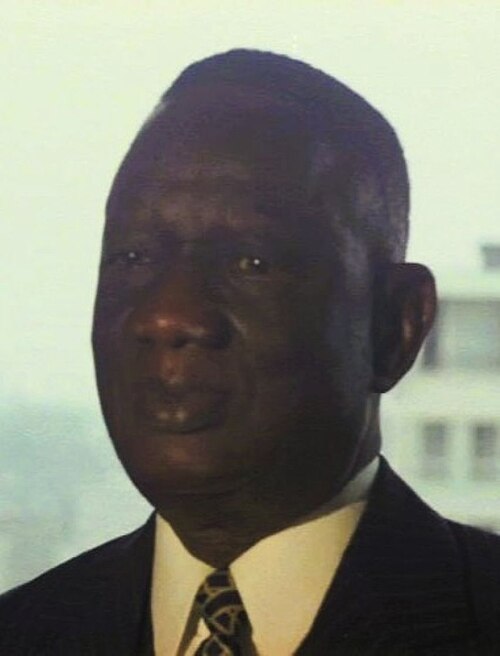
Siaka Probyn Stevens† stands as one of the most pivotal and complex figures in the history of Sierra Leone. Serving as Prime Minister from 1968 to 1971 and subsequently as the nation's first Executive President from 1971 until his retirement in 1985, Stevens' tenure fundamentally shaped the post-colonial trajectory of the country. A masterful political strategist, he is credited with maintaining stability and national unity for nearly two decades in a region often plagued by coups. His key achievement was steering Sierra Leone to become a one-party state under the banner of the All People's Congress (APC), a move he argued was necessary for cohesion. However, the legacy of Siaka Stevens is profoundly dualistic: celebrated as a founding father who championed the "common man," yet also criticized for presiding over a period of economic decline and institutionalizing a culture of patronage that would have long-term consequences for Sierra Leone.
Early Life & Education: From Railway Worker to Trade Unionist
Siaka Probyn Stevens was born on August 24, 1905, in the Moyamba District, though he was largely raised in Freetown. Unlike many of the educated elite from the Creole families of the Freetown peninsula, Stevens came from a more modest background. This early experience with the working class would deeply influence his political persona. His formal education was limited; he attended the Albert Academy in Freetown but did not pursue university studies. Instead, his real education came from the world of labor.
In the 1920s and 1930s, Stevens worked for the Sierra Leone Railway, an experience that proved formative. He rose to become a stationmaster but, more importantly, he immersed himself in trade union activism. He helped found and lead the United Mine Workers Union, representing laborers in the vital iron ore and diamond mining sectors. This period was crucial, as it:
- Forged his identity as a champion of the working class and the protector.
- Developed his formidable skills in negotiation, organization, and mass mobilization.
- Provided a powerful platform from which to launch his political career, building a loyal base of support outside the traditional elite circles.
His union work brought him into direct contact with the inequalities of the colonial system and set the stage for his entry into national Politics & Government.
Career & Major Achievements: The Path to the Presidency
Siaka Stevens' political journey began in the wake of World War II. He was a founding member of the Sierra Leone People's Party (SLPP) but later broke away, disillusioned with its perceived elitism. In 1960, he founded the more populist All People's Congress (APC). His rise to power was tumultuous. After the APC narrowly won the 1967 general election, Stevens' appointment as Prime Minister was swiftly overturned by a military coup. He spent nearly a year in exile before a sergeants' coup restored him to office in April 1968, an event celebrated as the "Sergeants' Revolt."
Consolidation of Power and the One-Party State
Once in power, Stevens moved decisively to secure his position and, as he framed it, ensure national unity. His major political achievement was the establishment of a one-party state in 1978. Through a combination of political maneuvering, constitutional change, and the co-optation or suppression of opposition, the APC became the sole legal party. This move, ratified by a referendum, was argued to eliminate divisive tribal politics. Under this system, Siaka Probyn Stevens† transformed the role of the head of state, becoming the first Executive President with extensive powers after Sierra Leone transitioned from a monarchy to a republic in 1971.
Economic Policies and Foreign Relations
Stevens' economic legacy is marked by significant challenges. The once-vibrant economy, buoyed by diamonds and iron ore, stagnated. Critics argue that state resources were increasingly directed towards maintaining the patronage networks essential to his rule. Notable achievements in infrastructure were made, such as the construction of the Bank of Sierra Leone complex, the Youyi Building (housing government offices), and the Makeni Bridge. In foreign policy, Stevens was a noted non-aligned leader. He maintained strong ties with both Western and Eastern blocs, but notably cultivated close relationships with communist states like China, the Soviet Union, and particularly with Libya's Muammar Gaddafi, who became a key ally.
Stepping Down: A Rare Transition
In a region where leaders rarely left office voluntarily, Stevens' decision to retire in 1985 was significant. He handpicked his successor, Major-General Joseph Saidu Momoh, and oversaw a peaceful transfer of power within the APC framework. This orderly exit burnished his image as a statesman who valued institutional stability, at least within the confines of his own political system.
Personal Life, Legacy, and Lasting Impact
Personally, Siaka Stevens was known as a charismatic and shrewd individual, often seen with his signature pipe. His political longevity was attributed to his "Maggie" philosophy—a Krio term meaning the ability to manage or arrange things cleverly, often through patronage and strategic compromise. He was a father to several children.
The legacy of Siaka Stevens is intensely debated. To his supporters, he is the father of modern Sierra Leone, a strongman who held a fractious nation together for 17 years, promoted a national identity beyond ethnicity, and gave voice to the rural and working classes. His infrastructural projects and assertive foreign policy are points of pride.
To his detractors, his rule planted the seeds for future conflict. The centralization of power, the erosion of democratic institutions and the economy, and the treatment of the diamond-rich regions as a personal patronage resource are seen as fundamental causes of the corruption and weak governance that culminated in the devastating civil war (1991-2002). His tenure remains the definitive case study in the complexities of post-colonial Executive Leadership in West Africa.
Net Worth & Business Ventures
While no precise, verified figure for Siaka Stevens' net worth exists, it is widely acknowledged that his political control translated into significant personal and familial wealth, a common feature of the patronage system he oversaw. His era was synonymous with the term "akpata" (Krio for a briefcase used to carry money), symbolizing the informal, cash-based economy and patronage networks. The diamond mining sector, a critical source of Sierra Leone's wealth, was particularly central. Stevens maintained de facto control over diamond exports through state agencies and loyalists, blurring the lines between state resources and personal gain. His retirement and the subsequent decline of the APC revealed the extent to which the nation's economy had been managed through personalistic networks rather than transparent institutions. This system of wealth accumulation, focused more on influence and control than on formal business ventures, left a lasting imprint on Sierra Leone's political economy.
Sources: Historical accounts of Sierra Leone's political history, including works by John R. Cartwright, David J. Francis, and reports from institutions like the Encyclopedia Britannica and Sierra Leone Web archives, provide the basis for this biography.
Frequently Asked Questions
What is Siaka Probyn Stevens†'s estimated net worth?
Net worth details for Siaka Probyn Stevens† are currently being updated.
What is Siaka Probyn Stevens†'s role and nationality?
Siaka Probyn Stevens† is a Ex-President from Sierra Leone.
How did Siaka Probyn Stevens† make their money?
Siaka Probyn Stevens† built their fortune primarily through Siaka Stevens was a former president of Sierra Leone who died in 1988; he was not a business figure and no credible source reports a significant personal net worth for him..
How old is Siaka Probyn Stevens†?
Siaka Probyn Stevens† was born in 1905 (121 years old).
Which category is Siaka Probyn Stevens† listed under?
Siaka Probyn Stevens† is featured under the Politics & Government category on NetWorth Africa.
How is Siaka Probyn Stevens†'s net worth calculated?
NetWorth Africa estimates financial valuations using publicly available stock equity holdings, company ownership records, real estate assets, and verified market data.
Net Worth Analysis
Siaka Stevens was a former president of Sierra Leone who died in 1988; he was not a business figure and no credible source reports a significant personal net worth for him.
Quick Stats
Related People
Aaron Motsoaledi
LP; Minister of Home Affairs • South Africa
Abane Ramdane†
FLN Leader & Strategist • Algeria
Abdalla Hamdok
Ex-Prime Minister • Sudan
Abdallah Kigoda
Ex-Minister of Natural Resources • Tanzania