Financial Breakdown
Asset Distribution
Assets vs Liabilities
Assets
Disclaimer: These financial estimates are based on publicly available information and should be considered approximate. Last updated: 12/29/2025
Biography
Introduction: A Brief Tenure in Turbulent Times
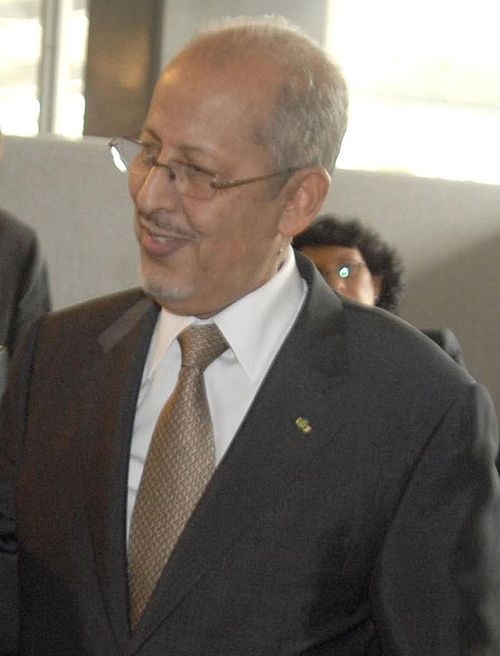
Sidi Ould Cheikh Abdallahi holds a significant, albeit short-lived, place in the modern political history of Mauritania. As the nation's first democratically elected president following a period of military rule, his election in 2007 was hailed as a milestone for democracy in the West African nation. His presidency, which lasted from April 2007 to August 2008, was marked by ambitious goals to address deep-seated economic challenges, social inequalities, and ethnic tensions. However, his time in office is primarily defined by its abrupt end: a military coup d'état that cut short his democratic mandate and plunged the country back into political instability. This biography explores the life, career, and complex legacy of Sidi Ould Cheikh Abdallahi, a figure whose rise symbolized hope for civilian rule and whose fall underscored the enduring challenges of governance in Mauritania's Politics & Government landscape.
Early Life and Education: Formative Years in Colonial Mauritania
Sidi Ould Cheikh Abdallahi was born in 1938 in the village of Boumdeid, within the Assaba region of what was then French colonial Mauritania. Hailing from a prominent Moorish (Bidhan) family of the Oulad Birri tribe, known for its religious and scholarly traditions, his early life was steeped in both Islamic learning and the realities of colonial administration. His father, Cheikh Abdallahi, was a respected marabout (Islamic scholar), which provided the young Sidi with a strong foundation in traditional education.
Pursuing a path that blended tradition with modern statecraft, Abdallahi excelled academically. He traveled to Senegal, the center of French West African administration, for his secondary education. His academic prowess earned him a scholarship to further his studies in France. He attended the prestigious École Nationale de la France d'Outre-Mer, a training ground for future administrators of the French colonial empire. This education equipped him with a deep understanding of economics, public administration, and governance—skills he would later bring to bear in an independent Mauritania. His formative years, straddling the worlds of traditional Mauritanian society and French colonial modernity, uniquely positioned him for a career in public service during the nation's transition to independence and beyond.
Career and Major Achievements: From Technocrat to President
The career of Sidi Ould Cheikh Abdallahi spans decades, characterized by roles as an economist, minister, and finally, head of state. His professional journey is a chronicle of Mauritania's own political evolution.
Rise as an Economic Technocrat
Following Mauritania's independence in 1960, Abdallahi's expertise was quickly utilized by the new government. He served in several key ministerial positions under the country's first president, Moktar Ould Daddah. His most notable early role was as Minister of Economic Affairs, where he was instrumental in managing the nascent nation's economy and its crucial mining sector. After the 1978 coup that ended Ould Daddah's rule, Abdallahi continued to serve in various governments, including as Minister of Hydraulics and Energy. However, following another political shift, he spent nearly two decades away from high-level politics, working as a consultant and reflecting on the nation's direction.
The 2007 Presidential Election and Democratic Transition
Abdallahi's return to the political forefront came in 2007. After a bloodless coup in 2005 overthrew President Maaouya Ould Sid'Ahmed Taya, the military council organized elections to restore civilian rule. Sidi Ould Cheikh Abdallahi emerged as a consensus candidate, appealing to a broad base. He positioned himself as an independent, experienced technocrat capable of uniting the country's diverse ethnic groups—Moorish Arab-Berbers (Bidhan) and Black African communities (Halpulaar, Soninke, Wolof). In a landmark second-round vote held on March 25, 2007, he defeated opponent Ahmed Ould Daddah, winning approximately 53% of the vote. His inauguration on April 19, 2007, marked Mauritania's first transition from one democratically elected president to another via the ballot box.
A Presidency of Challenge and Coup
President Abdallahi's administration faced immediate and profound tests. His major policy initiatives and challenges included:
- Economic Reform: Tackling poverty, high unemployment, and managing revenues from nascent oil exports and the vital iron ore sector.
- Social Justice: Addressing the lingering legacy of slavery and caste discrimination, a deeply sensitive issue in Mauritanian society.
- Security: Confronting the emerging threat of terrorism from Al-Qaeda in the Islamic Maghreb (AQIM).
- Political Fragmentation: Managing a fractious parliament where his government faced increasing opposition from both former allies and the military establishment.
The crisis culminated in August 2008. After Abdallahi dismissed several high-ranking military officers, including the heads of the presidential guard and the national gendarmerie, generals close to the 2005 coup leadership moved against him. On August 6, 2008, soldiers seized the presidential palace in Nouakchott. Sidi Ould Cheikh Abdallahi and his prime minister were arrested, and General Mohamed Ould Abdel Aziz took power, ending Mauritania's brief democratic experiment. Abdallahi's presidency lasted just 1 year, 3 months, and 18 days.
Personal Life, Legacy, and Lasting Impact
Outside the political arena, Sidi Ould Cheikh Abdallahi was known as a devout Muslim and a family man, deeply connected to his cultural and religious roots. His personal demeanor was often described as calm and scholarly, reflecting his upbringing. Following the coup and a brief house arrest, he largely retired from active politics, though he remained a symbolic figure for those advocating for a return to constitutional order.
The legacy of Sidi Ould Cheikh Abdallahi is complex and contested. On one hand, his election represented a high-water mark for democratic civilian rule in Mauritania. His victory was a moment of national optimism, demonstrating the possibility of a peaceful political transition. On the other hand, his inability to consolidate power, navigate the military's influence, or effectively address the country's systemic problems revealed the fragility of democratic institutions. The 2008 coup that removed him reinforced a cyclical pattern of military intervention in Mauritanian Executive Leadership. Ultimately, Abdallahi's tenure is a pivotal chapter that highlights the enduring struggle between democratic aspirations and authoritarian realities in Mauritania and the wider Sahel region. He passed away on November 23, 2020, in Nouakchott.
Net Worth and Business Ventures
Unlike some political figures in the region, Sidi Ould Cheikh Abdallahi was not widely known for significant personal wealth derived from business ventures. His career was predominantly in public service and technocratic roles. His financial profile was largely associated with his long career as a government minister and consultant. There are no substantial public records or credible reports indicating major private business holdings or a vast personal fortune. His economic standing was considered to be that of a well-established civil servant and former head of state, rather than a business magnate. In the context of Mauritanian Politics & Government, his legacy is tied to political, not financial, capital. The focus on his life remains squarely on his role as the democratically elected Ex-President (2007-2008) whose term was truncated by military force, shaping the nation's contemporary political trajectory.
Frequently Asked Questions
What is Sidi Ould Cheikh Abdallahi's estimated net worth?
Sidi Ould Cheikh Abdallahi has an estimated net worth of $5.0 Million.
What is Sidi Ould Cheikh Abdallahi's role and nationality?
Sidi Ould Cheikh Abdallahi is a Ex-President (2007-2008) from Mauritania.
How did Sidi Ould Cheikh Abdallahi make their money?
Sidi Ould Cheikh Abdallahi built their fortune primarily through As a former president of Mauritania with a short tenure and no known major business interests or Forbes listing, his wealth is estimated based on a typical public servant's career in the region..
How old is Sidi Ould Cheikh Abdallahi?
Sidi Ould Cheikh Abdallahi was born in 1938 (88 years old).
Which category is Sidi Ould Cheikh Abdallahi listed under?
Sidi Ould Cheikh Abdallahi is featured under the Politics & Government category on NetWorth Africa.
How is Sidi Ould Cheikh Abdallahi's net worth calculated?
NetWorth Africa estimates financial valuations using publicly available stock equity holdings, company ownership records, real estate assets, and verified market data.
Net Worth Analysis
As a former president of Mauritania with a short tenure and no known major business interests or Forbes listing, his wealth is estimated based on a typical public servant's career in the region.
Quick Stats
Related People
Aaron Motsoaledi
LP; Minister of Home Affairs • South Africa
Abane Ramdane†
FLN Leader & Strategist • Algeria
Abdalla Hamdok
Ex-Prime Minister • Sudan
Abdallah Kigoda
Ex-Minister of Natural Resources • Tanzania