Financial Breakdown
Asset Distribution
Assets vs Liabilities
Assets
Liabilities
Disclaimer: These financial estimates are based on publicly available information and should be considered approximate. Last updated: 12/31/2025
Biography
Introduction: A Pillar of Power and Controversy
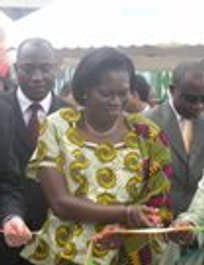
Simone Gbagbo is a formidable and polarizing figure in the modern political history of Ivory Coast. Known globally as the former Ex-First Lady & Politician, her influence extends far beyond the ceremonial, marking her as a key political operator in her own right. Born in 1949, Simone Gbagbo's journey from teacher and activist to a central player in the nation's highest echelons of power is a story of resilience, ideology, and controversy. Her most notable formal achievement was her election as a Member of Parliament for Abobo in 1995 and her subsequent rise to Vice-President of the Ivorian Popular Front (FPI). However, her legacy is deeply intertwined with her role as the influential wife of President Laurent Gbagbo and her actions during the nation's tumultuous post-2000 era, particularly the 2010-2011 crisis. A committed advocate for women's political participation, her life offers a complex study of power, gender, and nationalism in West African Politics & Government.
Early Life & Education: The Formative Years
Simone Ehivet Gbagbo was born on June 20, 1949, in the coastal town of Moossou, Grand-Bassam. Her upbringing in a Catholic, educated family set the stage for her future as a leader. From an early age, she was exposed to the values of education and social consciousness, which would later define her public life.
Academic Pursuits and Awakening
Simone Gbagbo pursued higher education with vigor, focusing on literature and history. She attended the University of Abidjan-Cocody, where she earned a Master's degree in History. Her academic path continued at the University of Paris Sorbonne, where she deepened her knowledge. This educational background in history profoundly shaped her political worldview, providing a lens through which she interpreted Ivorian identity and colonial legacies. It was during her time as a student and later as a high school history and literature teacher that her political consciousness fully awakened. She became actively involved in student and teacher union movements, platforms she used to critique the single-party rule of President Félix Houphouët-Boigny. These formative experiences in activism against what she perceived as an authoritarian and neo-colonial regime laid the groundwork for her lifelong political struggle.
Career & Major Achievements: From Activist to Power Center
Simone Gbagbo's career is inextricably linked to the political fortunes of her husband, Laurent Gbagbo, and the party they co-founded, the Ivorian Popular Front (FPI). Her transition from activist to a central figure in national politics was marked by strategic positioning and unwavering dedication to her cause.
Political Partnership and Rise
In the 1980s, Simone and Laurent Gbagbo were pivotal in founding the FPI, an opposition party that championed democracy and Ivorian nationalism. While Laurent was the public face, Simone was a crucial organizer and strategist. Her resilience was tested during periods of persecution; she was imprisoned in 1992 for her role in anti-government protests, an experience that cemented her image as a martyr for the democratic cause. This period of incarceration became a cornerstone of her political identity. Following the 1999 coup and the subsequent transition, Laurent Gbagbo ascended to the presidency after controversial elections in October 2000. Simone Gbagbo, now First Lady of Ivory Coast, assumed a role of unprecedented political influence, often described as the "Iron Lady" or the president's most trusted advisor.
Advocacy in Women's Rights and Political Influence
Within the sphere of Women's Rights, Simone Gbagbo carved out a significant niche. She leveraged her position to advocate for greater female participation in Politics & Government. She founded and led the Simone Gbagbo Women's Movement, which mobilized thousands of women in support of the FPI's agenda and provided a platform for female political engagement. In 1995, she was elected as a Deputy to the National Assembly, representing the populous commune of Abobo. She later ascended to the position of Vice-President of the FPI, a rare feat for a woman in Ivorian party politics at the time. Her advocacy, however, was often viewed through a partisan lens, focusing on empowering women within her political framework.
The 2010-2011 Crisis and International Reckoning
The pinnacle of both her influence and controversy came during the 2010-2011 Ivorian crisis. After Laurent Gbagbo refused to concede defeat to Alassane Ouattara in the presidential election, the country plunged into a violent five-month standoff. The international community, including the United Nations and the African Union, recognized Ouattara as the winner. Simone Gbagbo was a staunch defender of her husband's claim to power, reportedly influencing the hardline stance of his regime. Following the conflict's end in April 2011, which resulted in Laurent Gbagbo's arrest, Simone was also taken into custody. In a landmark case, she was tried in an Ivorian court and, in 2015, was convicted and sentenced to 20 years in prison for "undermining state security." This made her one of the highest-profile figures in the country to be held accountable for the post-election violence. Her sentence was later reduced, and she was granted amnesty and released in August 2018.
Personal Life & Legacy: The Woman Behind the Title
Simone Gbagbo's personal life is defined by her partnership with Laurent Gbagbo, whom she married in 1989. She is his second wife and is known to be a deeply religious Christian, often referencing her faith in public statements. Her identity as a mother and a devout believer has been part of her public persona, used to frame her struggles as moral and spiritual battles for the soul of Ivory Coast.
Her legacy is profoundly dualistic. To her supporters, Simone Gbagbo remains a symbol of resistance against foreign interference and a champion for Ivorian sovereignty and women's political empowerment. They view her prosecution as politically motivated. To her detractors, she is a figure associated with nationalism that bordered on xenophobia and with the grave human rights abuses committed during the 2010-2011 crisis. Regardless of perspective, her impact is undeniable. She demonstrated how a First Lady could wield substantive political power in Africa, challenging traditional, purely ceremonial roles. Her life story continues to influence political discourse in Ivory Coast, symbolizing the deep divisions and passionate ideologies that have shaped the nation's recent history.
Net Worth & Business Ventures
Specific details regarding Simone Gbagbo's personal net worth are not publicly documented with precision, as is common with many political figures in the region. Her financial profile is generally considered to be tied to the political and business networks associated with her husband's lengthy career in opposition and later in power. During the Gbagbo presidency (2000-2011), the family was believed to have access to significant state resources and influence. Following the crisis and their incarceration, much of their known assets, including properties, were seized or became subjects of legal contention by the Ivorian state. Unlike some political figures known for distinct private business empires, Simone Gbagbo's economic influence appears to have been largely derived from her political status and affiliations rather than from independent commercial ventures. Her primary "capital" remains her enduring political influence among a significant segment of the Ivorian population.
Key Facts at a Glance
- Full Name: Simone Ehivet Gbagbo
- Born: June 20, 1949, Moossou, Ivory Coast.
- Key Role: Former First Lady of Ivory Coast (2000-2011).
- Political Title: Vice-President of the Ivorian Popular Front (FPI).
- Elected Office: Member of Parliament for Abobo (1995).
- Landmark Case: Convicted by an Ivorian court in 2015, sentenced to 20 years, released via amnesty in 2018.
- Advocacy Focus: Women's political mobilization and participation.
For further reading on the political context of Ivory Coast, credible sources include the BBC's country profiles and reports from Human Rights Watch.
Frequently Asked Questions
What is Simone Gbagbo's estimated net worth?
Simone Gbagbo has an estimated net worth of $10.0 Million.
What is Simone Gbagbo's role and nationality?
Simone Gbagbo is a Ex-First Lady & Politician from Ivory Coast.
How did Simone Gbagbo make their money?
Simone Gbagbo built their fortune primarily through As a former First Lady and politician from Ivory Coast, her wealth is not from business but from political career and marriage; she is not a known billionaire and has faced legal issues including asset seizures..
How old is Simone Gbagbo?
Simone Gbagbo was born in 1949 (77 years old).
Which category is Simone Gbagbo listed under?
Simone Gbagbo is featured under the Politics & Government category on NetWorth Africa.
How is Simone Gbagbo's net worth calculated?
NetWorth Africa estimates financial valuations using publicly available stock equity holdings, company ownership records, real estate assets, and verified market data.
Net Worth Analysis
As a former First Lady and politician from Ivory Coast, her wealth is not from business but from political career and marriage; she is not a known billionaire and has faced legal issues including asset seizures.
Quick Stats
Related People
Aaron Motsoaledi
LP; Minister of Home Affairs • South Africa
Abane Ramdane†
FLN Leader & Strategist • Algeria
Abdalla Hamdok
Ex-Prime Minister • Sudan
Abdallah Kigoda
Ex-Minister of Natural Resources • Tanzania