Financial Breakdown
Asset Distribution
Assets vs Liabilities
Assets
Liabilities
Disclaimer: These financial estimates are based on publicly available information and should be considered approximate. Last updated: 12/29/2025
Biography
Introduction: The Lion of Africa
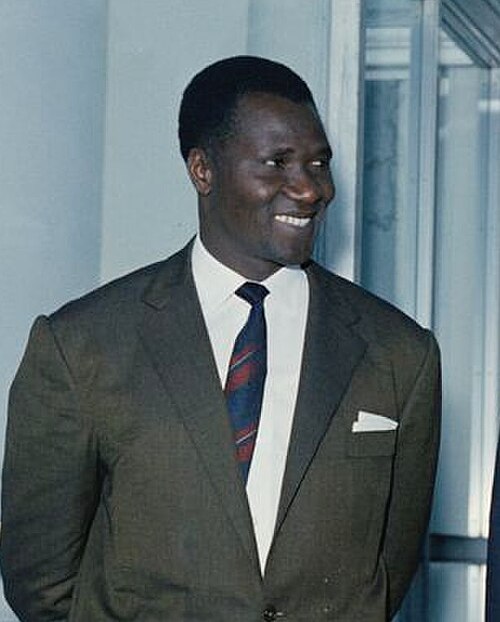
Ahmed Sékou Touré† stands as a colossal and controversial figure in the annals of African history. As the First President of Guinea, he led his nation to a landmark achievement: becoming, in 1958, the first French colony in Sub-Saharan Africa to vote for and achieve immediate independence. This defiant "No" vote to continued French colonial rule, delivered with the famous declaration, "We prefer poverty in liberty to riches in slavery," cemented his reputation as a fearless Pan-Africanist and a leader of the continent's Liberation Era. For 26 years, from 1958 until his death in 1984, Sékou Touré† ruled the Republic of Guinea with an iron fist, implementing a radical socialist agenda, positioning the nation as a frontline state in the Cold War, and leaving behind a complex legacy of nationalist pride and profound political repression.
His tenure was defined by a fierce commitment to African sovereignty, the establishment of a one-party state under the Parti Démocratique de Guinée (PDG), and the cultivation of alliances with the Eastern Bloc. While celebrated for his unwavering anti-colonial stance and his role in inspiring liberation movements across Africa, his government's record on human rights and economic management remains heavily criticized. This biography explores the life, career, and enduring impact of this pivotal leader in Politics & Government.
Early Life & Education: The Making of a Militant
Sékou Touré† was born on January 9, 1922, in Faranah, French Guinea, a landlocked region of West Africa. He claimed direct descent from the legendary 19th-century resistance leader Samori Touré, who fought against French conquest—a lineage that would profoundly shape his self-image as an inheritor of anti-colonial struggle. His early education was in Quranic schools and the French colonial system. A brilliant and rebellious student, he was expelled from the prestigious École Normale Supérieure William Ponty in Dakar, Senegal, in 1937 for leading a food protest. This early act of defiance foreshadowed his lifelong confrontation with established authority.
Forced into the workforce, Touré† took a job with the Niger French Company and quickly became involved in labor organizing. By 1945, he had founded the Post and Telecommunications Workers' Union and became a key figure in the Confederation Générale du Travail (CGT), a French trade union federation with communist ties. This period was his true political education. Through union activism, he honed his oratory skills, organized mass mobilizations, and connected the struggle for workers' rights with the broader fight against colonialism. His rapid ascent within the labor movement provided the organizational base and populist touch that would later propel his political party, the PDG, to dominance.
Career & Major Achievements: From Independence to the One-Party State
Sékou Touré†'s political career accelerated in the post-World War II era, as France attempted to reform its colonial empire. He was elected to the French National Assembly in 1956 and served briefly as mayor of Conakry. However, his true focus was building the PDG into a nationwide, disciplined movement that transcended ethnic divisions. When French President Charles de Gaulle offered Guinea and other colonies a referendum in 1958—a choice between immediate independence or autonomy within a French community—Touré† campaigned vigorously for full sovereignty.
The Historic "No" and Immediate Independence
On September 28, 1958, an overwhelming 95% of Guineans voted "No," rejecting the French proposal. On October 2, 1958, Guinea was proclaimed an independent republic, with Sékou Touré† as its first President. France's reaction was swift and punitive, withdrawing all administrative personnel, dismantling infrastructure, and cutting off financial and technical assistance in an attempt to make the new nation fail. This "colonial revenge" forced Guinea to seek support elsewhere, leading Touré† to turn to the Soviet Union, China, and Eastern Bloc countries for aid, firmly aligning Guinea with the socialist camp during the Cold War.
Domestic Policy and the PDG State
Domestically, President Sékou Touré† embarked on a radical program of "scientific socialism." He nationalized land, industries, and trade, and established a centralized planned economy. The PDG became the sole legal political party, and the state apparatus was fused with the party. Touré† promoted a cultural revolution, emphasizing African identity and rejecting Western influence. He authored a multi-volume ideological work called "The Political Doctrine of the PDG" and fostered a cult of personality, with titles like "The Supreme Guide of the Revolution."
Foreign Policy and Pan-African Leadership
On the international stage, Sékou Touré† was a leading voice for Pan-Africanism and anti-imperialism. He formed a short-lived union with Ghana's Kwame Nkrumah in 1958 and was a founding member of the Organization of African Unity (OAU) in 1963. He provided sanctuary and support to liberation movements fighting against Portuguese colonialism (in Guinea-Bissau, Angola, Mozambique) and white minority regimes in Southern Africa, making Conakry a hub for anti-colonial activists. However, his regime grew increasingly isolated from Western powers and many of his West African neighbors due to his militant rhetoric and alleged subversion.
Personal Life, Repression, and Legacy
While publicly a charismatic and devoted leader, Sékou Touré†'s personal life was guarded. He was married to Andrée Touré, a French woman he met during his union days. His rule became synonymous with severe political repression. Facing real and perceived plots, most notably the "Petit Touré" and "Fulani Plot" in the 1960s and the "Market Women's Plot" in 1976, his government established an extensive network of informants and a notorious secret police force. Tens of thousands of Guineans were imprisoned, tortured, or executed at the infamous Camp Boiro detention center. An estimated one to two million people fled into exile, creating a vast diaspora.
The legacy of Sékou Touré† is profoundly dualistic. He is revered by many as the father of Guinean independence, a symbol of African dignity and uncompromising resistance to colonialism. His bold stance in 1958 inspired freedom movements across the continent. Conversely, his economic policies, characterized by mismanagement and isolation, left Guinea—a country rich in bauxite, diamonds, and gold—as one of the world's poorest nations. His political system crushed dissent and instilled a deep-seated fear in society. When he died on March 26, 1984, during heart surgery in Cleveland, Ohio, USA, the military swiftly seized power, and the extent of the regime's human rights abuses began to be fully uncovered. Today, Guinea continues to grapple with the political and institutional structures he bequeathed.
Net Worth & Economic Context
Assessing the personal net worth of a leader like Sékou Touré†, who presided over a centralized socialist state for 26 years, is challenging and often speculative. Unlike leaders who amassed visible personal fortunes, Touré†'s wealth was deeply entwined with state control. He did not own private industries in the conventional sense, as the means of production were nationalized. However, critics and exiles accused his regime and inner circle of corruption and benefiting from control over Guinea's vast natural resources, particularly its bauxite mines, which account for over half the world's reserves.
Under his doctrine of "communal sovereignty," the state, and by extension the ruling party elite, controlled all export revenues. While there is no documented evidence of vast personal offshore wealth comparable to some other autocrats, the economic mismanagement and lack of transparency meant that resource wealth did not translate into public prosperity. The primary "business venture" was the state itself. Therefore, discussions of wealth in the context of Sékou Touré† are less about personal bank accounts and more about the absolute political control over the nation's economy, which led to widespread poverty for citizens while consolidating power and privilege for the ruling apparatus.
Related Keywords: Politics & Government, First President of Guinea, Guinea, Liberation Era, Pan-Africanism, Parti Démocratique de Guinée (PDG), Ahmed Sékou Touré, African independence, Cold War in Africa, Camp Boiro.
Frequently Asked Questions
What is Sékou Touré†'s estimated net worth?
Net worth details for Sékou Touré† are currently being updated.
What is Sékou Touré†'s role and nationality?
Sékou Touré† is a First President of Guinea from Guinea.
How did Sékou Touré† make their money?
Sékou Touré† built their fortune primarily through Sékou Touré was a political leader, not a business figure, and there are no credible reports of significant personal wealth; his legacy is tied to his political role, not commercial assets..
How old is Sékou Touré†?
Sékou Touré† was born in 1922 (104 years old).
Which category is Sékou Touré† listed under?
Sékou Touré† is featured under the Politics & Government category on NetWorth Africa.
How is Sékou Touré†'s net worth calculated?
NetWorth Africa estimates financial valuations using publicly available stock equity holdings, company ownership records, real estate assets, and verified market data.
Net Worth Analysis
Sékou Touré was a political leader, not a business figure, and there are no credible reports of significant personal wealth; his legacy is tied to his political role, not commercial assets.
Quick Stats
Related People
Aaron Motsoaledi
LP; Minister of Home Affairs • South Africa
Abane Ramdane†
FLN Leader & Strategist • Algeria
Abdalla Hamdok
Ex-Prime Minister • Sudan
Abdallah Kigoda
Ex-Minister of Natural Resources • Tanzania