Financial Breakdown
Asset Distribution
Assets vs Liabilities
Assets
Disclaimer: These financial estimates are based on publicly available information and should be considered approximate. Last updated: 12/31/2025
Biography
Introduction: A Pillar of Political Writing
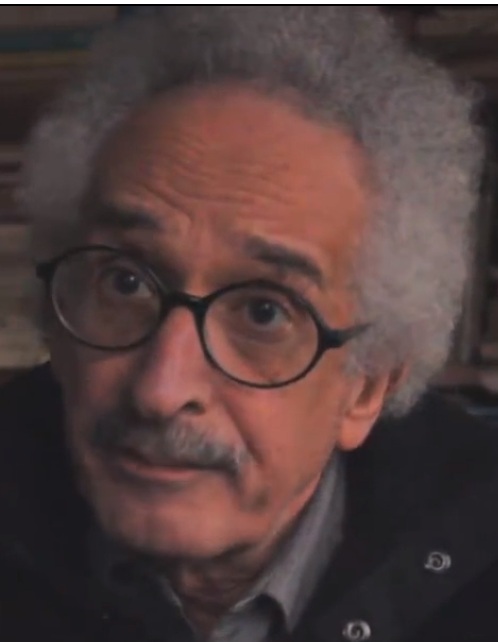
Sonallah Ibrahim stands as one of the most significant and uncompromising voices in modern Arabic literature. A renowned Political Novelist and Political Writer, his career, spanning over six decades, is defined by a fierce commitment to documenting the social, political, and economic realities of Egypt and the Arab world. Born in 1937, Ibrahim's life and work are inextricably linked to the tumultuous history of his nation, from the Nasser era through contemporary times. His key achievement lies in forging a unique literary style—a stark, documentary-like realism often incorporating official documents, news clippings, and statistical data—to critique authoritarianism, corruption, imperialism, and social decay. More than just a Writer, Sonallah Ibrahim is considered a moral compass and a chronicler of collective memory, making him an indispensable figure in the Arts & Culture landscape of the Middle East.
Early Life & Education: Forging a Critical Consciousness
Sonallah Ibrahim was born in Cairo, Egypt, in 1937. His early years were marked by loss; his mother passed away shortly after his birth, and he was raised primarily by his father, a mid-level government official. This experience of absence and a somewhat solitary childhood later permeated the psychological depth of his characters. He pursued a degree in law at Cairo University, but his true education came from the turbulent political environment of the 1950s. Immersed in the fervor of Gamal Abdel Nasser's revolutionary project, Ibrahim initially held leftist and nationalist ideals.
His formative experience, however, was his imprisonment from 1959 to 1964 for his membership in the Egyptian Communist Party. These years were crucial. The harsh conditions of detention, alongside other intellectuals, sharpened his critique of state power and solidified his resolve to write as an act of resistance. Upon his release, he worked as a journalist and translator, bringing works by Kafka and Brecht into Arabic. He also continued his studies, attending the Moscow Film Institute for a period in the late 1960s, which further exposed him to different strands of critical thought and narrative technique. This blend of direct political persecution, journalistic practice, and cross-cultural study equipped Sonallah Ibrahim with the tools and perspective that would define his literary career.
Career & Major Achievements: The Architecture of Dissent
Sonallah Ibrahim's literary debut was a seismic event. That Smell (1966, revised 1986), written shortly after his release from prison, is a minimalist, haunting account of a former political prisoner's disorientation and alienation in a surveilled society. Its publication was initially blocked by Egyptian censors, setting the tone for Ibrahim's lifelong tango with authority.
The Documentary Novel and Major Works
Throughout the 1970s and 1980s, Ibrahim perfected his signature "documentary novel." The Committee (1981) is a surreal Kafkaesque satire of unaccountable power. His masterpiece, Zaat (1992), is a sweeping social panorama of Egypt during the Infitah (economic opening) era under Anwar Sadat. Through the life of an ordinary woman, Zaat, he weaves a scathing critique of consumerism, corruption, and the erosion of public life, interspersing the narrative with real newspaper fragments. This technique creates a powerful dialectic between the personal and the political.
Other landmark works include:
- Beirut, Beirut (1984): Based on his experiences in war-torn Lebanon.
- Warda (2000): A historical novel exploring revolutionary movements in Oman and Palestine.
- Amerikanli (2003): A critique of American empire and academic complicity.
- Ice (2011): A complex reflection on the 2011 Egyptian revolution and its aftermath.
A Defining Moment of Defiance
In 2003, Sonallah Ibrahim delivered one of the most dramatic moments in Arab cultural history. Upon being awarded the prestigious Arab Novelists Conference Prize in Egypt, he declined the honor and its substantial financial reward from the hands of the Minister of Culture. In a public speech, he condemned the state's cultural and political failures, stating the Egyptian regime and its institutions "do not possess the credibility" to grant such an award. This act of principled refusal cemented his image as an intellectual of unwavering integrity, prioritizing his critical voice over official recognition.
Personal Life, Legacy & Lasting Impact
Sonallah Ibrahim has led a largely private life dedicated to writing and political engagement. He is known for his disciplined routine and modest lifestyle. His personal interests have always been intertwined with his work; he is a meticulous researcher, often spending years gathering material for a single novel. While not a philanthropist in the traditional sense, his life's work constitutes a form of intellectual philanthropy—a gift of critical history and preserved memory to the Arab public sphere, often at great personal risk.
The legacy of Sonallah Ibrahim is profound. He is a foundational figure for generations of younger Writers in Egypt and across the Arab world who see in him a model of artistic courage and innovation. His documentary style has influenced narrative forms beyond literature, including film and journalism. Academically, he is the subject of extensive study as a central node in post-colonial and world literature. More broadly, his novels serve as an essential counter-archive, challenging official narratives and giving voice to the marginalized. In the realm of Arts & Culture, he demonstrated that the novel could be both a work of high art and a direct instrument of socio-political analysis. As authoritarianism and neoliberal pressures continue to shape the region, the critical urgency of Sonallah Ibrahim's body of work remains undiminished.
Literary Estate & Recognition
While discussions of net worth are rarely appropriate for a figure like Sonallah Ibrahim, whose value is cultural and moral, his career has been sustained through his literary output. His income derives primarily from book sales, which are significant across the Arab world, and translations into over a dozen languages, including English, French, and German. International publishing deals and academic royalties contribute to his financial stability. He has not engaged in commercial business ventures, maintaining a clear separation between his artistic mission and commerce. The true "wealth" of Sonallah Ibrahim lies in the immense respect he commands and the enduring power of his novels. Prizes he has accepted, such as the Ibn Rushd Prize for Freedom of Thought (2004) and the Mohamed Zafzaf Prize (2019), come from independent cultural institutions, aligning with his principles. His most significant asset is his copyrights, which protect a literary corpus that is essential reading for understanding the modern Arab experience.
Sources & Further Reading: For those interested in exploring the works and context of Sonallah Ibrahim further, critical analyses can be found through academic publishers like AUC Press and in journals dedicated to Middle Eastern studies. Translations of his major novels are available from publishers such as Hoopoe Fiction (AUC Press) and Seven Stories Press.
Frequently Asked Questions
What is Sonallah Ibrahim's estimated net worth?
Sonallah Ibrahim has an estimated net worth of R 8.1 Million.
What is Sonallah Ibrahim's role and nationality?
Sonallah Ibrahim is a Political Novelist; Political Writer; Writer from Egypt.
How did Sonallah Ibrahim make their money?
Sonallah Ibrahim built their fortune primarily through Sonallah Ibrahim was a renowned but politically critical Egyptian novelist, not a business figure; his wealth derived from literary work, not corporate holdings, placing him in the upper-middle class range for his profession in Egypt..
How old is Sonallah Ibrahim?
Sonallah Ibrahim was born in 1937 (89 years old).
Which category is Sonallah Ibrahim listed under?
Sonallah Ibrahim is featured under the Arts & Culture category on NetWorth Africa.
How is Sonallah Ibrahim's net worth calculated?
NetWorth Africa estimates financial valuations using publicly available stock equity holdings, company ownership records, real estate assets, and verified market data.
Net Worth Analysis
Sonallah Ibrahim was a renowned but politically critical Egyptian novelist, not a business figure; his wealth derived from literary work, not corporate holdings, placing him in the upper-middle class range for his profession in Egypt.
Quick Stats

Related People
Abasse Ndione
Novelist & Playwright • Senegal
Abdel Rahman al-Abnudi†
Poet (Egypt-Sudan) • Sudan
Abdelkrim Ghallab†
Novelist & Journalist • Morocco
Abdellah Taïa
Novelist & Filmmaker • Morocco