Financial Breakdown
Asset Distribution
Assets vs Liabilities
Assets
Liabilities
Disclaimer: These financial estimates are based on publicly available information and should be considered approximate. Last updated: 12/31/2025
Biography
Introduction: A Beacon of Sudanese Cinema
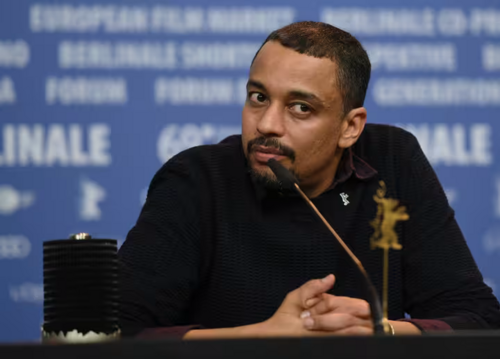
In the landscape of global Arts & Culture, few figures have championed the voice of a nation with as much resilience and artistry as Suhaib Gasmelbari. Born in 1979 in Sudan, Gasmelbari has emerged as a pivotal Director & Producer, dedicating his career to excavating, preserving, and narrating the rich yet often obscured cinematic history of his homeland. His international breakthrough came with the critically acclaimed documentary Talking About Trees (2019), a poignant and humorous film that earned him the prestigious Best Documentary Award at the Berlin International Film Festival (Berlinale). This achievement not only placed him on the world stage but also spotlighted the struggles and enduring spirit of Sudanese filmmakers working under decades of political and cultural repression. Suhaib Gasmelbari is more than a filmmaker; he is an archivist and activist, using the lens to bridge Sudan's past with its present and future.
Early Life & Education: Forging a Filmmaker's Path
Suhaib Gasmelbari's formative years were shaped by the complex socio-political fabric of Sudan. Growing up in the late 20th century, he witnessed periods of significant upheaval, which later became a subtle undercurrent in his cinematic explorations. His passion for visual storytelling was evident early on, leading him to pursue a formal education that would equip him with a diverse technical and theoretical toolkit.
Gasmelbari's academic journey took him beyond Sudan's borders, reflecting his ambition to gain a global perspective. He studied cinema and audiovisual production in France, a country with a deep-seated cinematic tradition. This experience was instrumental, exposing him to diverse filmmaking techniques and narrative forms. He further honed his skills at the Institut National de l'Audiovisuel (INA), specializing in directing. This Franco-Sudanese educational blend proved crucial; it provided him with the formal rigor of European filmmaking while his intrinsic connection to Sudanese narratives remained the core of his creative drive. These formative experiences laid the groundwork for a career that would deftly navigate between intimate local stories and universal themes of artistic resistance.
Career & Major Achievements: Chronicling Resistance and Resilience
The career of Suhaib Gasmelbari is a testament to perseverance and a deep commitment to collective memory. Before his feature-length success, he worked on various projects that developed his voice. He directed short films and contributed to television, often focusing on cultural and social documentation. However, his magnum opus, and the work that defines his career, is undoubtedly the documentary Talking About Trees.
Talking About Trees: An International Triumph
Released in 2019, Talking About Trees follows four veteran Sudanese filmmakers—Ibrahim Shaddad, Suleiman Ibrahim, Eltayeb Mahdi, and Manar Al Hilo—members of the "Sudanese Film Group." The film documents their quixotic struggle to revive an old cinema in Khartoum. More than a simple chronicle, it is a meditation on friendship, the corrosive power of censorship, and the undying love for cinema. The film’s triumph at the 69th Berlin International Film Festival, where it won the Glashütte Original Documentary Award, was a watershed moment. It signaled to the world that Sudanese cinema, despite being marginalized for decades, possessed powerful stories and storytellers. The award validated Suhaib Gasmelbari's patient, observant directorial style and brought unprecedented attention to Sudan's film community.
Archival Work and Production Advocacy
Parallel to his directing, Suhaib Gasmelbari has undertaken significant work as a producer and researcher. He has been deeply involved in efforts to locate, restore, and archive classic Sudanese films, many of which were thought to be lost due to neglect or political purging. This archival mission is a critical part of his legacy, ensuring that future generations have access to their cinematic heritage. Through his production company, he supports emerging talents in Sudan and the broader region, fostering a new wave of Arab and African filmmakers. His career is not a solitary pursuit but a collective endeavor to rebuild an industry from the ground up.
- 2019: Wins top documentary prize at Berlinale for Talking About Trees.
- Global Screenings: The film was selected for major festivals including Toronto International Film Festival (TIFF) and BFI London Film Festival.
- Preservation Efforts: Active role in projects aimed at digitizing and saving Sudan's film archives.
- Cultural Impact: His work has inspired academic study and renewed international funding interest in Sudanese arts.
Personal Life & Legacy: The Architect of Memory
While Suhaib Gasmelbari maintains a relatively private personal life, his professional persona is deeply intertwined with his principles. He is known for his intellectual rigor, collaborative spirit, and quiet determination. His interests clearly extend into history, literature, and the mechanics of cultural preservation, which inform the layered depth of his films. Based between Sudan and France, he operates as a cultural bridge, connecting resources and opportunities from the diaspora to the local creative scene in Khartoum.
The legacy of Suhaib Gasmelbari is being written in real-time. He has already cemented his place as the most prominent Sudanese filmmaker of his generation. His lasting impact lies in two interconnected realms: first, in giving Sudan a cinematic voice on the world stage at a critical juncture in the nation's history; and second, in his foundational work to salvage the country's film history. He has inspired a younger cohort of Sudanese artists to pick up cameras and tell their stories, proving that despite immense challenges, cinema is a vital form of expression and historical documentation. In the Arts & Culture narrative of Sudan, Gasmelbari is a pivotal chapter, one that ensures the preceding chapters are not forgotten and that future ones can be authored.
Net Worth & Business Ventures
As an independent documentary filmmaker and producer operating within the niche of Sudanese and African cinema, specific details regarding Suhaib Gasmelbari's net worth are not publicly disclosed and are typical of artists in this sector. His financial success is intrinsically linked to the critical acclaim and festival success of his projects, which secure funding through grants, international co-production deals, and distribution rights. The business side of his work revolves around his production activities, which are likely structured to support film development and archival projects. Primary income streams include:
- Film Grants & Festival Prizes: Major awards like the Berlinale prize come with financial support for future projects.
- International Co-Productions: Collaborating with European and African production companies to fund films.
- Distribution Rights: Sales of Talking About Trees to global streaming platforms and educational institutions.
- Cultural Funding: Support from arts councils and cultural institutes focused on African and Arab cinema preservation.
For Suhaib Gasmelbari, the "business" is fundamentally the business of cultural sustainability. Any financial resources are strategically reinvested into the cinematic ecosystem of Sudan, funding new films, restoration work, and mentorship initiatives, ensuring that his professional ventures yield both cultural capital and tangible artistic output for his community.
Frequently Asked Questions
What is Suhaib Gasmelbari's estimated net worth?
Suhaib Gasmelbari has an estimated net worth of $1.0 Million.
What is Suhaib Gasmelbari's role and nationality?
Suhaib Gasmelbari is a Director & Producer from Sudan.
How did Suhaib Gasmelbari make their money?
Suhaib Gasmelbari built their fortune primarily through Suhaib Gasmelbari is an acclaimed documentary filmmaker, not a business magnate; his wealth is derived from his artistic career and is not on any billionaire list..
How old is Suhaib Gasmelbari?
Suhaib Gasmelbari was born in 1979 (47 years old).
Which category is Suhaib Gasmelbari listed under?
Suhaib Gasmelbari is featured under the Arts & Culture category on NetWorth Africa.
How is Suhaib Gasmelbari's net worth calculated?
NetWorth Africa estimates financial valuations using publicly available stock equity holdings, company ownership records, real estate assets, and verified market data.
Net Worth Analysis
Suhaib Gasmelbari is an acclaimed documentary filmmaker, not a business magnate; his wealth is derived from his artistic career and is not on any billionaire list.
Quick Stats

Related People
Abasse Ndione
Novelist & Playwright • Senegal
Abdel Rahman al-Abnudi†
Poet (Egypt-Sudan) • Sudan
Abdelkrim Ghallab†
Novelist & Journalist • Morocco
Abdellah Taïa
Novelist & Filmmaker • Morocco