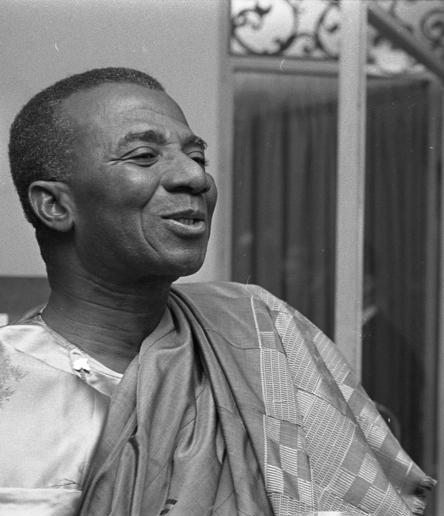
Biography
Introduction: The Architect of Togolese Independence
Sylvanus Olympio† stands as a monumental figure in the annals of West African history, renowned as the pioneering First President of Togo. A charismatic leader and astute politician, his life's work was dedicated to liberating his homeland from colonial rule and steering it onto the path of sovereign nationhood. Born in 1902 during the era of European partition, Sylvanus Olympio† would become the central force in the struggle for Togolese self-determination, ultimately leading the country to become one of the first in sub-Saharan Africa to gain independence from a United Nations trusteeship. His tenure, though tragically cut short, marked the definitive end of colonial administration and the birth of the Togolese Republic. His story is intrinsically linked to the turbulent Politics & Government of the Independence Era, a period defined by both immense hope and profound instability.
Early Life & Education: Forging a Pan-African Identity
Sylvanus Epiphanio Olympio was born on September 6, 1902, in Kpandu, in the then-German protectorate of Togoland. His background was one of privilege and transnational connection; his father was a successful Brazilian-born merchant of Afro-Brazilian descent, part of the influential "Tabom" community that returned to West Africa. This heritage provided Sylvanus Olympio† with a unique, cosmopolitan perspective from a young age. He received his early education at the German Catholic school in Lomé before embarking on a rigorous academic journey in Europe.
He studied at the London School of Economics and later graduated with a degree in commerce from the University of Vienna, becoming one of the most highly educated Africans of his generation. Fluent in English, German, French, and Portuguese, in addition to his native languages, Olympio was a true polyglot. His formative professional years were spent with the powerful United Africa Company (UAC), a subsidiary of the Unilever conglomerate, where he rose to the position of general manager. This experience provided him with an intimate understanding of international economics and colonial trade structures, knowledge he would later wield in the political arena. His education and corporate career were not merely personal achievements; they were the crucible in which his nationalist fervor and administrative competence were forged.
Career & Major Achievements: From Nationalist to President
Sylvanus Olympio's political career began in earnest after World War II, as the map of Africa was being redrawn. Togoland, previously a German colony, had been split into British and French-administered trust territories under the League of Nations and later the UN. Olympio emerged as the eloquent and uncompromising voice for reunification and independence. He founded and led the Comité de l'unité togolaise (CUT), which became the principal vehicle for the independence movement.
The Fight for Sovereignty
His strategy was multifaceted and relentless. He skillfully leveraged the international platform provided by the United Nations, presenting the case for Togolese self-rule directly to the world body. He argued against the continuation of French trusteeship and for the reunification of British and French Togoland. His diplomatic efforts, combined with organized popular support within Togo, pressured the colonial authorities. In 1956, a UN-supervised referendum was held in British Togoland, which voted to join the Gold Coast (soon to be Ghana) rather than reunify with French Togoland. While a setback for his reunification dream, Olympio focused on securing independence for French Togoland.
Ascension to the Presidency
In 1958, Olympio's CUT party won a decisive victory in territorial elections, and he became Prime Minister. He immediately began negotiations with France. His firm stance and international pressure culminated in success: on April 27, 1960, Togo achieved full independence. Sylvanus Olympio† was unanimously elected as the nation's inaugural President. His major achievements in office included:
- Establishing a sovereign republic and withdrawing from the French Franc zone, creating the Togolese Franc to assert monetary independence.
- Implementing fiscal austerity to reduce the inherited colonial debt and balance the national budget.
- Prioritizing infrastructure and agricultural development projects.
- Advocating for a non-aligned foreign policy during the Cold War.
However, his presidency faced severe challenges. His policies of fiscal restraint led to reduced public spending, including a controversial decision to downsize the army and integrate only a fraction of the former French colonial troops, many of whom were veterans of France's Indochina and Algeria wars. This created a pool of discontented, unemployed former soldiers.
Tragic End and Historical Impact
This discontent proved fatal. In the early hours of January 13, 1963, a small group of these disgruntled veterans, led by Sergeant Étienne Gnassingbé (later known as Gnassingbé Eyadéma), staged a coup d'état. Sylvanus Olympio†, in a desperate attempt to seek asylum, was shot and killed outside the gates of the American embassy in Lomé. His assassination marked a dark turning point, not just for Togo, but for post-colonial Africa, as it was the first violent overthrow of a government in a newly independent African nation. It ushered in decades of military rule under the Gnassingbé family, a dynasty that began with the very act that ended Olympio's life and vision.
Personal Life, Legacy & Lasting Impact
Beyond the statesman, Sylvanus Olympio was a family man. He was married to Dinah Olympio, who was an active partner in his life and a respected figure in her own right. Together they had several children. Known for his disciplined, austere, and intellectual demeanor, Olympio was a devout Catholic whose personal integrity was rarely questioned even by his political opponents. His interests were deeply rooted in the economic and cultural development of his people.
The legacy of Sylvanus Olympio† is complex and powerful. He is universally revered as the father of Togolese independence, the man who successfully negotiated the end of colonial rule. His image is a symbol of the nation's founding. Streets, stadiums, and institutions bear his name. However, his legacy is also one of tragic "what ifs." His assassination cast a long shadow, institutionalizing political violence and military intervention in Togolese Politics & Government. Historians debate whether his austere economic policies were necessary medicine or contributed to his downfall. Nevertheless, his unwavering commitment to sovereignty, his diplomatic skill, and his ultimate martyrdom secure his place as the defining figure of Togo's Independence Era. He remains a potent symbol of the aspirations and perils that characterized Africa's post-colonial dawn.
Net Worth & Business Acumen
Prior to his political career, Sylvanus Olympio† achieved significant professional and financial success in the corporate world. His nearly two-decade-long career with the United Africa Company (UAC) was exceptionally distinguished for an African in the colonial era. Rising to the senior position of general manager, he gained invaluable experience in large-scale administration, international trade, finance, and logistics. This role undoubtedly provided him with a substantial income and a deep understanding of the economic forces that governed West Africa. While specific figures of his personal net worth are not recorded in historical sources, his background was one of affluence. His family's established merchant business and his own high-ranking corporate post placed him among the economic elite of Lomé. This financial independence was crucial, as it allowed him to engage in politics without being economically beholden to colonial or foreign interests. His business acumen directly informed his presidential policies, particularly his focus on fiscal responsibility and economic self-reliance for the new nation of Togo.
For further reading on the life and times of Sylvanus Olympio, credible historical sources can be found through academic databases and archives such as Encyclopædia Britannica and United Nations historical records on decolonization.
Frequently Asked Questions
What is Sylvanus Olympio†'s estimated net worth?
Net worth details for Sylvanus Olympio† are currently being updated.
What is Sylvanus Olympio†'s role and nationality?
Sylvanus Olympio† is a First President of Togo from Togo.
How did Sylvanus Olympio† make their money?
Sylvanus Olympio† built their fortune primarily through Sylvanus Olympio was assassinated in 1963 and was a political leader, not a business figure, so he did not accumulate personal wealth in the modern sense..
How old is Sylvanus Olympio†?
Sylvanus Olympio† was born in 1902 (124 years old).
Which category is Sylvanus Olympio† listed under?
Sylvanus Olympio† is featured under the Politics & Government category on NetWorth Africa.
How is Sylvanus Olympio†'s net worth calculated?
NetWorth Africa estimates financial valuations using publicly available stock equity holdings, company ownership records, real estate assets, and verified market data.
Net Worth Analysis
Sylvanus Olympio was assassinated in 1963 and was a political leader, not a business figure, so he did not accumulate personal wealth in the modern sense.
Quick Stats
Related People
Aaron Motsoaledi
LP; Minister of Home Affairs • South Africa
Abane Ramdane†
FLN Leader & Strategist • Algeria
Abdalla Hamdok
Ex-Prime Minister • Sudan
Abdallah Kigoda
Ex-Minister of Natural Resources • Tanzania