Biography
Introduction
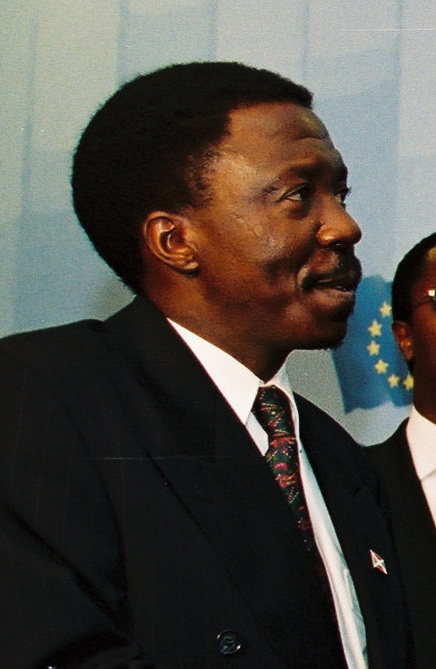
Sylvestre Ntibantunganya stands as a pivotal figure in the tumultuous modern history of Burundi. Serving as the nation's President from 1994 to 1996, his tenure was defined by an intense and violent struggle to maintain a fragile ethnic balance and implement democratic principles amidst a brewing civil war. A member of the Hutu ethnic group, Sylvestre Ntibantunganya rose to the highest office following the assassination of his predecessor, Melchior Ndadaye, the first democratically elected Hutu president. His presidency is historically significant as it represented a continued, though perilously unstable, effort to transition Burundi away from decades of Tutsi-dominated military rule toward a more inclusive government. His time in office, though short and marked by extreme crisis, encapsulates the profound challenges of leadership in the face of deep-seated ethnic conflict and political fragmentation in the Great Lakes region of Africa.
Early Life and Education
Sylvestre Ntibantunganya was born in 1956 in the commune of Gisanze, in the former Bururi Province of the Belgian-administered Ruanda-Urundi trust territory. His formative years were spent in a colonial and post-colonial society rigidly structured along ethnic lines, an experience that would deeply inform his later political perspectives. He pursued his education with distinction, demonstrating an early interest in social issues and communication.
Ntibantunganya attended the University of Burundi, where he studied and later graduated with a degree in Literature and Social Sciences. It was during his university years that his intellectual and political consciousness sharpened. He became actively involved in student circles and began writing, developing a voice that would later define his career. Fluent in Kirundi, French, and English, he channeled his skills into journalism, a profession that served as his primary gateway into public life. Before entering politics directly, Sylvestre Ntibantunganya worked as a journalist and editor, notably for the government-controlled newspaper, Le Renouveau du Burundi. This role placed him at the heart of national discourse, allowing him to analyze and comment on the evolving and often tense political landscape of the 1970s and 1980s under the military rule of President Jean-Baptiste Bagaza and later Pierre Buyoya.
Career and Major Achievements
Sylvestre Ntibantunganya's political career accelerated with the wave of democratic reforms that swept Africa in the early 1990s. In Burundi, this culminated in the historic 1993 presidential and parliamentary elections, which saw the victory of Melchior Ndadaye of the Front for Democracy in Burundi (FRODEBU). Ntibantunganya, a prominent member of FRODEBU, was elected as a deputy to the National Assembly. His political ascent was rapid; he was appointed as the Minister of Foreign Affairs and Cooperation in President Ndadaye's government, a critical role in rehabilitating Burundi's international image.
Ascension to the Presidency
The trajectory of his career—and the nation—was violently altered on October 21, 1993, when President Ndadaye was assassinated in a coup attempt by Tutsi extremist army officers. This event triggered widespread ethnic violence and massacres, plunging the country into chaos. In the aftermath, Cyprien Ntaryamira was chosen to succeed Ndadaye. Sylvestre Ntibantunganya continued as Foreign Minister until April 1994, when President Ntaryamira was killed alongside Rwandan President Juvénal Habyarimana in the plane crash that ignited the Rwandan genocide. Burundi was once again left leaderless.
On April 8, 1994, the National Assembly, in accordance with the constitution, elected Sylvestre Ntibantunganya as the new President of the Republic. He inherited a nation on the brink of civil war, with the army still dominated by Tutsi officers and Hutu militias gaining strength. His presidency was constitutionally provisional, intended to complete Ntaryamira's term until 1998.
Leadership During Crisis
Ntibantunganya's tenure from 1994 to 1996 was arguably one of the most challenging in Burundi's history. His major achievement was the sheer act of maintaining a semblance of constitutional order and a multi-ethnic government in the face of existential threats. He presided over a coalition government that included his Hutu-dominated FRODEBU and the Tutsi-dominated Unity for National Progress (UPRONA) party. Key efforts during his presidency included:
- Advocating for and participating in regional peace initiatives, such as those mediated by former Tanzanian President Julius Nyerere.
- Attempting to implement power-sharing agreements to stabilize the government and integrate the armed forces.
- Working to organize a national debate on security and reconciliation, though these efforts were consistently undermined by violence.
However, his authority was severely constrained. The Tutsi-dominated army acted with significant autonomy, and Hutu rebel groups intensified their attacks. The capital, Bujumbura, became increasingly divided and dangerous. A major crisis erupted in July 1996 when Tutsi soldiers massacred over 300 Hutu refugees at a camp. President Ntibantunganya, seeking safety and to protest the army's actions, took refuge in the U.S. embassy. This move effectively ended his governing power.
The 1996 Coup and End of Presidency
On July 25, 1996, former President Pierre Buyoya—a Tutsi and army officer—staged a bloodless coup, citing the need to restore order and prevent genocide. Sylvestre Ntibantunganya was deposed, marking the end of his presidency after just over two years. The coup was condemned internationally but underscored the profound instability of the period. Ntibantunganya's departure returned Burundi to military rule and intensified the civil war, which would last until the early 2000s.
Personal Life, Legacy, and Later Career
Outside the intense arena of Politics & Government, Sylvestre Ntibantunganya is known as an intellectual, a writer, and a devout Catholic. His faith and background in literature provided a foundation for his advocacy of dialogue and peace. Following his removal from office, he remained an active political figure, though never regaining the presidency. He continued to be a voice within FRODEBU and participated in the long and arduous Arusha Peace and Reconciliation negotiations, which eventually led to the signing of the Arusha Accords in 2000—a direct legacy of the transitional struggles he personally endured.
Ntibantunganya's legacy is complex. He is often viewed as a well-intentioned leader who was overwhelmed by forces far beyond the control of any single individual. Historians recognize his presidency as a critical, albeit failed, experiment in consociational democracy during a period of extreme ethnic polarization. His commitment to constitutional process, even as it collapsed around him, remains a noted aspect of his tenure. In later years, he served as Burundi's Ambassador to Germany (2005-2011) and has been involved in various peace and dialogue initiatives, reflecting his enduring commitment to national reconciliation.
Net Worth and Business Ventures
Unlike some political figures, Sylvestre Ntibantunganya has not been associated with significant personal business ventures or substantial private wealth accumulation. His career has been almost entirely within the public sector, spanning journalism, government ministry, the executive presidency, and diplomatic service. In the context of Burundi, one of the world's poorest nations, the financial rewards of public office are limited. There is no credible public record or estimation of his net worth, and he has not been a subject of major financial scandal. His profile aligns more with that of a career public servant and intellectual rather than a business-oriented politician. Any personal assets would likely stem from his salaries earned over decades of public service, including his time as president, minister, and ambassador. His primary legacy is political and historical, not financial.
For further reading on the complex history of Burundi during this era, credible sources include the United Nations reports on the Great Lakes region, historical analyses from the African Studies Center, and peace process documentation from the UN Peacemaker database on the Arusha Accords.
Frequently Asked Questions
What is Sylvestre Ntibantunganya's estimated net worth?
Sylvestre Ntibantunganya has an estimated net worth of $1.0 Million.
What is Sylvestre Ntibantunganya's role and nationality?
Sylvestre Ntibantunganya is a Ex-President (1994-1996) from Burundi.
How did Sylvestre Ntibantunganya make their money?
Sylvestre Ntibantunganya built their fortune primarily through As a former president of Burundi, a low-income country, his wealth is not publicly documented and is not on any billionaire list; net worth is estimated based on typical post-presidential assets and pensions in the region..
How old is Sylvestre Ntibantunganya?
Sylvestre Ntibantunganya was born in 1956 (70 years old).
Which category is Sylvestre Ntibantunganya listed under?
Sylvestre Ntibantunganya is featured under the Politics & Government category on NetWorth Africa.
How is Sylvestre Ntibantunganya's net worth calculated?
NetWorth Africa estimates financial valuations using publicly available stock equity holdings, company ownership records, real estate assets, and verified market data.
Net Worth Analysis
As a former president of Burundi, a low-income country, his wealth is not publicly documented and is not on any billionaire list; net worth is estimated based on typical post-presidential assets and pensions in the region.
Quick Stats
Related People

Aaron Motsoaledi
LP; Minister of Home Affairs • South Africa

Abane Ramdane†
FLN Leader & Strategist • Algeria

Abdalla Hamdok
Ex-Prime Minister • Sudan

Abdallah Kigoda
Ex-Minister of Natural Resources • Tanzania