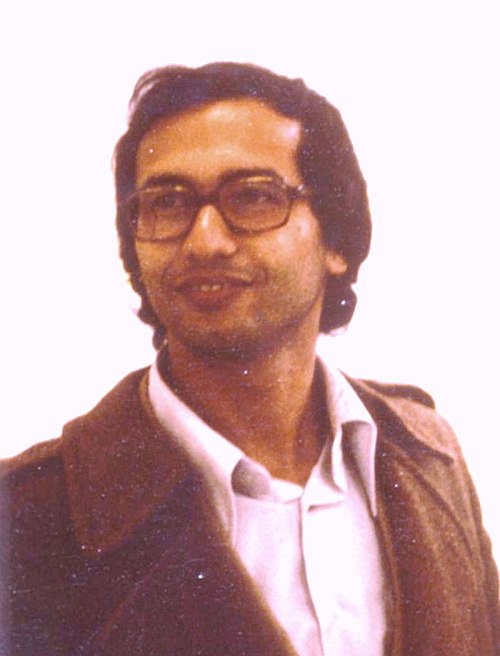
Biography
In the pantheon of Algerian Arts & Culture, few figures cast a shadow as profound and tragic as Tahar Djaout†. A brilliant Journalist & Novelist, Djaout's life and work were dedicated to the power of the word—as a tool for artistic expression, social critique, and intellectual freedom. Born in 1954, the year the Algerian War of Independence intensified, his destiny became intertwined with his nation's tumultuous journey. Achieving critical acclaim for his poetic novels and fearless journalism, his most defining, albeit harrowing, achievement was his martyrdom. Assassinated in 1993 for his secular, democratic ideals and unwavering criticism of rising extremism, Tahar Djaout† transformed from a celebrated writer into a potent symbol of the cost of free speech. His legacy is a cornerstone of modern Algerian Literature, representing the courageous voice that was silenced but whose echo continues to resonate.
Early Life & Education: Forging an Intellectual
Tahar Djaout† was born on January 11, 1954, in Oulkhou, a village in the Kabylie region of then-French Algeria. His birth year placed his childhood directly within the crucible of the Algerian War of Independence (1954-1962), a conflict that would deeply inform his later perspectives on identity, violence, and nationhood. Growing up in a Berber (Amazigh) family, he was immersed in the rich oral and cultural traditions of Kabylie, which would later seep into the lyrical fabric of his writing.
Demonstrating academic prowess from a young age, Djaout pursued his education with distinction. He attended the École Normale Supérieure in Algiers, a prestigious institution that nurtured Algeria's intellectual elite. Here, he studied mathematics and physics, showcasing the analytical mind that would later give his literary work a unique, precise structure. However, his true passion lay in letters. While a student, he began publishing poetry, quickly gaining recognition for his refined and potent verse. His early collections, including L’Arche à vau-l’eau (1973) and L’Oiseau minéral (1975), established him as a significant new voice in Algerian poetry, one that skillfully blended personal reflection with broader social consciousness.
Formative Influences and Early Career
The post-independence era in Algeria was a period of intense cultural and political fermentation. Djaout, like many of his generation, grappled with the complexities of building a new national identity. He worked initially as a journalist for the state-run newspaper El Moudjahid and later for Algérie-Actualité, a weekly magazine where he served as a cultural reporter and editor. This period honed his journalistic voice—one that was inquisitive, critical, and committed to intellectual rigor. It was also during these years that he transitioned from poetry to the novel, a medium that allowed him to explore the multifaceted challenges of contemporary Algerian society in greater depth.
Career & Major Achievements: The Pen as a Scalpel
The career of Tahar Djaout† is a dual narrative of literary creation and journalistic courage. His novels, though few in number, are considered masterpieces of modern Maghreb literature. He published his first novel, L’Exproprié, in 1981. However, it was his subsequent works that cemented his reputation:
- Les Chercheurs d'os (The Bone Seekers, 1984): A critical exploration of the War of Independence's legacy, questioning the official, heroic narrative and focusing on its traumatic aftermath.
- L’Invention du désert (The Invention of the Desert, 1987): A sprawling, poetic novel that intertwines the story of the Almoravid dynasty with the modern-day reflections of an Algerian writer, meditating on history, faith, and identity.
- Les Vigiles (The Watchers, 1991): A satirical and absurdist critique of the Algerian bureaucracy and police state, winner of the prestigious Prix Méditerranée.
His prose was celebrated for its poetic density, allegorical power, and unflinching examination of taboo subjects. Tahar Djaout† used his fiction to dissect the ailments of post-colonial society: the weight of history, the failures of leadership, and the stifling of individual thought.
The Final Battle: Journalism and Martyrdom
In the early 1990s, as Algeria descended into a brutal civil war following the military's cancellation of elections that an Islamist party was poised to win, Djaout's role evolved from cultural critic to a frontline defender of secular democracy. In 1992, he co-founded the weekly French-language newspaper Ruptures. This publication became a bold platform for pluralist and democratic ideas, directly challenging the rhetoric of the armed Islamist groups. Djaout's editorials were lucid, fierce, and uncompromising. He famously wrote, "Silence is death," and "If you speak, you die. If you are silent, you die. So, speak and die." This statement became his epitaph.
On May 26, 1993, at the age of 39, Tahar Djaout† was ambushed outside his home in Bainem, Algiers, and shot in the head by assassins linked to the Armed Islamic Group (GIA). He died after a coma on June 2, 1993. His murder was a calculated strike to silence one of the most eloquent secular voices in the country. It sent shockwaves through Algeria and the international literary community, marking a dark turning point in the nation's "Black Decade."
Personal Life, Legacy, and Lasting Impact
Beyond his public persona, Tahar Djaout† was described as a man of quiet intensity, deeply devoted to his family and his craft. His personal interests in mathematics and science informed the precise, almost geometric construction of his narratives. He was a private individual who found his public voice through necessity, driven by a profound belief in the responsibility of the intellectual.
His legacy is multifaceted and immense. As a Journalist & Novelist, he left behind a body of work that remains essential reading for understanding modern Algeria. His novels are studied worldwide as pinnacles of Francophone Algerian Literature. As a symbol, he represents the ultimate sacrifice for freedom of expression. The phrase "Silence is death" has become a universal rallying cry for journalists and writers under threat globally.
- Numerous cultural centers, libraries, and literary prizes in Algeria and France bear his name.
- His assassination is commemorated annually by press freedom organizations like Reporters Without Borders.
- His work continues to inspire new generations of Algerian artists and thinkers who grapple with many of the same issues he confronted.
Tahar Djaout† is not merely a historical figure; he is a continual presence in the ongoing struggle for a rational, open, and pluralistic society in Algeria and beyond.
Posthumous Recognition and Cultural Value
While a biography of Tahar Djaout† does not involve a discussion of personal net worth or business ventures in the traditional sense, his cultural and intellectual value is incalculable. His legacy is measured in influence, not currency. The commercial success of his translated works and the academic industry built around studying his novels contribute to his enduring presence in global Arts & Culture. More significantly, the "value" of his stand is immeasurable—it fortified the principles of a free press and demonstrated the lethal power of ideas in a time of chaos. Publishers continue to reissue his works, ensuring his voice reaches new audiences, and scholars analyze his texts, extracting insights relevant to contemporary conflicts between fundamentalism and secularism. In this sense, the estate of Tahar Djaout†—his words and his moral example—remains one of Algeria's most precious and non-negotiable assets, a permanent testament to the price and necessity of speaking truth to power.
† The dagger symbol (†) next to his name is often used to denote that the individual is deceased, a solemn marker for a life tragically cut short.
For further reading on his life and work, consult resources from Reporters Without Borders or academic publications on Francophone Algerian literature.
Frequently Asked Questions
What is Tahar Djaout†'s estimated net worth?
Net worth details for Tahar Djaout† are currently being updated.
What is Tahar Djaout†'s role and nationality?
Tahar Djaout† is a Journalist & Novelist from Algeria.
How did Tahar Djaout† make their money?
Tahar Djaout† built their fortune primarily through Tahar Djaout was an Algerian journalist and novelist who was assassinated in 1993, so he has no personal net worth as of 2024..
How old is Tahar Djaout†?
Tahar Djaout† was born in 1954 (72 years old).
Which category is Tahar Djaout† listed under?
Tahar Djaout† is featured under the Arts & Culture category on NetWorth Africa.
How is Tahar Djaout†'s net worth calculated?
NetWorth Africa estimates financial valuations using publicly available stock equity holdings, company ownership records, real estate assets, and verified market data.
Net Worth Analysis
Tahar Djaout was an Algerian journalist and novelist who was assassinated in 1993, so he has no personal net worth as of 2024.
Quick Stats
Related People
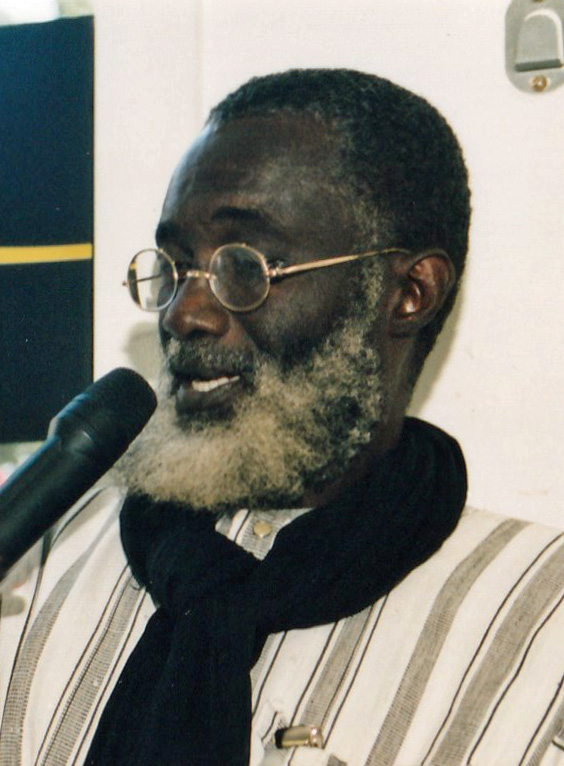
Abasse Ndione
Novelist & Playwright • Senegal
Abdel Rahman al-Abnudi†
Poet (Egypt-Sudan) • Sudan
Abdelkrim Ghallab†
Novelist & Journalist • Morocco
Abdellah Taïa
Novelist & Filmmaker • Morocco