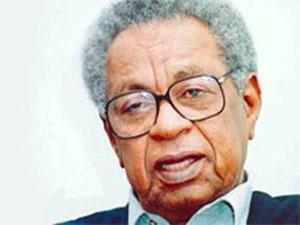
Biography
Introduction: A Colossus of Arabic Literature
Tayeb Salih† (1929-2009) is widely regarded as one of the most influential and celebrated novelists in the Arabic language. His enduring fame rests primarily on his groundbreaking 1966 novel, Season of Migration to the North, a work that has been translated into dozens of languages and hailed as one of the most important novels of the 20th century. A master storyteller from Sudan, Salih's writing delves deep into the complex psychological and cultural encounters between the Arab world and the West, colonialism's legacy, and the turbulent search for identity in a post-colonial era. His achievement lies not only in his profound thematic exploration but also in his exquisite, lyrical prose style, which revolutionized modern Arabic narrative forms and brought the stories of Sudan to a global audience in the realm of Arts & Culture.
Early Life & Education: Roots in the Sudanese Village
Al-Tayeb Salih was born in 1929 in the remote agricultural village of Karmakol, located in northern Sudan along the banks of the Nile. This rural setting, with its tight-knit community, traditional customs, and oral storytelling heritage, became the foundational landscape for much of his literary imagination. His early education was rooted in Islamic and Arabic studies, immersing him in classical texts and the rhythms of the Arabic language. For his secondary education, he moved to the capital, Khartoum, a transition that exposed him to a more modern, urban environment and the administrative center of the Anglo-Egyptian condominium ruling Sudan.
Salih's academic prowess earned him a degree in Science from the University of Khartoum in 1949. However, his intellectual curiosity steered him toward the humanities. He subsequently traveled to the United Kingdom, where he studied at the University of London in the early 1950s. This period was formative; living in the heart of the former colonial power as a young man from a colonized nation provided him with the firsthand, complex experience of cultural displacement and confrontation that would later fuel his magnum opus. Before fully committing to writing, he worked briefly as a teacher in Sudan, another experience that deepened his understanding of his society's nuances.
Career & Major Achievements: From Broadcasting to Literary Immortality
Tayeb Salih's professional career was diverse, spanning journalism, broadcasting, and international civil service. For over a decade, he worked for the BBC's Arabic Service in London, eventually becoming the head of its drama department. This role honed his skills in narrative and dialogue. He later held significant positions with UNESCO in Paris and the Gulf, including as the Director-General of the Ministry of Information in Qatar. These roles kept him engaged with the broader Arab world and global cultural dialogues.
The Masterpiece: "Season of Migration to the North"
It was in 1966, with the serialized publication of Mawsim al-Hijra ila al-Shamal in the Beirut magazine Hiwār, that Tayeb Salih's literary star ascended. Published as a book in 1967, Season of Migration to the North is a dense, poetic, and shocking novel. It tells the story of Mustafa Sa'eed, a Sudanese intellectual who travels to London, and the unnamed narrator who returns to his Nile village after studies in Europe, only to discover Sa'eed's dark legacy. The novel boldly inverts the colonial narrative, presenting a devastating critique of both Orientalist fantasy and the trauma of colonialism. In 2001, the Arab Literary Academy in Damascus voted it "the most important Arabic novel of the 20th century," cementing its canonical status.
Other Notable Works
While Season of Migration to the North is his most famous work, Tayeb Salih's other contributions are highly regarded. His early novel The Wedding of Zein (1964) showcases a different, more humorous and magical realist side of his writing, celebrating village life and spirituality. His literary output also includes:
- Bandar Shah: Daw al-Bayt (1971) - The first of his "Bandarshah" novels.
- Meryoud (1977) - The second "Bandarshah" novel, continuing his exploration of history and memory.
- Numerous acclaimed short stories and essays, collected in volumes like The Cypriot Man (1978).
His impact extended beyond literature into television, as he wrote and presented a influential series of interviews with prominent Arab intellectuals in the 1970s. Throughout his career, Salih received numerous awards and honors, reflecting his stature as a leading figure in world literature.
Personal Life, Legacy, and Lasting Impact
Tayeb Salih was known as a private, thoughtful, and deeply intellectual individual. He married journalist and poet Julia Maclean in 1974, and they had three children. Despite his international career, he remained profoundly connected to his Sudanese roots, often drawing literary inspiration from the landscapes and people of his childhood. In his later years, he divided his time between London and various Arab capitals.
The legacy of Tayeb Salih† is monumental. He passed away in London in 2009, but his work continues to be studied, debated, and revered globally. He is credited with modernizing Arabic prose, infusing it with the cadences of everyday speech and complex psychological depth. More than just a novelist from Sudan, he is a universal writer who articulated the existential dilemmas of the modern condition—identity, alienation, and the clash of cultures—with unparalleled artistry. His work remains essential reading for anyone seeking to understand the post-colonial world, and Season of Migration to the North is a permanent fixture on university syllabi worldwide, ensuring his voice continues to inspire and challenge new generations.
Literary Estate and Cultural Influence
While discussions of net worth in the traditional sense are rarely applied to literary figures like Tayeb Salih†, his value is immeasurable in cultural capital. His primary "business" was his writing, which generated income through book sales, translations, and academic adaptations. The commercial success of his novels, particularly in translation, secured his financial stability. More significantly, his work has spawned a vast industry of scholarly analysis, critical essays, and PhD theses. His novels have been adapted for theater and continue to be referenced in contemporary discussions on migration and East-West relations. The stewardship of his literary estate ensures the continued publication and accessibility of his works, solidifying his position as a priceless asset to Sudan's and the Arab world's cultural heritage. His true wealth lies in the enduring power of his stories to shape consciousness and bridge cultural divides in the world of Arts & Culture.
Sources & Further Reading: For authoritative information on Tayeb Salih†, consult academic databases, the Encyclopædia Britannica, and critical works such as The Arabic Novel: An Historical and Critical Introduction by Roger Allen. His novels are published by leading houses like Penguin Classics and NYRB Classics.
Frequently Asked Questions
What is Tayeb Salih†'s estimated net worth?
Tayeb Salih† has an estimated net worth of R 16.2 Million.
What is Tayeb Salih†'s role and nationality?
Tayeb Salih† is a Novelist Season of Migration to the North from Sudan.
How did Tayeb Salih† make their money?
Tayeb Salih† built their fortune primarily through Tayeb Salih was a celebrated novelist, not a business figure; literary earnings in Sudan are modest, and he passed away in 2009, so no active income exists..
How old is Tayeb Salih†?
Tayeb Salih† was born in 1929 (97 years old).
Which category is Tayeb Salih† listed under?
Tayeb Salih† is featured under the Arts & Culture category on NetWorth Africa.
How is Tayeb Salih†'s net worth calculated?
NetWorth Africa estimates financial valuations using publicly available stock equity holdings, company ownership records, real estate assets, and verified market data.
Net Worth Analysis
Tayeb Salih was a celebrated novelist, not a business figure; literary earnings in Sudan are modest, and he passed away in 2009, so no active income exists.
Quick Stats

Related People
Abasse Ndione
Novelist & Playwright • Senegal
Abdel Rahman al-Abnudi†
Poet (Egypt-Sudan) • Sudan
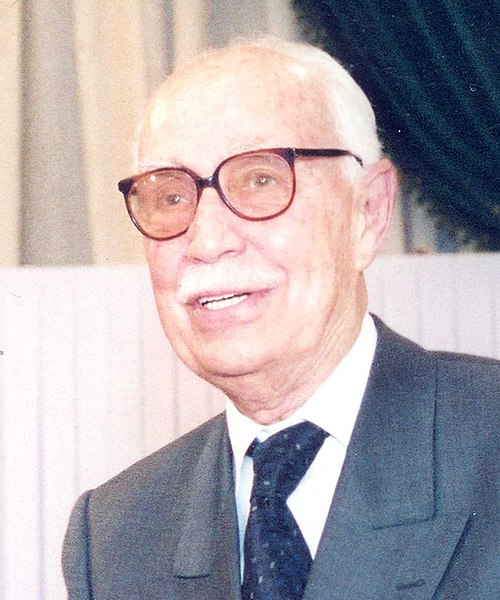
Abdelkrim Ghallab†
Novelist & Journalist • Morocco
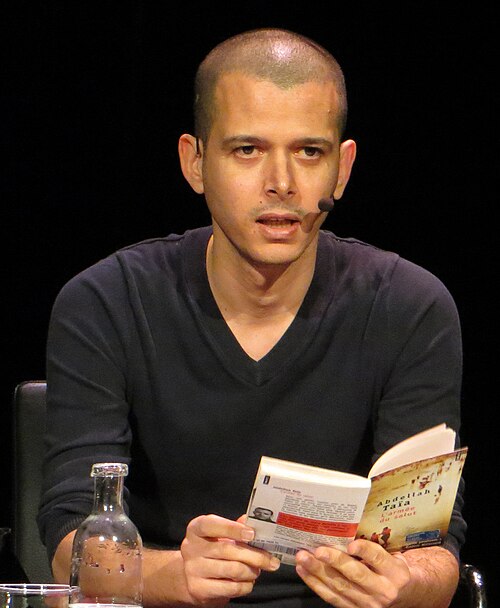
Abdellah Taïa
Novelist & Filmmaker • Morocco