Biography
Introduction: A Pillar of Eritrean Governance
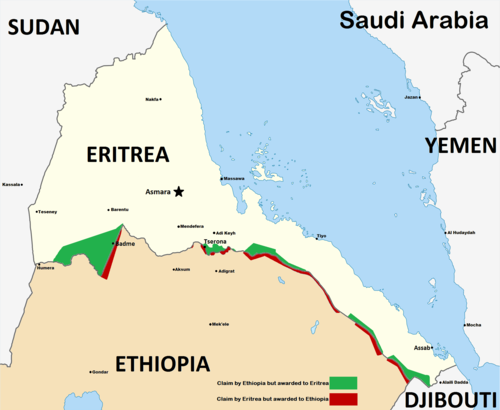
Tesfai Gebreselassie stands as a central figure in the Politics & Government landscape of the Horn of Africa, serving as the long-standing Minister of Land, Water & Environment for the State of Eritrea. Appointed to this crucial portfolio in the post-independence era, his tenure has been defined by the monumental task of managing and regulating the nation's most vital natural resources. Born in 1963, his life and career are deeply intertwined with Eritrea's journey from liberation struggle to sovereign nation-building. Tesfai Gebreselassie is notable for architecting and implementing foundational land reform policies, a complex and sensitive issue critical to national stability, agricultural development, and environmental sustainability. His key achievement lies in navigating the transition from traditional land tenure systems to a government-regulated framework, aiming to ensure equitable access and sustainable use for all Eritreans.
Early Life and Education: Forged in the Crucible of Struggle
Born in 1963, Tesfai Gebreselassie's formative years coincided with the escalating armed struggle for Eritrean independence from Ethiopian rule. Like many of his generation, his early life was shaped by the socio-political realities of the conflict. While specific details of his childhood and early education are not widely publicized in international sources, it is understood that his academic and ideological development was heavily influenced by the ethos of the Eritrean People's Liberation Front (EPLF).
He pursued higher education, demonstrating an early aptitude for technical and organizational fields relevant to nation-building. Reports indicate that Tesfai Gebreselassie studied engineering, a discipline that would later inform his systematic approach to resource management. His education was not merely academic; it was complemented by practical experience within the EPLF's administrative structures, where planning, logistics, and resource allocation were essential for survival and military success. This unique blend of formal technical training and hands-on revolutionary administration provided the foundational experience for his future role in government. It instilled in him a perspective that views land and water not just as economic assets, but as pillars of national sovereignty and social equity.
Career and Major Achievements: Architect of Eritrea's Land Policy
The career trajectory of Tesfai Gebreselassie is a testament to his expertise and the trust placed in him by the Eritrean government. Following Eritrea's hard-won independence in 1991, he quickly assumed significant responsibilities in the nascent administration. His initial appointments were in roles related to infrastructure and planning, where he contributed to early reconstruction efforts. His competence led to his appointment as Minister of Land, Water & Environment, a position he has held for decades, overseeing one of the government's most critical and challenging sectors.
Land Proclamation and Reform
His most defining work is undoubtedly the formulation and execution of the 1994 Land Proclamation (Proclamation No. 58/1994). This landmark legislation abolished traditional land tenure and vested all land ownership in the state. Under the guidance of Minister Tesfai Gebreselassie, the policy was designed to:
- Eliminate perceived inequalities in land distribution.
- Prevent speculative land grabbing.
- Provide usufruct rights (rights of use) to all citizens, particularly farmers.
- Enable government-led land allocation for national development projects.
Water Resource Management and Environmental Conservation
Beyond land, his ministry's mandate encompasses water and environment. Under his leadership, Eritrea has embarked on numerous water conservation projects, including the construction of dams, micro-dams, and extensive soil and water conservation programs known as watershed management. These initiatives aim to combat the country's chronic water scarcity and improve agricultural resilience. Environmental protection, though challenged by deforestation and desertification, has been integrated into national planning, with policies addressing forestry and sustainable land use championed by the ministry.
Challenges and Implementation
The work of Tesfai Gebreselassie has not been without international scrutiny or domestic challenge. The land reform, while aiming for equity, has been critiqued for centralizing control and, in some cases, displacing communities. Furthermore, his ministry operates under the constraints of a national service program that supplies labor for many conservation projects. Despite these complexities, his long tenure indicates he remains a key implementer of government policy, focused on achieving food security, water availability, and controlled urban expansion through state-managed resource allocation.
Personal Life, Legacy, and Lasting Impact
Tesfai Gebreselassie maintains a low public profile regarding his personal life, consistent with the general discretion of senior Eritrean officials. His public identity is largely defined by his professional role. He is known as a serious, technically-minded administrator dedicated to his portfolio. His legacy is intrinsically linked to the physical and legal landscape of modern Eritrea.
The lasting impact of Minister Tesfai Gebreselassie will be judged by the long-term sustainability and equity of Eritrea's land and water regimes. He has indelibly shaped how Eritreans interact with their most fundamental resources. The terraced hillsides, water catchment systems, and the very legal basis for land ownership and use bear the imprint of his ministry's policies. Whether these policies will successfully ensure environmental resilience and fair access for future generations remains a central question. Nevertheless, his role as the principal steward of Eritrea's natural capital during its first three decades of independence secures his place as a pivotal, if debated, figure in the nation's post-liberation history.
Net Worth and Business Ventures
In line with the opaque nature of personal finances within Eritrea's Politics & Government sector, there is no verifiable or publicly available information regarding the personal net worth, assets, or private business ventures of Tesfai Gebreselassie. Eritrean ministers are salaried public officials, and there are no credible reports or disclosures suggesting significant personal wealth or ownership of major business enterprises tied to him. His professional focus has remained squarely within the public sector, managing state resources rather than engaging in private commercial activity. Any discussion of personal wealth would be purely speculative and not grounded in available facts. His documented career is defined by public service and administrative responsibility over the national resources of Eritrea.
Frequently Asked Questions
What is Tesfai Gebreselassie's estimated net worth?
Tesfai Gebreselassie has an estimated net worth of $500,000.
What is Tesfai Gebreselassie's role and nationality?
Tesfai Gebreselassie is a Minister of Land, Water & Environment from Eritrea.
How did Tesfai Gebreselassie make their money?
Tesfai Gebreselassie built their fortune primarily through As a government minister in Eritrea, a country with a state-controlled economy and low GDP per capita, his wealth is likely derived from salary and not significant private business holdings..
How old is Tesfai Gebreselassie?
Tesfai Gebreselassie was born in 1963 (63 years old).
Which category is Tesfai Gebreselassie listed under?
Tesfai Gebreselassie is featured under the Politics & Government category on NetWorth Africa.
How is Tesfai Gebreselassie's net worth calculated?
NetWorth Africa estimates financial valuations using publicly available stock equity holdings, company ownership records, real estate assets, and verified market data.
Net Worth Analysis
As a government minister in Eritrea, a country with a state-controlled economy and low GDP per capita, his wealth is likely derived from salary and not significant private business holdings.
Quick Stats
Related People
Aaron Motsoaledi
LP; Minister of Home Affairs • South Africa
Abane Ramdane†
FLN Leader & Strategist • Algeria
Abdalla Hamdok
Ex-Prime Minister • Sudan
Abdallah Kigoda
Ex-Minister of Natural Resources • Tanzania