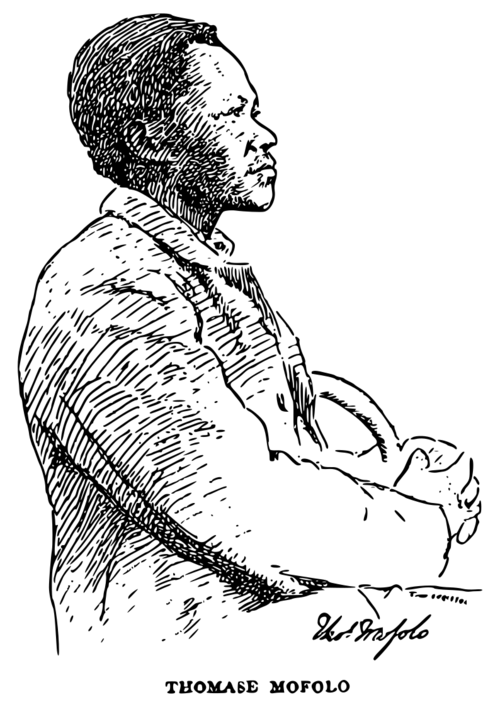
Biography
Introduction: A Literary Pioneer of Southern Africa
Thomas Mokopu Mofolo† (1876–1948) stands as a monumental figure in the Arts & Culture of Africa, widely recognized as the first great novelist from Southern Africa writing in an indigenous language. His enduring legacy is cemented by his third and most famous work, Chaka, a historical novel written in Sesotho that reimagines the life of the legendary Zulu king, Shaka. Published in 1925, Chaka is not merely a biography but a profound, tragic exploration of power, ambition, and spiritual corruption. It transformed oral tradition into high literary art and established Thomas Mofolo† as a foundational voice in African literature. His work provided a powerful counter-narrative to colonial perspectives, crafting a uniquely African literary aesthetic that would inspire generations of writers across the continent.
Early Life & Education: Foundations in Faith and Language
Thomas Mofolo† was born on December 22, 1876, in Khojane, a small village in what was then Basutoland (now Lesotho). His early life was deeply influenced by the pervasive presence of the Paris Evangelical Missionary Society (PEMS), which played a crucial role in education and printing in the region. He received his primary education at local mission schools, demonstrating a keen intellect. For his secondary education, he attended the Morija Training School and Seminary, a pivotal institution run by the PEMS at their mission station in Morija.
This formative period at Morija was critical. The mission was a hub for Sesotho language publishing through its Morija Printing Works. Here, Mofolo was immersed in a world that valued the written word in his native tongue. He trained as a teacher and a carpenter, but his exposure to the printing press, biblical texts, and early Sesotho translations shaped his literary sensibilities. His education was a blend of Western Christian doctrine and a deep, practical engagement with the Sesotho language, providing him with the tools to later craft his sophisticated narratives. Before becoming a full-time writer, he worked as a secretary, a translator, and a labor recruiter, experiences that broadened his understanding of the social forces shaping Southern Africa.
Career & Major Achievements: The Sesotho Literary Trilogy
The career of Thomas Mofolo† as a novelist, though concentrated in a short period, produced three seminal works that charted new territory for African literature. All were published by the Morija Printing Works, reflecting his lifelong connection to that institution.
Moeti oa Bochabela (The Traveller of the East) - 1907
His first novel, published in 1907, is considered the first novel ever written in Sesotho. It is a Christian allegory that follows a young African man, Fekisi, on a spiritual quest for truth, culminating in his conversion to Christianity. While firmly in the mission tradition, it demonstrated Mofolo's mastery of narrative structure and his ability to adapt the novel form to Sesotho storytelling sensibilities.
Pitseng - 1910
His second novel, Pitseng (meaning "In the Pot" or "At the Pool"), is a romantic drama that explores themes of love, moral education, and Christian living within a modernizing Basotho society. It is noted for its detailed depiction of Basotho customs and its focus on character development, moving beyond pure allegory to more nuanced social observation.
Chaka - 1925: The Masterpiece
The crowning achievement of Thomas Mofolo† is undoubtedly Chaka. Completed around 1910, its publication was delayed for 15 years due to missionary concerns over its depiction of African spirituality and its tragic, non-Christian ending. The novel is a creative reinterpretation of the rise and fall of Shaka Zulu. Mofolo blends historical detail with myth and supernatural elements, presenting Chaka as a tragic hero whose initial noble qualities are systematically destroyed by the manipulative sorcerer Isanusi. The narrative delves into themes of absolute power, isolation, and the Faustian bargain.
The impact of Chaka cannot be overstated. It has been translated into numerous languages, including English, French, German, and Italian, making it a cornerstone of world literature. It established a template for the historical novel in Africa and inspired a vast array of literary and artistic responses, from plays to operas. Scholars praise it for its psychological depth and its complex meditation on leadership and destiny, securing Mofolo's place as the Novelist "Chaka" in the global literary imagination.
Personal Life, Legacy, and Lasting Impact
Personally, Thomas Mofolo† was a devout Christian who struggled with the tension between his faith and his artistic vision, particularly evident in the delayed publication of Chaka. In his later years, he faced significant personal and professional challenges. He ventured into business, opening a bookstore in Bloemfontein and later attempting to run a transport business, but these met with limited success. He also became politically disillusioned and largely withdrew from public literary life after the 1930s. Thomas Mofolo† passed away on September 8, 1948, in Teyateyaneng, Lesotho.
His legacy, however, has only grown with time. Thomas Mofolo† is celebrated as the progenitor of written fiction in Sesotho and a pioneer of modern African literature. His work demonstrated that African languages were fully capable of sustaining complex literary forms. The Thomas Mofolo Central Library in Maseru, Lesotho, is named in his honor. His influence is seen in the works of later African literary giants like Chinua Achebe and Ngũgĩ wa Thiong'o, who also engaged with history and language to define their cultural identities. Annually, the Thomas Mofolo Prize is awarded for outstanding creative writing in Southern Africa, ensuring his name continues to inspire new generations.
Literary Estate and Cultural Value
While discussions of net worth in a modern financial sense are not directly applicable to Thomas Mofolo†, his literary and cultural value is immeasurable. He did not amass significant personal wealth from his writings; his novels were published by a mission press, and the commercial literary market for Sesotho works in early 20th-century Southern Africa was limited. His business ventures, including his bookstore, were more about community service and intellectual engagement than profit-driven enterprises.
The true "wealth" of Thomas Mofolo† lies in the enduring intellectual property of his novels, particularly Chaka, which remains in print globally and is a staple in university curricula. His work generates significant academic study, translation royalties, and cultural capital for Lesotho and Africa as a whole. He laid the foundation for a literary tradition that has produced economic opportunities for countless publishers, translators, scholars, and writers who followed in his path. In this sense, the legacy of Thomas Mofolo† constitutes one of the most valuable assets in the canon of African Arts & Culture.
Key Facts and Sources
- Full Name: Thomas Mokopu Mofolo†
- Birth/Death: December 22, 1876 – September 8, 1948
- Nationality: Basotho (Lesotho)
- Key Work: Chaka (published 1925)
- Language: Sesotho
- Major Themes: Power, tragedy, spirituality, cultural conflict
- Honors: Namesake of the Thomas Mofolo Central Library and the Thomas Mofolo Prize.
For further reading, consult academic sources such as the Encyclopædia Britannica, scholarly articles on African literature, and translations of his work published by reputable academic presses like Oxford University Press.
Frequently Asked Questions
What is Thomas Mofolo†'s estimated net worth?
Net worth details for Thomas Mofolo† are currently being updated.
What is Thomas Mofolo†'s role and nationality?
Thomas Mofolo† is a Novelist "Chaka" from Lesotho.
How did Thomas Mofolo† make their money?
Thomas Mofolo† built their fortune primarily through Thomas Mofolo (1876–1948) was a pioneering novelist, not a business figure; he died long before 2024 and is not on any wealth list..
How old is Thomas Mofolo†?
Thomas Mofolo† was born in 1876 (150 years old).
Which category is Thomas Mofolo† listed under?
Thomas Mofolo† is featured under the Arts & Culture category on NetWorth Africa.
How is Thomas Mofolo†'s net worth calculated?
NetWorth Africa estimates financial valuations using publicly available stock equity holdings, company ownership records, real estate assets, and verified market data.
Net Worth Analysis
Thomas Mofolo (1876–1948) was a pioneering novelist, not a business figure; he died long before 2024 and is not on any wealth list.
Quick Stats


Related People
Abasse Ndione
Novelist & Playwright • Senegal

Abdel Rahman al-Abnudi†
Poet (Egypt-Sudan) • Sudan
Abdelkrim Ghallab†
Novelist & Journalist • Morocco
Abdellah Taïa
Novelist & Filmmaker • Morocco