Biography
Introduction: The Upright Man
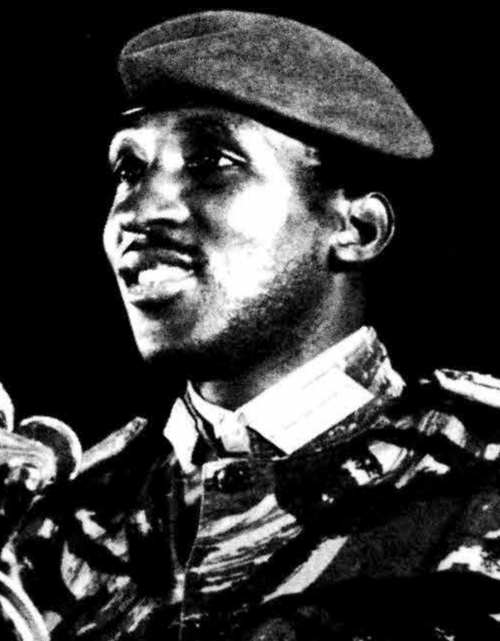
Thomas Sankara† stands as one of the most iconic and influential figures in modern African history. Serving as the President of Burkina Faso from 1983 until his assassination in 1987, Sankara was a charismatic Marxist revolutionary, pan-Africanist, and visionary leader who sought to radically transform his impoverished, landlocked West African nation. His tenure, though brief, was marked by an unprecedented wave of ambitious social, economic, and ecological reforms aimed at achieving self-reliance and eradicating the legacy of colonialism. Often called "Africa's Che Guevara," Thomas Sankara† renamed his country from the colonial Upper Volta to Burkina Faso, meaning "Land of the Upright People." His key achievements include massive vaccination drives, women's empowerment, afforestation campaigns, and a fierce stance against corruption and foreign debt, making him a enduring symbol of integrity and revolutionary change in the Politics & Government sphere.
Early Life & Education: Forging a Revolutionary
Thomas Isidore Noël Sankara was born on December 21, 1949, in Yako, then part of French colonial Upper Volta. His father was a gendarme, and his mother was of direct Mossi royal descent, exposing him to both the colonial administration and traditional African structures from a young age. The family's frequent relocations due to his father's job allowed the young Sankara to witness the vast inequalities and poverty across his country.
He pursued a military career, a common path for bright young men with limited means, enrolling at the Prytanée Militaire de Kadiogo in 1966. His exceptional performance earned him a place at the military academy of Antsirabe in Madagascar in 1970, a pivotal period. It was in Madagascar that he witnessed a popular uprising overthrow a government, profoundly shaping his political consciousness. He immersed himself in the works of Marx, Lenin, and African liberation theorists. Further military training in France and Morocco, including parachute commando certification, honed his skills but also deepened his critique of neo-colonialism. By the late 1970s, Captain Thomas Sankara† had returned to Upper Volta, known for his charisma, integrity, and sharp political critiques, quickly becoming a popular figure among the junior officer corps and the populace.
Career & Major Achievements: The Four Years of Revolution
Thomas Sankara's† rise in Politics & Government was meteoric. After a coup in 1982, he was appointed Prime Minister but was soon arrested for his radical views. Freed by a coup led by his friend Blaise Compaoré in 1983, Sankara, at just 33 years old, assumed power on August 4, 1983, marking the beginning of the Burkinabé Revolution.
Domestic Revolution and "The Upright People"
Sankara’s government embarked on one of the most comprehensive reform programs ever attempted in post-colonial Africa. His achievements were wide-ranging:
- Women's Liberation: He appointed women to high governmental positions, banned female genital mutilation and forced marriages, promoted contraception, and encouraged girls' education. He was the first African leader to explicitly link women's rights to national liberation.
- Health & Education: A nationwide vaccination campaign immunized over 2.5 million children against meningitis, yellow fever, and measles in just weeks. He also oversaw a massive literacy drive, increasing the literacy rate from 13% to 73% in some reports, and built hundreds of schools and health centers.
- Economic Self-Reliance: He advocated for food sovereignty, urging farmers to grow cotton and food crops instead of cash crops for export. He launched ambitious infrastructure projects, including a nationwide railway, built with local labor.
- Environmental Campaigns: To combat desertification, his "One Village, One Grove" program led to the planting of over 10 million trees. He also established bans on uncontrolled grazing and wood-cutting.
- Anti-Corruption & Austerity: As Revolutionary President, he slashed government privileges, sold off the fleet of Mercedes cars, and made the Renault 5 the official vehicle for ministers. He required all public officials, including himself, to publicly declare their assets.
Foreign Policy and Pan-Africanism
On the international stage, Thomas Sankara† was a fiery orator who championed pan-African unity and opposed neo-colonialism. He famously criticized the International Monetary Fund and World Bank, urging African nations to form a united front to refuse foreign debt, which he called "neo-colonial slavery." He changed the country's name, flag, and anthem to reflect a new, autonomous identity. His government provided asylum for revolutionaries from across Africa and supported liberation movements.
Personal Life, Demise & Legacy
Thomas Sankara† was known for his austere and disciplined personal life. He lived in a small brick house, played guitar in a band, jogged regularly, and was a vegetarian. He was a fitness enthusiast and encouraged sports among the youth. His marriage to Mariam Sermé was a simple ceremony, and they had two sons. This personal integrity, contrasting sharply with the opulence of many contemporary leaders, earned him immense moral authority.
His revolutionary program created powerful enemies both domestically and internationally. On October 15, 1987, Thomas Sankara† was assassinated in a coup d'état led by his former comrade Blaise Compaoré, who then reversed most of Sankara's policies. Sankara's body was buried in an unmarked grave, and his death was shrouded in silence for years.
Despite his short rule, the legacy of Thomas Sankara† has only grown with time. He is revered across Africa and the global south as a symbol of anti-imperialism, feminist leadership, and incorruptible governance. His speeches and policies continue to inspire new generations of activists. In 2022, over three decades after his death, a trial in Burkina Faso found Compaoré (in absentia) and others guilty of complicity in Sankara's murder, offering a measure of belated justice. Sankara remains the definitive Revolutionary President, whose vision for Burkina Faso continues to challenge the continent and the world.
Net Worth & Philosophy on Wealth
In the context of net worth and business, Thomas Sankara† presents a unique case. He explicitly rejected personal wealth accumulation as antithetical to his revolutionary principles. He earned a modest military salary as president, estimated to be around R 7,286per month, and owned virtually no personal assets of significant value. His most famous possessions were his guitar, a few bicycles, and a refrigerator. He sold the state fleet of luxury cars and famously declared, "You cannot carry out fundamental change without a certain amount of madness." His "business ventures" were state-led initiatives aimed at national self-sufficiency, not personal profit. His financial legacy is not one of monetary wealth but of a profound philosophical stance against corruption and for public service, making his moral and political capital his true, enduring worth. To this day, he is cited as a paragon of a leader who lived as humbly as the people he served.
For further reading on the life and ideas of Thomas Sankara†, consider visiting the Encyclopedia Britannica entry or exploring collections of his speeches, such as "Thomas Sankara Speaks."
Frequently Asked Questions
What is Thomas Sankara†'s estimated net worth?
Net worth details for Thomas Sankara† are currently being updated.
What is Thomas Sankara†'s role and nationality?
Thomas Sankara† is a Revolutionary President from Burkina Faso.
How did Thomas Sankara† make their money?
Thomas Sankara† built their fortune primarily through Thomas Sankara was known for his modest lifestyle and anti-corruption stance, famously rejecting personal wealth accumulation as President of Burkina Faso until his assassination in 1987..
How old is Thomas Sankara†?
Thomas Sankara† was born in 1949 (77 years old).
Which category is Thomas Sankara† listed under?
Thomas Sankara† is featured under the Politics & Government category on NetWorth Africa.
How is Thomas Sankara†'s net worth calculated?
NetWorth Africa estimates financial valuations using publicly available stock equity holdings, company ownership records, real estate assets, and verified market data.
Net Worth Analysis
Thomas Sankara was known for his modest lifestyle and anti-corruption stance, famously rejecting personal wealth accumulation as President of Burkina Faso until his assassination in 1987.
Quick Stats
Related People
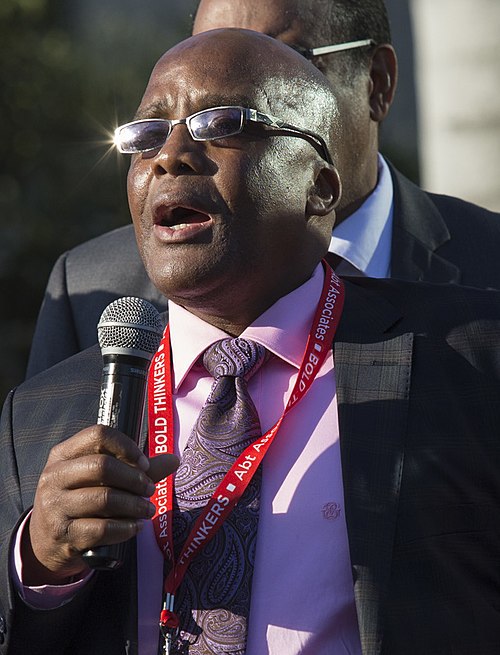
Aaron Motsoaledi
LP; Minister of Home Affairs • South Africa
Abane Ramdane†
FLN Leader & Strategist • Algeria
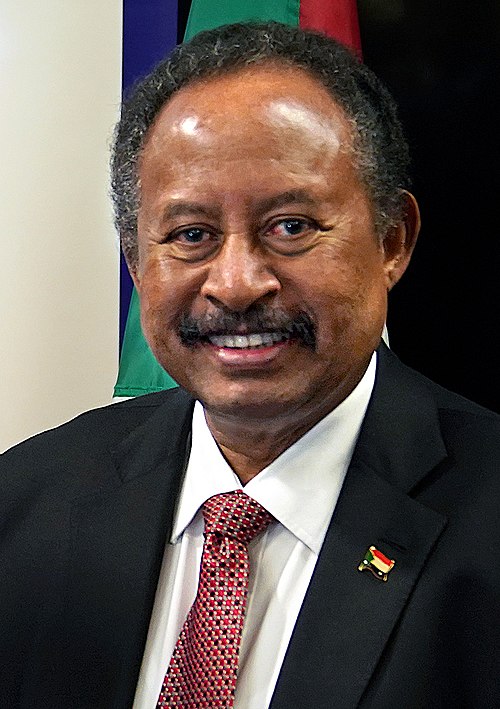
Abdalla Hamdok
Ex-Prime Minister • Sudan
Abdallah Kigoda
Ex-Minister of Natural Resources • Tanzania