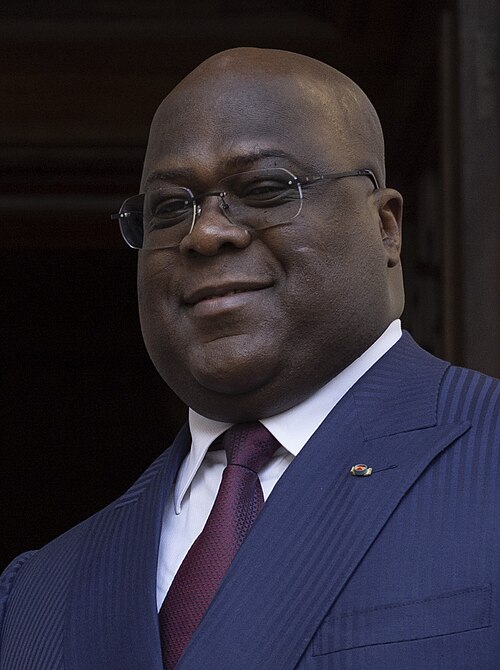
Biography
Introduction: The Symbol of Resistance
Étienne Tshisekedi wa Mulumba stands as one of the most significant and enduring figures in the modern political history of the Democratic Republic of the Congo. For over four decades, he was the face of the opposition, a symbol of unwavering resistance against authoritarian rule, and a tireless advocate for democracy. His remarkable journey from a high-ranking minister under Mobutu Sese Seko to his transformation into Mobutu's most formidable critic defines a legacy of principle over power. Étienne Tshisekedi† co-founded the first major opposition party, the Union for Democracy and Social Progress (UDPS), in 1982, an act of immense courage that would shape the nation's political landscape for generations. His ultimate, posthumous achievement was seeing his son, Félix Tshisekedi, elected President in 2019, a poignant culmination of a lifelong struggle for democratic change.
Early Life & Education: Formative Years in Colonial Congo
Étienne Tshisekedi was born on December 14, 1932, in the town of Luluabourg (now Kananga) in the Kasai region. He belonged to the Luba ethnic group, a detail that would later play a complex role in his political life. Coming of age in the final decades of the Belgian Congo, Tshisekedi pursued an education that positioned him among the nascent Congolese elite. He excelled academically, earning a degree in Law from Lovanium University (now the University of Kinshasa) in 1961, shortly after the country's independence.
His formative years were marked by the turbulent birth of the nation, witnessing the assassination of Patrice Lumumba and the subsequent consolidation of power by Mobutu Sese Seko. As a young, educated Congolese, Tshisekedi was initially drawn into the state apparatus of the new regime. His legal background and intellectual prowess saw him quickly rise within the political structure of Mobutu's government, serving in various ministerial positions throughout the 1960s and 1970s. This insider experience would prove crucial, as it gave him an intimate understanding of the regime's corruption and repression, fueling his later dissent.
Career & Major Achievements: From Regime Insider to Democratic Icon
The career of Étienne Tshisekedi† is a stark narrative of political metamorphosis. For the first two decades of Mobutu's rule, he served as a minister, including stints as Minister of Interior and Minister of Justice. However, disillusionment grew as Mobutu's Mouvement Populaire de la Révolution (MPR) became the sole legal party and state corruption became endemic.
The Founding of the UDPS and Relentless Opposition
In 1982, Tshisekedi, along with twelve other parliamentarians, bravely authored a public letter condemning Mobutu's dictatorship and calling for a return to multiparty democracy. This act, known as the "Letter of the Thirteen," was a watershed moment. It led directly to the creation of the Union for Democracy and Social Progress (UDPS), the first organized, legal opposition party since Mobutu's power grab. The regime's response was brutal. Tshisekedi faced constant persecution: repeated arrests, prolonged periods of house arrest, internal exile, and severe beatings by state security forces. Despite this, he refused to flee into exile, declaring, "My place is here with my people." His steadfastness earned him the reverential nickname "The Sphinx of Limete," after his Kinshasa neighborhood.
The Struggle Through Transition and Conflict
After Mobutu's ouster in 1997, Tshisekedi's struggle continued against successive regimes. He served as Prime Minister for brief, contentious periods under Mobutu (1991, 1992-93, 1997) and later declared himself President in 2011, rejecting the controversial election results that favored Joseph Kabila. This act underscored his role as a moral compass, even when it isolated him politically. Throughout the Congo Wars and the Kabila presidencies, he remained the central figure of the opposition, a rallying point for millions of Congolese yearning for credible democratic leadership. His party, the UDPS, maintained a vast, loyal grassroots network across the country, built on a platform of rule of law, social justice, and genuine electoral democracy.
Key Political Milestones
- 1982: Co-authors the "Letter of the Thirteen" and founds the UDPS.
- 1991-1992: Serves as Prime Minister of the transitional government following the National Sovereign Conference, a high point of his formal political power.
- 2006 & 2011: Runs as the main opposition presidential candidate, disputing the outcomes.
- 2016: Returns from medical treatment abroad to a massive public reception, demonstrating his undiminished popular support.
Personal Life & Legacy: The Man Behind the Politics
Beyond the political battles, Étienne Tshisekedi† was a family man. He was married to Marthe Tshisekedi, a steadfast partner throughout his ordeals. Their son, Félix Tshisekedi
His legacy is multifaceted. Primarily, he is remembered as the father of the Congolese opposition, the man who dared to say "no" to a dictator and provided a sustained alternative for over 30 years. He normalized political dissent in a country where it was tantamount to treason. His death on February 1, 2017, in Brussels sent the nation into mourning, highlighting his status as a unifying national figure. His most profound legacy materialized two years later when his son, Félix, was elected President of the Democratic Republic of the Congo. For many Congolese, this victory was seen as the posthumous triumph of Étienne Tshisekedi's lifelong sacrifice, a democratic transition he fought for but did not live to see completed. Unlike many political figures in the region, Étienne Tshisekedi† was not associated with vast personal wealth or business empires. His financial standing was a reflection of his political choices. Having renounced his position within Mobutu's corrupt system, he chose a path of principle that led to persecution rather than enrichment. His primary asset was his immense political capital and the loyalty of his supporters. He lived a modest life, especially compared to the opulent kleptocracy he opposed. Any personal wealth was derived from his earlier career as a lawyer and government minister before his break with Mobutu. His true "worth" was measured in the millions of Congolese who saw him as an incorruptible symbol of hope and resistance, a legacy far more enduring than material riches. His estate and the management of the UDPS party's affairs were inherited by his political heirs, most notably his son, President Félix Tshisekedi. For further reading on the political context of his life, credible sources like the Encyclopedia Britannica and reports from Human Rights Watch provide valuable historical background on the Democratic Republic of the Congo.Net Worth & Business: A Life of Principle Over Wealth
Net Worth Analysis
Étienne Tshisekedi was a prominent opposition politician, not a business figure, and lived a modest lifestyle consistent with his political career. He died in 2017, and there are no credible reports of significant personal wealth.
Quick Stats
Related People
Aaron Motsoaledi
LP; Minister of Home Affairs
Abane Ramdane†
FLN Leader & Strategist
Abdalla Hamdok
Ex-Prime Minister
Abdallah Kigoda
Ex-Minister of Natural Resources