Financial Breakdown
Asset Distribution
Assets vs Liabilities
Assets
Disclaimer: These financial estimates are based on publicly available information and should be considered approximate. Last updated: 12/31/2025
Biography
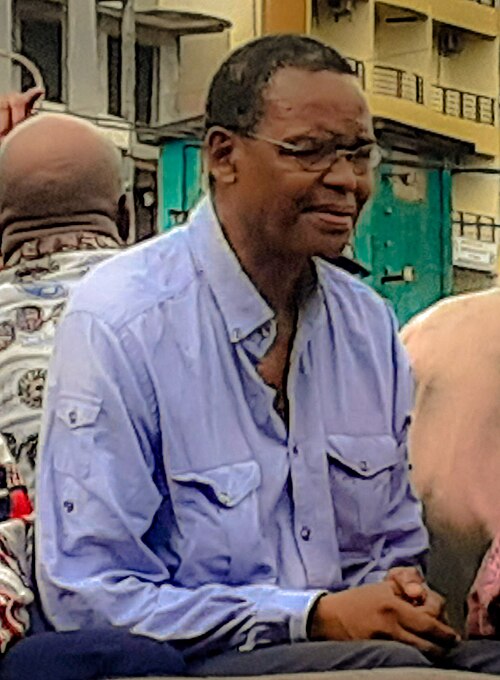
In the vibrant landscape of contemporary African literature, few voices resonate with the historical depth and narrative versatility of Tierno Monénembo. Born in Guinea in 1947, Monénembo has carved a monumental space for himself as a storyteller who deftly navigates the complex intersections of history, exile, and identity. A master of the French language, his work is a cornerstone of Arts & Culture from the Francophone world, offering poignant critiques of political tyranny while celebrating the resilience of the human spirit. His international acclaim was definitively cemented in 2008 when he was awarded the prestigious Prix Renaudot for his novel "Le Roi de Kahel," becoming one of the most distinguished literary figures from West Africa. Tierno Monénembo's biography is not just a chronicle of personal achievement but a map of the post-colonial African intellectual journey.
Early Life and Education: The Roots of Exile
Tierno Monénembo, born Thierno Saïdou Diallo in 1947 in the Fouta Djallon region of Guinea, experienced the tremors of political upheaval from a young age. His early years were shaped by the rise of Guinea's first president, Ahmed Sékou Touré, whose authoritarian regime quickly cast a shadow over the country. Coming from an aristocratic Peul (Fulani) family that fell into disfavor, the young Monénembo witnessed firsthand the dangers of political dissent. This atmosphere of fear and repression proved formative, setting him on a path of perpetual movement.
His education began in Guinea but was soon interrupted by the need for safety. At just fifteen years old, he began an exile that would define much of his life and work. He fled first to neighboring Côte d'Ivoire in 1963, then to Senegal, where he completed his secondary studies. His academic prowess led him to France in 1969, where he pursued higher education in the sciences. Monénembo earned a doctorate in biochemistry from the University of Lyon, a testament to his sharp intellect. However, the pull of storytelling, of making sense of the dislocation and history he carried with him, proved stronger. By the late 1970s, he had turned decisively away from a career in science to dedicate himself fully to writing, transforming his personal narrative of exile into a universal literary exploration.
Career and Major Achievements: Charting History Through Fiction
A Prolific and Acclaimed Literary Output
Tierno Monénembo's literary career spans over four decades and more than a dozen novels, each a meticulous excavation of memory and event. His early works, such as "Les Crapauds-brousse" (1979) and "Les Écailles du ciel" (1986), established his signature style: a rich, often humorous prose that masks a deep-seated critique of African dictatorships and the scars of colonialism. He writes with the precision of a scientist and the soul of a poet, creating characters that are both specific and symbolic.
His novels often serve as historical canvases:
- "Un Attiéké pour Elgass" (1993) explores the immigrant experience in France.
- "Pelourinho" (1995) delves into the African diaspora in Brazil.
- "Cinéma" (1997) won the Grand Prix littéraire d'Afrique noire, confirming his status as a leading African author.
The Pinnacle: Winning the Prix Renaudot
The crowning achievement of Monénembo's career came in 2008. His novel "Le Roi de Kahel" (The King of Kahel) was awarded the Prix Renaudot, one of France's most revered literary prizes. The book is a fictionalized biography of Aimé Olivier de Sanderval, a 19th-century French explorer who dreamed of establishing his own kingdom in the Fouta Djallon, the very region of Monénembo's birth. Through this work, Monénembo masterfully subverts the colonial narrative, presenting a complex, almost tragic portrait of the colonizer while reclaiming the history of his homeland. Winning the Prix Renaudot placed Tierno Monénembo in the pantheon of Francophone literary greats and brought his work to a vastly expanded global audience.
Confronting National Trauma and Gaining Further Recognition
Never one to shy away from difficult subjects, Monénembo turned his gaze to one of Guinea's darkest chapters in his 2012 novel, "Le Terroriste Noir." The book tells the little-known story of Addi Bâ, a Guinean resistance fighter in World War II who was executed by the Nazis. This was followed by "Le Lacrime" (2016), a powerful indictment of the Ebola virus epidemic and the political failures that exacerbated the crisis in West Africa. His consistent excellence has been recognized with numerous accolades, including the prestigious Prix Tropiques in 1993 and the Prix Erckmann-Chatrian in 2015. Each novel by Tierno Monénembo adds a crucial layer to the understanding of modern African history and the diasporic condition.
Personal Life, Legacy, and Lasting Impact
Despite his international fame, Tierno Monénembo has remained a somewhat elusive figure, deeply private about his personal life. He is known to divide his time between France and West Africa, maintaining a connection to his roots while operating within the global literary sphere. His life is his work; the themes of wandering, memory, and the search for belonging that permeate his novels are reflections of his own existential journey. He is less a public intellectual and more a dedicated craftsman, allowing his fiction to communicate his deepest observations about the world.
The legacy of Tierno Monénembo is multifaceted. He is a bridge between generations, connecting the foundational works of earlier African literary giants like Chinua Achebe and Ahmadou Kourouma with the concerns of contemporary global audiences. As a writer from Guinea, he has brought nuanced international attention to the country's history and struggles. Furthermore, his success has paved the way for and inspired a new wave of Francophone African writers. His lasting impact lies in his unwavering commitment to truth-telling, his lyrical transformation of history into compelling narrative, and his role as a essential chronicler of the African experience in the 20th and 21st centuries. He ensures that forgotten stories are remembered and that silenced voices are heard.
Literary Distinction and Influence
While not a traditional business magnate, Tierno Monénembo's success is measured in cultural capital and literary influence, which have solidified his standing as a leading figure in world literature. The financial rewards accompanying major prizes like the Prix Renaudot have undoubtedly provided stability, allowing him to write freely. However, his true "net worth" is found in the critical acclaim, translations of his work into multiple languages, and his sustained presence in academic curricula worldwide. His primary venture is his authorship—a prolific output of novels that continue to sell, be studied, and spark discussion. Monénembo's career demonstrates that profound impact in the realm of Arts & Culture often transcends mere financial metrics, residing instead in the power to shape historical understanding and inspire future generations of storytellers across Africa and its diaspora.
Sources & Further Reading: Biographical information is drawn from authoritative literary databases, publisher profiles (Éditions du Seuil), and analyses of his work in academic journals. Key references include the official announcements from the Prix Renaudot committee and critical studies on Francophone African literature.
Frequently Asked Questions
What is Tierno Monénembo's estimated net worth?
Tierno Monénembo has an estimated net worth of $1.0 Million.
What is Tierno Monénembo's role and nationality?
Tierno Monénembo is a Prix Renaudot Winner from Guinea.
How did Tierno Monénembo make their money?
Tierno Monénembo built their fortune primarily through Tierno Monénembo is a celebrated author and intellectual, not a business figure; his wealth stems from literary prizes, book sales, and academic work, typical for a globally recognized writer..
How old is Tierno Monénembo?
Tierno Monénembo was born in 1947 (79 years old).
Which category is Tierno Monénembo listed under?
Tierno Monénembo is featured under the Arts & Culture category on NetWorth Africa.
How is Tierno Monénembo's net worth calculated?
NetWorth Africa estimates financial valuations using publicly available stock equity holdings, company ownership records, real estate assets, and verified market data.
Net Worth Analysis
Tierno Monénembo is a celebrated author and intellectual, not a business figure; his wealth stems from literary prizes, book sales, and academic work, typical for a globally recognized writer.
Quick Stats

Related People
Abasse Ndione
Novelist & Playwright • Senegal
Abdel Rahman al-Abnudi†
Poet (Egypt-Sudan) • Sudan
Abdelkrim Ghallab†
Novelist & Journalist • Morocco
Abdellah Taïa
Novelist & Filmmaker • Morocco