Financial Breakdown
Asset Distribution
Assets vs Liabilities
Assets
Liabilities
Disclaimer: These financial estimates are based on publicly available information and should be considered approximate. Last updated: 12/31/2025
Biography
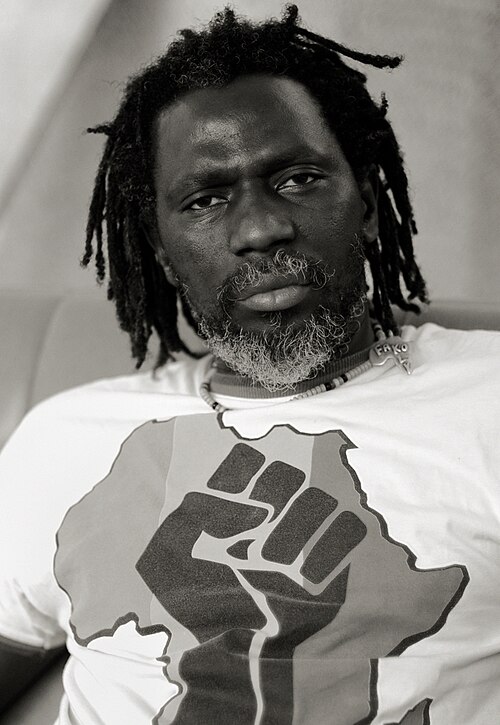
In the pantheon of global reggae, Tiken Jah Fakoly stands as a colossal figure, not just as a musician but as a fearless social and political activist. Hailing from Ivory Coast, Fakoly has carved a unique niche, using the potent medium of reggae music as a weapon for justice, Pan-African unity, and political change. Born Doumbia Moussa Fakoly in 1968, he adopted the stage name "Tiken Jah," a nod to his Mandinka heritage and reverence for Jah (God), signaling his mission from the outset. His deep, resonant voice and lyrics, sung primarily in Dioula and French, deliver uncompromising critiques of corruption, neocolonialism, and social inequality, earning him both ardent admiration and periods of exile. A pivotal achievement in his career was winning the prestigious BBC Radio 3 Award for World Music in the "Audience Award" category in 2003, catapulting his message onto the international stage. Tiken Jah Fakoly is more than an Entertainment figure; he is a modern-day griot, a truth-teller whose anthems have become soundtracks for movements across Francophone Africa and beyond.
Early Life & Education: The Roots of Rebellion
Tiken Jah Fakoly was born on June 23, 1968, in Odienné, a city in the northwestern region of Ivory Coast. He was raised in a large and devout Muslim family of Malian descent, part of the Mandinka ethnic group. His grandfather was an imam, and young Doumbia was initially expected to follow a religious path. This spiritual grounding would later profoundly influence his music, infusing it with a moral authority and a sense of divine purpose in fighting injustice.
His formative years were not spent in formal music schools but in absorbing the sounds and struggles around him. The first major musical influence came from the king of reggae himself, Bob Marley. Hearing Marley's album "Survival" was a transformative experience for the teenager. He has often recounted how Marley's politically charged lyrics spoke directly to the African condition, awakening his own consciousness. This was complemented by the influence of Alpha Blondy, the Ivorian reggae pioneer who proved that reggae sung in local languages could resonate powerfully. Fakoly's education was conventional, but his real schooling came from observing the socio-political landscape of post-colonial Ivory Coast, with its growing ethnic tensions and economic disparities under the long rule of President Félix Houphouët-Boigny. These observations would become the bedrock of his future songwriting.
Formative Experiences and Musical Beginnings
In the mid-1980s, Fakoly formed his first band, "Djelys" (named after traditional West African storytellers). This early step was crucial, as it connected his modern musical expression to the ancient role of the griot—a historian, messenger, and critic. The band performed locally, and Fakoly began crafting lyrics that addressed local issues, a practice that set him apart. He understood that to reach his people, he had to speak in their language, both linguistically and culturally. This commitment to authenticity became his signature, laying the groundwork for a career that would prioritize message over commercial appeal, even as it eventually achieved both.
Career & Major Achievements: From Odienné to the World Stage
Tiken Jah Fakoly's professional career launched in earnest with his debut album, "Mangercratie" (1993). The title, a portmanteau of "manger" (to eat) and "démocratie," critiqued the "eatocracy"—the corrupt political class that feasts while the people starve. The album's raw sound and direct lyrics established his reputation as a rebel voice. His breakthrough came with the 1996 album "Françafrique," a scathing indictment of France's continued political and economic manipulation of its former African colonies. The title track became an anthem across the continent, naming the shadowy system that perpetuated dependency.
The early 2000s marked his ascent to international recognition. The album "Le Caméléon" (2002) and his subsequent BBC Award win in 2003 opened doors to global festivals and a wider audience. However, his growing fame and pointed criticism made him a target. Following the release of "Coup de gueule" (2004), which attacked Ivorian political leaders by name during the country's civil war, he faced death threats and was forced into exile, relocating to Mali and later to Senegal. Undeterred, he continued to produce powerful work, including "L'Africain" (2007) and "African Revolution" (2010), which broadened his Pan-African vision.
Key Accomplishments and Impact
- International Awards: BBC Radio 3 World Music Audience Award (2003), Victoires de la Musique (French national music award) for Best World Music Album for "Dernier Appel" (2014).
- Historic Performances: One of the first African reggae artists to sell out legendary venues like L'Olympia in Paris (2003, 2013) and to headline major festivals worldwide.
- Activism Through Music: His songs like "Quitte le pouvoir" (Leave Power) have been used in pro-democracy protests across Africa. He organized the "Tournée pour la paix" in 2011 to advocate for reconciliation in Ivory Coast.
- Discography: Over a dozen studio albums, each serving as a chapter in his ongoing critique of global injustice and a call for African self-determination.
His impact is measured not just in records sold but in the courage he inspires. Tiken Jah Fakoly's music provides a vocabulary of resistance for millions, proving that the Reggae Artist & Activist model pioneered by Marley is not only alive but critically essential in 21st-century Africa.
Personal Life, Philanthropy & Lasting Legacy
Despite his fierce public persona, Tiken Jah Fakoly guards his private life closely. A devoted Muslim, he sees no contradiction between his faith and Rastafarian-inspired reggae, viewing both as paths to truth and justice. He is a family man, married with children, and his exile experiences have deeply shaped his worldview, reinforcing his identity as a pan-African citizen rather than solely an Ivorian. His personal interests are inextricably linked to his work; he is a voracious reader of history and politics, which fuels his lyrical depth.
His activism extends far beyond the stage. In 2009, he founded the "Tiken Jah Fakoly Foundation," dedicated to supporting education and sustainable development in rural Africa. The foundation has funded the construction of schools, wells, and health centers, particularly in his native Odienné region, embodying his belief that empowerment begins with access to basic needs and knowledge. Furthermore, he has been a vocal advocate for artists' rights and fair trade in the music industry, challenging exploitative practices.
The Legacy of a Lion
The legacy of Tiken Jah Fakoly is that of a bridge-builder and a truth-teller. He bridged the gap between traditional West African storytelling and global reggae, and between local political struggles and universal themes of freedom. He has inspired a new generation of socially conscious artists across the Francophone world. His lasting impact is a body of work that serves as a historical document of Africa's post-colonial challenges and a relentless, melodic demand for a better future. He transformed reggae from a imported genre into a specific, powerful tool for African liberation, securing his place as one of the most important musical and political voices of his generation.
Net Worth & Business Ventures
While Tiken Jah Fakoly is not primarily known as a commercial businessman, his successful career spanning three decades has undoubtedly led to financial stability. Estimating the exact net worth of a private individual, especially one based in Africa with diverse income streams, is challenging, but it is widely believed to be in the range of several million dollars. His wealth is generated through a combination of sources consistent with a top-tier international musician.
His primary revenue streams include:
- Music Sales and Streaming: Royalties from his extensive discography, which continues to sell and stream globally.
- Concert Tours: As a major live act, headlining tours across Europe, Africa, and the Americas constitute a significant portion of his income.
- Merchandising: Sales of branded merchandise at concerts and online.
- Awards and Grants: Prize money from awards and potential grants for cultural projects.
Rather than investing in unrelated business ventures, Fakoly's financial focus appears to be cyclical, funneling resources back into his art and activism. His most significant "venture" is his foundation, which is a philanthropic undertaking. Any business aspect of his career is ultimately in service to his mission: to produce music that enlightens and to fund projects that uplift communities. This alignment between his finances and his principles reinforces the authenticity that has made Tiken Jah Fakoly a trusted and revered figure in the world of Entertainment and activism.
Frequently Asked Questions
What is Tiken Jah Fakoly's estimated net worth?
Tiken Jah Fakoly has an estimated net worth of $5.0 Million.
What is Tiken Jah Fakoly's role and nationality?
Tiken Jah Fakoly is a Reggae Artist & Activist from Ivory Coast.
How did Tiken Jah Fakoly make their money?
Tiken Jah Fakoly built their fortune primarily through As a successful reggae artist and activist from Ivory Coast, his wealth is derived from music sales, tours, and activism, but he is not a business magnate on the Forbes Africa rich list..
How old is Tiken Jah Fakoly?
Tiken Jah Fakoly was born in 1968 (58 years old).
Which category is Tiken Jah Fakoly listed under?
Tiken Jah Fakoly is featured under the Entertainment category on NetWorth Africa.
How is Tiken Jah Fakoly's net worth calculated?
NetWorth Africa estimates financial valuations using publicly available stock equity holdings, company ownership records, real estate assets, and verified market data.
Net Worth Analysis
As a successful reggae artist and activist from Ivory Coast, his wealth is derived from music sales, tours, and activism, but he is not a business magnate on the Forbes Africa rich list.
Quick Stats
Related People

2Baba (Innocent Idibia)
Veteran Artist & Activist • Nigeria
Aar Maanta
Singer & Composer • Somalia
Abdel Aziz al-Mubarak
Oud Master • Sudan
Abdel Halim Hafez†
Legend; “Nightingale”; “The Dark-Skinned Nightingale” • Egypt