Biography
Introduction: A National Heroine
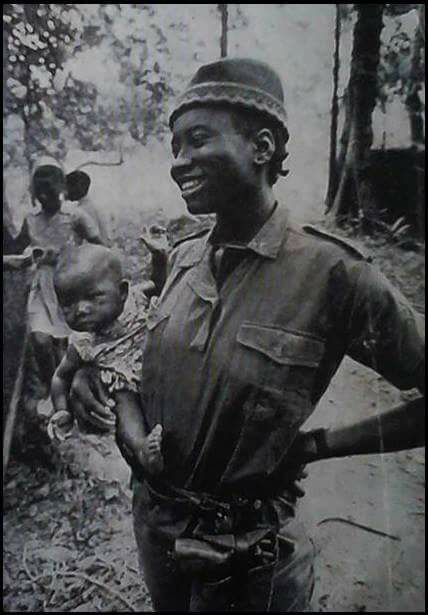
In the annals of African liberation history, the name Titina Silá stands as a powerful symbol of courage, sacrifice, and unwavering commitment to freedom. As a pioneering Female Freedom Fighter from Guinea-Bissau, Silá played a decisive role in one of the 20th century's most successful armed independence struggles against Portuguese colonial rule. Her life, though tragically cut short, became a rallying cry for the African Party for the Independence of Guinea and Cape Verde (PAIGC) and cemented her status as a national heroine. Titina Silá's most notable achievement was her leadership and participation in guerrilla warfare, rising to become a respected political commissioner and a key figure in mobilizing communities, especially women, for the cause. Her legacy is a cornerstone in the study of Women in Liberation movements globally, demonstrating the critical and often understated role women played in the fight for sovereignty and self-determination in Politics & Government.
Early Life & Education: Forging a Revolutionary Spirit
Titina Ernestina Silá was born in 1943 in the village of Cacine, in the Tombali region of what was then Portuguese Guinea. Growing up under a harsh colonial system that offered limited opportunities for the native population, particularly for girls, shaped her early worldview. Unlike many of her contemporaries, Silá had access to some formal education, which was a rare privilege. She attended primary school in her region, where she began to develop the literacy and critical thinking skills that would later serve her in the political apparatus of the liberation movement.
Her formative years were marked by the rising wave of anti-colonial sentiment sweeping across Africa in the 1950s and early 1960s. The founding of the PAIGC in 1956 by Amílcar Cabral provided an organized channel for this sentiment. The brutal repression of the Pidjiguiti Massacre in 1959, where Portuguese forces killed striking dock workers in Bissau, radicalized many young Guineans, and it is widely believed this event was a pivotal moment for the young Titina Silá. By her late teens, she was deeply immersed in the nationalist cause, transitioning from a student to a committed militant. Her education was not in classrooms but in the political teachings of Cabral, which emphasized unity, political consciousness, and the integral role of women in the revolution.
Career & Major Achievements: Commander on the Frontlines
Titina Silá's career within the PAIGC was meteoric and distinguished. She joined the independence struggle in the early 1960s, initially working in support roles. However, her dedication, intelligence, and natural leadership quickly propelled her to the front lines of the guerrilla war that began in 1963.
Rise to Political Commissioner
Silá underwent military training and rose through the ranks to become a political commissioner (comissária política), a role of immense responsibility that blended military command with ideological education. She was tasked with mobilizing local populations, explaining the PAIGC's goals, and ensuring political cohesion among fighters. Operating in the difficult terrain of the southern fronts, she became known for her fearlessness, strategic acumen, and deep connection with the rural communities whose support was vital for the guerrilla army's success.
The Battle of Guiledge and the Death of Cabral
Her commitment was severely tested in January 1973. The PAIGC leader, Amílcar Cabral, was assassinated in Conakry on January 20. Titina Silá was part of the high-level delegation that traveled from the interior war zones to Guinea's capital to retrieve his remains for burial in liberated territory. On their return journey, on January 30, 1973, the group was ambushed by Portuguese forces at the Guiledge crossing on the Corubal River. In what became known as the Battle of Guiledge, Titina Silá was killed in combat. She was just 29 years old. Her death, occurring in the shadow of Cabral's assassination, was a profound blow to the movement, but it also immortalized her as a martyr. The PAIGC used her sacrifice to galvanize its forces, and within eight months, they would unilaterally declare the independence of Guinea-Bissau on September 24, 1973.
Impact and Symbolism
Titina Silá's achievements extend beyond her military service. She embodied the PAIGC's progressive stance on women's emancipation. As a female commander leading men, she shattered traditional gender norms and became a living example of the new society the revolution sought to build. Her work in mobilizing women to participate not just as support staff but as armed combatants and political organizers was instrumental. She contributed directly to:
- Strengthening the PAIGC's logistical and intelligence networks through community engagement.
- Serving as a powerful symbol that motivated thousands of women to join the liberation effort.
- Demonstrating the effectiveness of combining political education with military action, a cornerstone of Cabral's strategy.
Personal Life & Legacy: An Enduring Symbol
Due to her early death and the clandestine nature of her life as a guerrilla, details of Titina Silá's personal life, such as marriage or children, are not widely documented in public sources. Her life was wholly dedicated to the revolution. What is known is that she was described by comrades as charismatic, fiercely determined, and profoundly loyal to the cause of her people's freedom. Her personal interests were inextricably linked to the political struggle; her identity was that of a freedom fighter.
The legacy of Titina Silá is monumental in Guinea-Bissau. She is celebrated as a National Heroine. Her name graces streets, schools, and cultural centers across the country. Perhaps the most significant tribute is the Titina Silá Award, a national prize awarded to women who distinguish themselves in various fields of social endeavor, ensuring her name continues to inspire new generations. Internationally, she is recognized as an icon of women's participation in liberation struggles. Scholars of gender and conflict often cite her story to highlight the active, combatant role women played in decolonization, moving beyond narratives of women as solely victims or caretakers. Her life remains a critical reference point in the history of Guinea-Bissau and a testament to the power of women in shaping the destiny of nations.
Historical Recognition & Commemoration
While concepts of personal net worth or business ventures are entirely inapplicable to the life of a revolutionary martyr like Titina Silá, her value is measured in historical and symbolic capital. She did not accumulate financial wealth; she fought for the collective wealth of a nation's independence. Her "venture" was the liberation project itself. The PAIGC operated with a philosophy of collectivism and sacrifice, and fighters like Silá lived on modest provisions provided by the party and supportive communities.
Today, her legacy is the foundation upon which her enduring worth is built. The national awards in her name, the institutional memory preserved by the Guinea-Bissau government, and her permanent place in the educational curriculum represent her lasting impact. For researchers and those interested in the history of Politics & Government in West Africa, her story is an indispensable resource. Key sources documenting her life include historical archives of the PAIGC, scholarly works on the Guinea-Bissau war of independence, and biographies of Amílcar Cabral. Organizations like the UNESCO Women in Africa History project also provide contextual resources on figures like Silá, highlighting the broader landscape of Women in Liberation movements across the continent.
Frequently Asked Questions
What is Titina Silá†'s estimated net worth?
Net worth details for Titina Silᆠare currently being updated.
What is Titina Silá†'s role and nationality?
Titina Silᆠis a Female Freedom Fighter from Guinea-Bissau.
How did Titina Silᆠmake their money?
Titina Silᆠbuilt their fortune primarily through Titina Silá was a revolutionary fighter who died in 1973 and did not accumulate personal wealth from her role..
How old is Titina Sil�
Titina Silᆠwas born in 1943 (83 years old).
Which category is Titina Silᆠlisted under?
Titina Silᆠis featured under the Politics & Government category on NetWorth Africa.
How is Titina Silá†'s net worth calculated?
NetWorth Africa estimates financial valuations using publicly available stock equity holdings, company ownership records, real estate assets, and verified market data.
Net Worth Analysis
Titina Silá was a revolutionary fighter who died in 1973 and did not accumulate personal wealth from her role.
Quick Stats
Related People
Aaron Motsoaledi
LP; Minister of Home Affairs • South Africa
Abane Ramdane†
FLN Leader & Strategist • Algeria
Abdalla Hamdok
Ex-Prime Minister • Sudan
Abdallah Kigoda
Ex-Minister of Natural Resources • Tanzania