Financial Breakdown
Asset Distribution
Assets vs Liabilities
Assets
Disclaimer: These financial estimates are based on publicly available information and should be considered approximate. Last updated: 12/31/2025
Biography
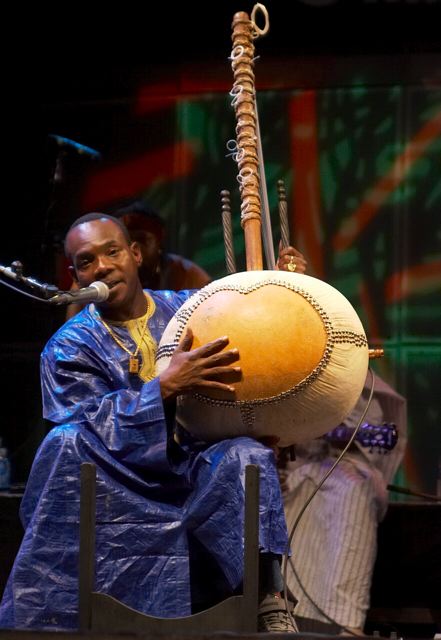
In the pantheon of world music, few names resonate with the purity, innovation, and profound cultural heritage of Toumani Diabaté†. Hailing from Mali, Diabaté was universally acclaimed as a Kora Master, a title earned through peerless virtuosity and a lifelong dedication to expanding the horizons of his ancient instrument. The kora, a 21-string harp-lute central to the Mandé griot tradition, found its most eloquent and adventurous modern voice through him. As a descendant of over 70 generations of griots (or *jalis*), the historian-musicians of West Africa, Toumani Diabaté† was both a guardian of a millennia-old legacy and a fearless musical pioneer. His key achievement lies in single-handedly elevating the kora from an accompaniment instrument to a celebrated solo voice on the global stage, collaborating with icons from Ali Farka Touré to Björk, and winning a Grammy Award in the process. His passing in 2024 marked the end of an era, but his music remains a timeless bridge between ancestral wisdom and contemporary expression.
Early Life & Education: The Griot's Path
Toumani Diabaté† was born in 1965 in Bamako, Mali, into the most revered griot family in West Africa. His father, Sidiki Diabaté, was himself a legendary kora player known as "the King of the Kora," having recorded the first-ever kora album in 1970. From this exalted lineage, Toumani was immersed in the Mandé musical and oral history traditions from birth. The role of the griot—to chronicle history, offer wisdom, and provide social cohesion through music and poetry—was his birthright and his destiny.
A Self-Taught Prodigy
Remarkably, despite his father's towering status, Toumani Diabaté† was largely self-taught. He learned not through formal lessons but by osmosis, listening, and sheer innate talent. He first touched a kora at age five and demonstrated an immediate, preternatural affinity for its complex polyphonic possibilities. By his early teens, he had mastered the instrument's vast traditional repertoire. However, his education was not confined to tradition. He was deeply influenced by a wide array of sounds, from flamenco and blues to jazz and funk, which he heard on the radio. This unique blend of deep-rooted griot knowledge and a voracious, global musical curiosity became the foundation for his revolutionary career. By the age of 13, he was already performing professionally, and at 21, he made a decision that would change his life and the course of kora music forever: he moved to Europe to bring the sound of the kora to the world.
Career & Major Achievements: A Global Ambassador
The career of Toumani Diabaté† is a testament to artistic evolution and cross-cultural dialogue. His breakthrough came in 1987 with the release of "Kaira," a landmark album that was the first-ever solo kora recording in history. Recorded in a single afternoon in London, its serene, intricate melodies stunned the world music scene and announced the arrival of a singular genius. This album redefined the kora as a complete, solo concert instrument capable of profound emotional and technical depth.
Groundbreaking Collaborations and Grammy Glory
Diabaté’s true genius shone in collaboration. He possessed an unparalleled ability to find common musical ground across genres. His 2005 partnership with the late Malian blues guitarist Ali Farka Touré, "In the Heart of the Moon," won the Grammy Award for Best Traditional World Music Album. This album was a profound conversation between the kora and the guitar, tracing the shared roots of Malian and American blues. He formed the symmetric Orchestra, a large ensemble blending traditional Malian instruments with modern ones, releasing the acclaimed album "Mande Variations." His collaborative spirit extended globally: he worked with jazz trombonist Roswell Rudd, flamenco guitarist Ketama (on the groundbreaking "Songhai" projects), and even pop avant-gardist Björk.
Accolades and Cultural Impact
Over four decades, Toumani Diabaté† released over a dozen albums as a leader and appeared on countless others. He performed on the world's most prestigious stages, from the Nobel Peace Prize Concert to the opening ceremony of the FIFA World Cup. His influence extended beyond performance; he was a passionate educator and advocate for Malian culture. He established a school for traditional music in Bamako and was a vocal proponent for peace in his homeland during times of conflict. Each performance by Toumani Diabaté† was more than a concert; it was a living history lesson, a display of breathtaking technical mastery, and a heartfelt gesture of unity. His career didn't just showcase the kora—it fundamentally transformed how the world perceived and appreciated West African musical heritage.
Personal Life & Legacy: The Chain of Tradition
Offstage, Toumani Diabaté† was a devoted family man and a pillar of his community in Bamako. He lived his life according to the griot principles of service, knowledge, and communication. He was famously generous with his time and knowledge, mentoring countless young musicians. His personal life was deeply intertwined with his artistry; he saw his musical gift as a responsibility to his ancestors and to future generations.
A Lasting Musical Dynasty
His legacy is powerfully embodied in his own family. His son, Sidiki Diabaté, is a celebrated kora player and producer in his own right, forming a successful hip-hop duo with rapper Iba One and ensuring the Diabaté name remains at the forefront of Malian music, both traditional and modern. This passing of the torch symbolizes the living, evolving nature of the griot tradition that Toumani cherished. His passing in 2024 was mourned globally, but his sonic legacy is immortal. Toumani Diabaté† leaves behind a world where the kora is recognized as a major instrument of global music, a vast catalog of recordings that serve as a masterclass in artistry, and an inspirational model of cultural pride fused with open-hearted collaboration. He proved that deep tradition and bold innovation are not opposites, but essential partners in creating timeless art.
Net Worth & Business Ventures
While the exact figures of his estate are private, Toumani Diabaté† achieved significant financial success through his prolific career as a recording artist, international touring musician, and collaborator. His income was generated from multiple streams: album sales (including Grammy-winning works), sold-out concert performances at major festivals and venues worldwide, and royalties from collaborations and film soundtracks. Unlike many purely commercial entertainment figures, Diabaté's "business" was fundamentally the stewardship and dissemination of culture. He invested back into his community, most notably through his commitment to education. While not a businessman in the conventional sense, he successfully managed a career that transformed a niche traditional art form into a globally marketable and respected genre, ensuring both his family's livelihood and the financial sustainability of his cultural mission. His primary venture was his art itself, and its value is immeasurable, having enriched the global cultural landscape far beyond monetary measure.
Frequently Asked Questions
What is Toumani Diabaté†'s estimated net worth?
Toumani Diabaté† has an estimated net worth of $5.0 Million.
What is Toumani Diabaté†'s role and nationality?
Toumani Diabaté† is a Kora Master from Mali.
How did Toumani Diabaté† make their money?
Toumani Diabaté† built their fortune primarily through Estimated based on his status as a world-renowned, Grammy-winning musician and cultural ambassador, with income from recordings, performances, and cultural projects, but not as a business tycoon..
How old is Toumani Diabat�
Toumani Diabaté† was born in 1965 (61 years old).
Which category is Toumani Diabaté† listed under?
Toumani Diabaté† is featured under the Entertainment category on NetWorth Africa.
How is Toumani Diabaté†'s net worth calculated?
NetWorth Africa estimates financial valuations using publicly available stock equity holdings, company ownership records, real estate assets, and verified market data.
Net Worth Analysis
Estimated based on his status as a world-renowned, Grammy-winning musician and cultural ambassador, with income from recordings, performances, and cultural projects, but not as a business tycoon.
Quick Stats


Related People

2Baba (Innocent Idibia)
Veteran Artist & Activist • Nigeria

Aar Maanta
Singer & Composer • Somalia

Abdel Aziz al-Mubarak
Oud Master • Sudan
Abdel Halim Hafez†
Legend; “Nightingale”; “The Dark-Skinned Nightingale” • Egypt