Financial Breakdown
Asset Distribution
Assets vs Liabilities
Assets
Disclaimer: These financial estimates are based on publicly available information and should be considered approximate. Last updated: 12/30/2025
Biography
Introduction: The Immortal Icon
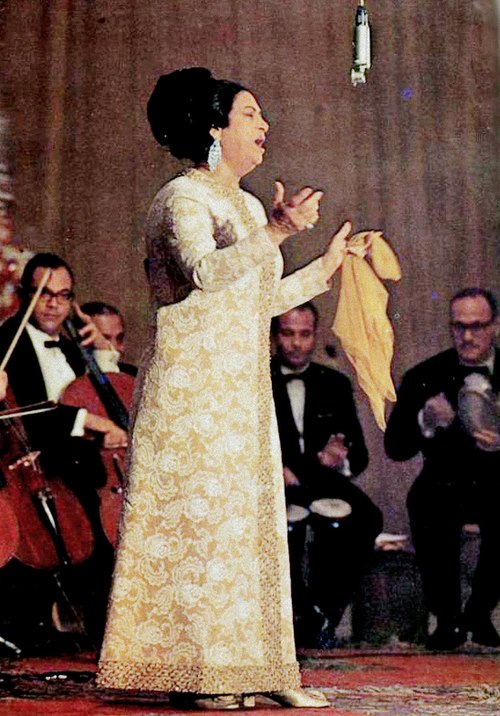
Umm Kulthum† stands as a colossus in the world of Entertainment and music, an unparalleled Icon whose voice defined a nation and captivated the Arab world. Revered as “The Voice of Egypt”, her influence transcended mere performance to become a cultural, political, and spiritual force. Born in a small village in the Nile Delta around 1904, she rose from humble beginnings to become the most famous and cherished Arab singer of the 20th century. Her key achievement lies not just in her vast discography, but in her unique ability to articulate the collective emotions of millions, turning her monthly radio concerts into national events that brought the entire region to a standstill. For over five decades, Umm Kulthum† crafted a legacy of artistic excellence, national pride, and profound emotional connection that remains potent decades after her passing.
Early Life & Education: Roots of a Legend
The future “Voice of Egypt” was born Umm Kulthum Ibrahim al-Sayyid al-Beltagi in the village of Tamay ez-Zahayra, Dakahlia Governorate, Egypt. The exact date of her birth is often cited as December 31, 1904, though some sources suggest May 4, 1904. Her formative experiences were deeply rooted in rural religious tradition. Her father, an imam, taught her to recite the Quran, and she demonstrated extraordinary vocal power and precision from a very young age. To supplement the family's income, her father would dress her as a boy to perform religious songs at local weddings and festivals alongside her brother and father.
This early "education" was not formal but was rigorous and foundational. Learning in the oral tradition, she mastered complex classical Arabic poetry and the intricate maqamat (melodic modes) of Arab music. Her prodigious talent soon outgrew the village circuit. In the early 1920s, the family moved to Cairo, the bustling epicenter of Arab arts. Initially, she faced challenges as a provincial performer. To refine her craft, she sought out prestigious teachers like the renowned poet Ahmed Rami, who introduced her to classical Arabic poetry and wrote 137 songs for her, and composer Mohamed El Qasabgi, who helped her gain access to the prestigious stage of the Cairo Opera House. This period of dedicated study and mentorship was crucial in transforming the gifted village girl into a sophisticated artist of the highest caliber.
Career & Major Achievements: A Reign Unparalleled
The career of Umm Kulthum† is a chronicle of relentless ascent and monumental impact. Her breakthrough in Cairo came in the late 1920s, and by the 1930s, she was a dominant figure in music and film. She starred in several successful musical films but ultimately abandoned cinema to focus solely on her first love: live radio performance and recording.
The Thursday Concerts and Artistic Mastery
Her most iconic career feature was the monthly live radio concert, held on the first Thursday of every month. These events became a cultural institution across the Arab world. Streets would empty, and businesses would close as millions gathered around radios to listen to performances that could last for three to four hours per song. A single song, like the legendary "Enta Omri" (You Are My Life), could stretch over an hour, featuring elaborate improvisations (taqasim) and lyrical repetitions that showcased her emotional depth and technical command. Her repertoire, set to poetry by the greatest Arab poets like Rami, Hafez Ibrahim, and later Nizar Qabbani, explored themes of love, longing, loss, and patriotism.
National Symbol and Political Influence
Following the Egyptian Revolution of 1952, Umm Kulthum† strategically aligned herself with the nationalist project of Gamal Abdel Nasser. Her songs, such as "Wallahi Zaman, Ya Silahi" (It's Been a Long Time, O My Weapon), became unofficial anthems. Her concerts were broadcast across the Arab world, effectively making her voice the voice of Arab nationalism and solidarity. Her influence was such that it is said President Nasser scheduled his speeches around her broadcasts to ensure maximum listenership. This fusion of art and national identity cemented her status as more than a singer; she was a symbol of Egypt and Arab resilience.
Record-Breaking Success and Global Recognition
Her major achievements are staggering:
- She sold over 80 million records worldwide.
- Her 1967 concert in Paris broke attendance records and introduced her music to a significant Western audience.
- In 1966, she famously performed at the Olympia in Paris.
- She received the highest honors from numerous Arab states and was a president of the Egyptian Musicians Union.
Personal Life & Legacy: The Enduring Voice
Personally, Umm Kulthum† was known for her dignity, strong will, and devout character. She was famously private, maintaining an aura of respectability and modesty. She never married, though rumors of relationships persisted, and she dedicated her life entirely to her art and her public. Her personal style—with her signature diamond-rimmed glasses, elegant gown, and ever-present handkerchief—became iconic. Beyond performance, she was a significant philanthropist, donating large sums to Egyptian and Arab causes, particularly after the 1967 Arab-Israeli War, demonstrating a deep commitment to her people.
The legacy of Umm Kulthum† is immortal. She is credited with preserving and modernizing the classical Arab musical tradition. Decades after her death on February 3, 1975, her funeral drew over four million mourners—one of the largest gatherings in history—testament to her profound connection with the masses. Today, her music continues to resonate, inspiring artists across genres and generations worldwide. Academic studies dissect her impact, and her recordings are perpetually reissued. She remains the definitive cultural Icon of the Arab world, a symbol of artistic integrity, national identity, and the sublime power of the human voice.
Net Worth & Business Acumen
While precise figures from her era are difficult to translate to modern valuations, Umm Kulthum† was undoubtedly one of the wealthiest and most financially astute entertainers in the Arab world. Her wealth was built through multiple, savvy revenue streams. Her record sales were phenomenal, generating immense royalties. Her live concerts were major commercial successes, with tickets in high demand. However, her most significant financial innovation was her deal with Egyptian Radio. For her monthly concerts, she negotiated a unique contract where she was paid a substantial fee *and* retained the rights to the live recordings, which she would then license for commercial release—a groundbreaking model for artist control at the time.
This business savvy extended to her public persona; she was known for her luxurious lifestyle, including a notable collection of jewelry and real estate, but she balanced this with her well-known philanthropy. Her financial success was not merely personal wealth but a testament to her understanding of her own value and her ability to command it, setting a precedent for artistic entrepreneurship in the region. In today's terms, her empire, built on music rights, performances, and endorsements, would place her among the entertainment industry's top earners.
Sources & Further Reading
To learn more about the life and music of Umm Kulthum†, consider these credible resources:
- Encyclopedia Britannica: Umm Kulthum Biography
- Danielson, Virginia. "The Voice of Egypt: Umm Kulthum, Arabic Song, and Egyptian Society in the Twentieth Century." University of Chicago Press, 1997.
- BBC Culture: The Legend of Umm Kulthum
- Al Jazeera Documentary Films and archival footage.
Frequently Asked Questions
What is Umm Kulthum†'s estimated net worth?
Net worth details for Umm Kulthum† are currently being updated.
What is Umm Kulthum†'s role and nationality?
Umm Kulthum† is a Icon; “The Voice of Egypt”; “Voice of Egypt” from Egypt.
How did Umm Kulthum† make their money?
Umm Kulthum† built their fortune primarily through Umm Kulthum, the legendary Egyptian singer, passed away in 1975, so a net worth estimate for 2024 is not applicable..
How old is Umm Kulthum†?
Umm Kulthum† was born in 1904 (122 years old).
Which category is Umm Kulthum† listed under?
Umm Kulthum† is featured under the Entertainment category on NetWorth Africa.
How is Umm Kulthum†'s net worth calculated?
NetWorth Africa estimates financial valuations using publicly available stock equity holdings, company ownership records, real estate assets, and verified market data.
Net Worth Analysis
Umm Kulthum, the legendary Egyptian singer, passed away in 1975, so a net worth estimate for 2024 is not applicable.
Quick Stats

Related People

2Baba (Innocent Idibia)
Veteran Artist & Activist • Nigeria

Aar Maanta
Singer & Composer • Somalia
Abdel Aziz al-Mubarak
Oud Master • Sudan
Abdel Halim Hafez†
Legend; “Nightingale”; “The Dark-Skinned Nightingale” • Egypt