Financial Breakdown
Asset Distribution
Assets vs Liabilities
Assets
Disclaimer: These financial estimates are based on publicly available information and should be considered approximate. Last updated: 12/31/2025
Biography
Introduction: A Seed of Change
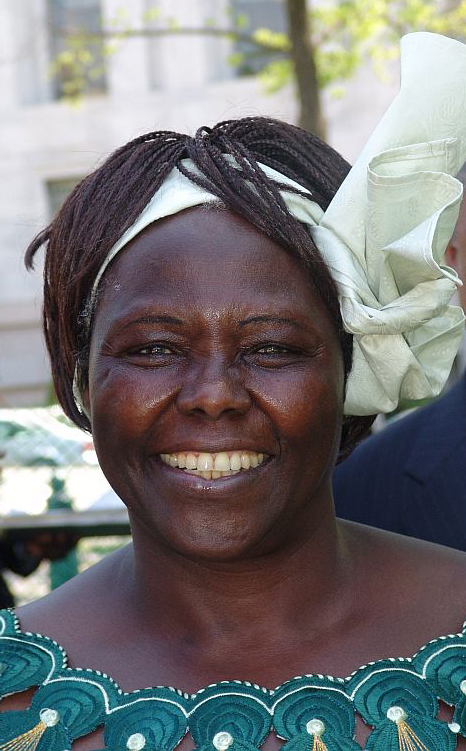
Professor Wangari Maathai† stands as a monumental figure in the annals of global activism, seamlessly bridging the worlds of environmental conservation, social justice, and political courage. A Kenyan trailblazer, she etched her name in history in 2004 by becoming the first African woman to be awarded the Nobel Peace Prize. The Norwegian Nobel Committee recognized her profound contribution to "sustainable development, democracy, and peace," highlighting the intrinsic link between a healthy environment and societal stability. While categorized within the broader sphere of Entertainment for her influential public advocacy and inspirational storytelling, her true stage was the Earth itself. Her life's work, centered on empowering communities through the simple yet revolutionary act of planting trees, demonstrated how grassroots action could grow into a global movement for change.
Early Life & Education: Roots in the Highlands
Wangari Muta Maathai was born on April 1, 1940, in the rural village of Ihithe, in the central highlands of Kenya. Growing up in a landscape of lush, fertile forests, she developed an early connection to the land, a connection that would later define her life's mission. Her academic journey was one of exceptional firsts, paved by the support of her family and the opportunities of the "Kennedy airlift" of 1960, which selected promising Kenyan students to study in the United States.
She earned a Bachelor of Science in Biology from Mount St. Scholastica College (now Benedictine College) in Kansas in 1964, followed by a Master of Science in biological sciences from the University of Pittsburgh in 1966. Upon returning to Kenya, she made history at the University of Nairobi, where she became the first woman in East and Central Africa to earn a doctorate degree, receiving her Ph.D. in veterinary anatomy in 1971. She subsequently became the first female chair of a university department (Veterinary Anatomy) and later an associate professor. These formative years, witnessing both the beauty of her homeland and the environmental degradation accompanying development, planted the seeds for her future activism.
Career & Major Achievements: From a Single Tree to a Forest of Change
The career of Wangari Maathai† is a testament to the power of visionary action. In 1977, responding to the needs of rural Kenyan women who lamented the lack of firewood, clean water, and nutritious food, she founded the Green Belt Movement (GBM). This was not merely a reforestation project; it was a holistic, community-driven empowerment program.
The Green Belt Movement: Empowerment Through Action
The model was elegantly simple yet transformative. The GBM taught women to plant native tree nurseries, paying them a small stipend for each seedling that survived. This achieved multiple goals simultaneously:
- Environmental Restoration: Combating soil erosion and deforestation.
- Economic Empowerment: Providing women with an independent income.
- Civic Education: Teaching communities about their environmental and democratic rights.
Political Courage and International Recognition
Wangari Maathai† fearlessly linked environmental issues to governance. In the late 1980s and 1990s, she became a vocal critic of the authoritarian regime of President Daniel arap Moi. Her activism to save Nairobi's Uhuru Park and Karura Forest from commercial development led to violent clashes, arrests, and public ridicule. She was famously labeled a "subversive" and "a madwoman" by politicians. Yet, she remained unbowed. Her courageous stand made her a global symbol of peaceful resistance. The pinnacle of recognition came on October 8, 2004, when she was awarded the Nobel Peace Prize. She served as a member of the Kenyan Parliament (2002-2007) and as Assistant Minister for Environment and Natural Resources, bringing her advocacy into the heart of government.
A Voice on the Global Stage
Her influence extended into the realm of global diplomacy and Entertainment through advocacy. She served on the boards of numerous international organizations and used her powerful oratory and compelling personal narrative—shared in her memoir, Unbowed—to educate world leaders and the public alike. She was a United Nations Messenger of Peace, focusing on climate change, further cementing her role as a leading environmental Nobel Peace Prize Winner.
Personal Life, Legacy, and Lasting Impact
Wangari Maathai's personal life was marked by the same determination she showed publicly. She was a mother of three. Her marriage to Mwangi Mathai ended in divorce in the 1970s, a proceeding that was highly controversial in Kenyan society at the time. She later added an extra "a" to her surname. Her legacy is both tangible and inspirational. The forests that stand across Kenya and Africa are a living monument to her work. The Green Belt Movement continues its vital work, and her philosophy of "thinking globally and acting locally" has inspired countless environmental and social justice movements worldwide.
She redefined security, arguing that peace depends on the sustainable management of scarce resources. Her passing on September 25, 2011, was mourned globally, but her message continues to resonate, especially in the face of the contemporary climate crisis. Institutions, awards, and stories in film and literature continue to celebrate her life, ensuring that the legacy of Wangari Maathai† endures as a beacon of hope and action.
Net Worth, Recognition, and Enduring Value
While the net worth of Wangari Maathai† was not centered on personal financial accumulation, her work generated immense social and ecological capital. The financial aspects of her life were tied to her roles as a professor, parliamentarian, and Nobel laureate. The Nobel Peace Prize came with a substantial monetary award (approximately $1.4 million in 2004), which she reportedly used to further the causes of the Green Belt Movement and environmental advocacy. Her true "business ventures" were non-profit and humanitarian. The value she created is measured in millions of restored hectares of land, empowered communities, and a powerful, enduring idea: that the fight for a healthy planet is inextricably linked to the fight for human dignity and peace. Her story, a compelling narrative of courage and resilience, remains a vital part of the world's cultural and Entertainment landscape, inspiring documentaries, books, and educational programs that continue to spread her vision.
Sources & Further Reading: The life and work of Wangari Maathai are well-documented. Key sources include her autobiography, Unbowed (2006), the official website of The Green Belt Movement, and the Nobel Prize biographical page. Her Nobel lecture remains a powerful and essential document for understanding her philosophy.
Net Worth Analysis
Wangari Maathai was an environmental activist and Nobel laureate, not a business figure; her wealth was not substantial and she passed away in 2011.
Quick Stats
Related People

2Baba (Innocent Idibia)
Veteran Artist & Activist
Aar Maanta
Singer & Composer

Abdel Aziz al-Mubarak
Oud Master
Abdel Halim Hafez†
Legend; “Nightingale”; “The Dark-Skinned Nightingale”