Financial Breakdown
Asset Distribution
Assets vs Liabilities
Assets
Disclaimer: These financial estimates are based on publicly available information and should be considered approximate. Last updated: 12/30/2025
Biography
Introduction: A President of Contradictions and Change
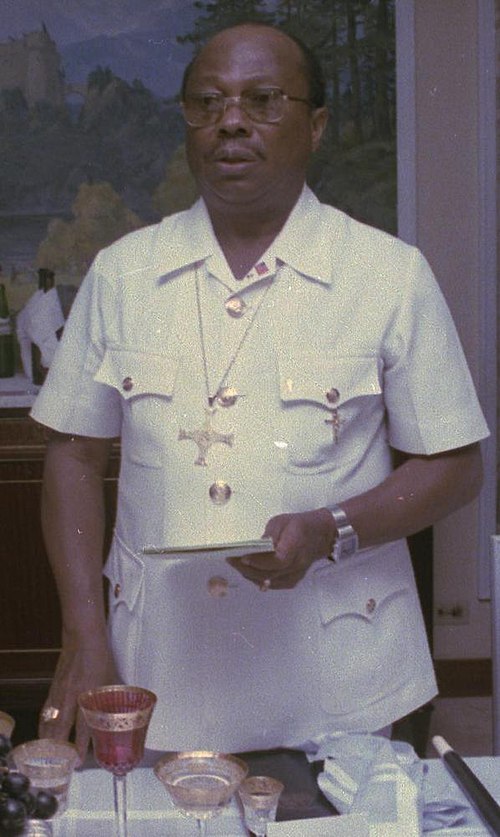
William Richard Tolbert Jr.† stands as one of the most complex and pivotal figures in modern Liberian history. Serving as the Nineteenth President of the Republic of Liberia from 1971 until his tragic death in 1980, Tolbert's tenure marked a period of ambitious reform and profound upheaval. A career civil servant and Baptist preacher, he ascended to the presidency following the death of the long-ruling William V.S. Tubman. Tolbert inherited a nation dominated by the Americo-Liberian elite but facing growing pressure for social and economic inclusion from the indigenous majority. His administration is notable for its attempt to navigate these tensions through a platform of national reconciliation and modernization. While his ambitious "Total Involvement for Higher Heights" agenda aimed at progressive change, it ultimately collided with entrenched interests and a deteriorating economy, leading to the coup that ended both his life and over a century of Americo-Liberian political dominance. The story of William R. Tolbert Jr.† is thus a crucial chapter in the Politics & Government of West Africa, illustrating the challenges of reform in a deeply divided society.
Early Life & Education: Formative Years in the Americo-Liberian Elite
Born on May 13, 1913, in Bensonville, Liberia, William R. Tolbert Jr.† was deeply embedded in the nation's ruling class. His family were descendants of the Americo-Liberian settlers, the freed African-American and Caribbean slaves who founded the republic in 1847. This background provided him with significant social and political advantages from a young age. His father, William Richard Tolbert Sr., was a successful businessman and legislator, setting a clear path for public service.
Tolbert's education was among the finest available in Liberia. He attended the prestigious Crummell Hall Elementary School and later graduated from the University of Liberia in 1934 with a Bachelor of Arts degree. His academic prowess was evident early on. Demonstrating a remarkable aptitude for administration and detail, the young Tolbert entered the civil service, quickly rising through the ranks. A deeply religious man, he was also ordained as a Baptist minister and would eventually become President of the Baptist World Alliance, a role that shaped his moral outlook and international connections. These twin pillars—Politics & Government and faith—formed the bedrock of his character and his approach to leadership, emphasizing order, piety, and a sense of duty to modernize his nation.
Career & Major Achievements: From Vice-President to Reformist President
William R. Tolbert Jr.†'s political career was one of long apprenticeship and sudden, transformative power. His major achievements and career progression can be divided into two distinct phases.
The Vice-Presidential Years (1951-1971)
In 1951, President William V.S. Tubman selected Tolbert as his vice-presidential running mate, a position he would hold for an unprecedented two decades. For 20 years, Tolbert served loyally as Tubman's deputy, overseeing day-to-day administrative functions and chairing numerous commissions. This period, though lacking in independent executive power, gave him an intimate understanding of the machinery of the Liberian state and the patronage network of the True Whig Party, which had ruled since 1877.
The Presidency and the "Total Involvement" Agenda (1971-1980)
Upon Tubman's death in July 1971, William R. Tolbert Jr.† was sworn in as the Nineteenth President. He moved quickly to distinguish himself from his predecessor, initiating a series of reforms under the slogan "Total Involvement for Higher Heights." His major achievements and policy shifts included:
- Economic Liberalism: He relaxed Tubman's tight control over the economy, encouraging limited foreign investment beyond the dominant Firestone rubber plantation and attempting to diversify agricultural production through a "Back-to-the-Farm" campaign aimed at achieving food self-sufficiency.
- Diplomatic Outreach: Tolbert significantly altered Liberia's foreign policy. He established diplomatic relations with the Soviet Union and several Eastern Bloc countries, and forged closer ties with other African nations, positioning Liberia as a more active, non-aligned player in global Politics & Government.
- Symbolic Reforms: In a bid for national unity, he reduced the cost of obtaining citizenship for indigenous Liberians and changed the national holiday commemorating the arrival of the settlers to "Pioneers' Day," aiming to soften its divisive symbolism.
- Social Initiatives: He increased funding for education and launched public health campaigns. His administration also saw the hosting of major international events, most notably the Organization of African Unity (OAU) summit in 1979, which showcased Monrovia but strained national finances.
However, these reforms were often undermined by systemic corruption, rising inflation, and the 1979 global oil crisis. The proposed increase in the price of rice, a national staple, sparked the "Rice Riots" in April 1979, a massive protest that was violently suppressed, eroding his remaining public support and setting the stage for the military coup of 1980.
Personal Life, Philanthropy & Lasting Legacy
Outside of politics, William R. Tolbert Jr.† was a man of deep religious conviction and family commitment. He was married to Victoria A. David Tolbert, and together they had eight children. His identity as a Baptist leader was central to his life; his election as President of the Baptist World Alliance in 1965 was a point of great personal pride and gave him a platform on issues of social justice and religious freedom globally. He was known for his personal frugality and discipline, traits that sometimes contrasted with the perceived opulence of his administration's elite.
Philanthropically, his efforts were often channeled through his church and civic organizations, focusing on education and religious outreach. His lasting legacy is profoundly dualistic. To some, he is remembered as a sincere reformer who sought to dismantle the barriers within Liberian society and modernize the economy. To others, his presidency represents the final, faltering chapter of an exclusionary Americo-Liberian hegemony, unable to enact meaningful change quickly enough to satisfy a restless populace. The coup of April 12, 1980, led by Master Sergeant Samuel Doe, resulted in the brutal assassination of William R. Tolbert Jr.† and much of his cabinet, an event that violently closed one era and opened another of prolonged instability for Liberia. His death remains a defining trauma in the nation's collective memory.
Net Worth & Business Ventures
While precise figures are not publicly documented in the modern sense, William R. Tolbert Jr.† was a man of considerable means, consistent with his status within the ruling elite. His wealth was derived from a combination of his long tenure in high public office, family inheritance, and private business interests. Like many prominent figures in Liberian Politics & Government of the era, he had investments in agriculture, including rubber and rice farming, which were the backbone of the national economy. He also held interests in various commercial enterprises within Liberia. It is critical to contextualize this wealth within the structure of the time, where the lines between state resources, party patronage, and personal business were often blurred under the True Whig Party system. His personal lifestyle was reported to be less ostentatious than some of his contemporaries, but his economic standing was unequivocally that of the privileged class whose dominance his policies attempted, with limited success, to reform.
For further reading on the history of Liberia and its leaders, credible sources include the Encyclopædia Britannica and academic publications on post-colonial African Politics & Government.
Net Worth Analysis
William R. Tolbert Jr. was President of Liberia from 1971 until his assassination in 1980, and historical figures from this era do not have contemporary net worth estimates.
Quick Stats
Related People

Aaron Motsoaledi
LP; Minister of Home Affairs

Abane Ramdane†
FLN Leader & Strategist

Abdalla Hamdok
Ex-Prime Minister

Abdallah Kigoda
Ex-Minister of Natural Resources