Financial Breakdown
Asset Distribution
Assets vs Liabilities
Assets
Disclaimer: These financial estimates are based on publicly available information and should be considered approximate. Last updated: 12/30/2025
Biography
Introduction: Liberia's Longest-Serving President
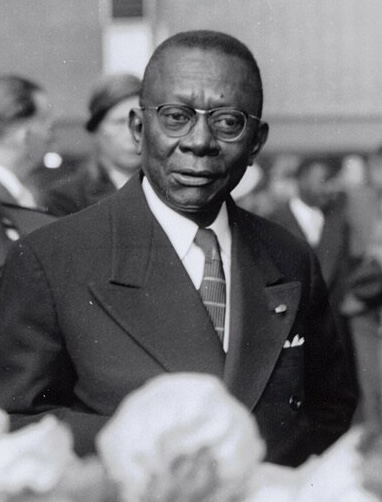
William Vacanarat Shadrach Tubman† stands as a colossal figure in the annals of Liberian history. Serving as the nation's 19th President for an unprecedented 27 years, from 1944 until his death in 1971, his tenure was the longest in the country's history. Often referred to as the "father of modern Liberia," William Tubman presided over a period of profound transformation, steering the nation from relative isolation into a period of significant economic growth and greater, though still limited, social integration. His legacy is defined by two cornerstone policies: the Open Door Policy, which aggressively attracted foreign investment, and the National Unification Program, aimed at bridging the deep-seated divide between the Americo-Liberian elite and the indigenous ethnic majority. As an Ex-President (1944-1971), his impact on Politics & Government in West Africa remains a subject of both admiration and critical analysis.
Early Life & Education: From Harper to the Halls of Power
William V.S. Tubman was born on November 29, 1895, in Harper, Maryland County, Liberia. His background was firmly within the Americo-Liberian settler class, the descendants of freed American slaves who founded the republic. His father, the Reverend Alexander Tubman, was a preacher, former Speaker of the Liberian House of Representatives, and a former Senator. From an early age, William Tubman was immersed in the political and religious institutions that underpinned Americo-Liberian society.
His education began at Methodist schools in Harper before he enrolled at the prestigious Cape Palmas Seminary. Demonstrating early intellectual promise and a strong work ethic, he later studied at the Cuttington College and Divinity School. His initial career path followed his father's footsteps into the Methodist Episcopal Church, where he was ordained as a pastor. However, the pull of law and Politics & Government proved stronger. He apprenticed under a private law firm, a common practice at the time, and was admitted to the Liberia Bar in 1917. This legal training became the foundation for his rapid ascent in public service, equipping him with the skills for debate, governance, and statecraft.
Career & Major Achievements: The Tubman Era (1944-1971)
William Tubman's political career began in his twenties. He served as a recorder in the Maryland County Monthly and Probate Court before being elected as a Senator from Maryland County in 1923, becoming, at age 28, the youngest senator in Liberian history. He served as a prosecutor and later as a judge in the Supreme Court of Liberia. This extensive judicial and legislative experience positioned him perfectly for the highest office. In 1943, he successfully ran for the presidency on the True Whig Party ticket—the party that held unbroken dominance for over a century—and was inaugurated on January 3, 1944.
The Open Door Policy: Economic Revitalization
Upon taking office, Tubman inherited a stagnant economy heavily reliant on rubber production from Firestone's plantations. His response was the revolutionary Open Door Policy. This policy actively encouraged foreign capital, expertise, and corporations to invest in Liberia by offering generous concessions, tax incentives, and infrastructure support. The results were transformative:
- Massive expansion of the rubber industry, with new entrants like the Liberian Agricultural Company (LAC).
- Development of the iron ore mining sector, led by companies such as the Liberia Mining Company (LMC) and later the Liberian-American-Swedish Minerals Company (LAMCO).
- Infrastructure projects, including the construction of the modern Freeport of Monrovia, new roads, and the Roberts International Airport.
The National Unification Program: A Fragile Bridge
Alongside economic reform, William Tubman tackled Liberia's entrenched social apartheid. The National Unification Program, launched in 1944, sought to integrate indigenous Liberians into the political and social life of the nation. Key measures included:
- Extending suffrage to indigenous property-owning males and women (later universal suffrage).
- Appointing indigenous individuals to government positions, though rarely to the most powerful posts.
- Abolishing the punitive "hut tax" and officially ending forced labor.
- Promoting cultural events that celebrated indigenous heritage alongside Americo-Liberian traditions.
Foreign Policy & Pan-Africanism
On the international stage, President Tubman was a respected elder statesman. He maintained a staunchly pro-Western stance during the Cold War, aligning closely with the United States. Simultaneously, he was a vocal advocate for African independence and unity. He hosted the 1961 conference of African leaders that led to the founding of the Organization of African Unity (OAU) in 1963 and played a key mediating role in continental disputes. His long and stable rule provided Liberia with an unusual degree of influence in post-colonial African affairs.
Personal Life, Legacy, and Final Years
William Tubman was a charismatic and authoritative leader. He was known for his "Executive Mansion" open-house events and his annual travels to every county, which he called "administrative tours." He married Antoinette Padmore in 1919, and after her passing, he wed Martha Aletha Rhoda in 1948. He was a devout Methodist and a Freemason. His personal interests included hunting and oratory. Philanthropically, he used personal and state funds to support churches, schools, and community projects, further cementing his public image.
The legacy of William Tubman is complex and dualistic. He is credited with modernizing Liberia's economy, infrastructure, and international profile. His unification policies began a crucial, if incomplete, national dialogue. However, his long reign was also characterized by political repression, the consolidation of one-party rule, and accusations of corruption that concentrated wealth among a small clique. The economic boom fueled by foreign investment created vulnerabilities, making Liberia dependent on global commodity prices. He died on July 23, 1971, in a London clinic following surgery, and was succeeded by his Vice President, William R. Tolbert, Jr. The stability of the "Tubman Era" unraveled just over a decade later with the 1980 coup, a event many historians see as a direct consequence of the unresolved tensions his policies had managed but not eliminated.
Net Worth & Business Ventures
While precise figures are not available from historical records, William Tubman was widely considered one of the wealthiest men in Liberia during his presidency. His wealth was intertwined with state power and the economic system he fostered. His assets were believed to include significant holdings in rubber plantations, real estate across Liberia, and shares in various concession-based enterprises that benefited from government contracts. It was common for high-ranking officials of the True Whig Party to have business interests that aligned with national development projects. This blending of personal business and public office led to perennial allegations of patronage and crony capitalism. His estate and the famous "Tubman Farm" were symbols of this acquired wealth, reflecting the financial advantages that could accrue to the head of state in a system where political and economic power were closely linked.
Note: This biography is constructed based on historical accounts of William V.S. Tubman's life and presidency. For further reading, consult academic sources on Liberian history or archival materials from the period.
Net Worth Analysis
William Tubman, President of Liberia from 1944 until his death in 1971, is a historical political figure with no contemporary net worth estimates. His wealth was not comparable to modern business billionaires.
Quick Stats
Related People
Aaron Motsoaledi
LP; Minister of Home Affairs
Abane Ramdane†
FLN Leader & Strategist
Abdalla Hamdok
Ex-Prime Minister
Abdallah Kigoda
Ex-Minister of Natural Resources