Financial Breakdown
Asset Distribution
Assets vs Liabilities
Assets
Liabilities
Disclaimer: These financial estimates are based on publicly available information and should be considered approximate. Last updated: 12/30/2025
Biography
Introduction: The Unification President
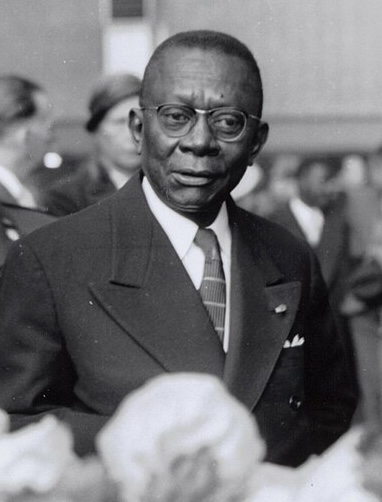
William Vacanarat Shadrach Tubman† stands as a monumental figure in the annals of Liberian history. Serving as the nation's Eighteenth President from 1944 until his death in 1971, his 27-year tenure remains the longest in Liberian history. Often hailed as the "father of modern Liberia," William V. S. Tubman† is most notable for his visionary Unification Policy, which sought to bridge the profound socio-economic and political chasm between the Americo-Liberian elite and the indigenous majority. His presidency transformed Liberia from a relatively isolated republic into a more integrated, economically active nation on the African and world stage. Through a combination of political savvy, economic liberalism, and diplomatic acumen, Tubman's era, known as the "Tubman Age," was marked by unprecedented stability, foreign investment, and national development.
Early Life & Education: Formative Years in Maryland County
William V. S. Tubman† was born on November 29, 1895, in Harper, Maryland County, Liberia. His father, the Reverend Alexander Tubman, was a strict Methodist preacher, general, and former Speaker of the Liberian House of Representatives, belonging to the Americo-Liberian class. His mother, Elizabeth Rebecca (Barnes) Tubman, was from Atlanta, Georgia. This heritage placed young William within the politically dominant settler community, deeply influencing his worldview and future career in Politics & Government.
His education began at the Methodist Cape Palmas Seminary and continued at the prestigious Harper County High School. Demonstrating intellectual promise and leadership early on, Tubman became a teacher before deciding to study law. He apprenticed under a seasoned lawyer, a common path to the bar at the time, and was admitted to the Liberia Bar in 1917. His legal career was swiftly interrupted by a call to public service. His formative experiences were not just academic; serving as a colonel in the Liberian militia and as a recorder in the Maryland County court system exposed him to the intricate realities of local governance and the deep-seated tensions between the coastal elite and interior populations—a theme he would later address as president.
Career & Major Achievements: The Tubman Age (1944-1971)
William V. S. Tubman's† political ascent was rapid. He was elected to the Liberian Senate from Maryland County in 1923, becoming, at 28, the youngest senator in Liberian history. After a distinguished judicial career as a county judge and later an associate justice of the Supreme Court of Liberia, he was nominated as the presidential candidate for the True Whig Party, the dominant political entity. In 1944, he won the election and began a presidency that would redefine the nation.
The National Unification Policy
Tubman's cornerstone achievement was the National Unification Policy, launched in 1944 and formally codified by an act in 1964. This policy was a direct attempt to dismantle the legal and social barriers that marginalized the indigenous majority. Key initiatives included:
- Extending suffrage to indigenous Liberians and women.
- Abolishing forced labor practices.
- Promoting the integration of indigenous leaders into the national political structure through appointments to the legislature and bureaucracy.
- Establishing a "National Unification Council" to foster dialogue.
Economic Open Door Policy and Infrastructure
To fuel national development, President Tubman instituted an "Open Door Policy" to attract foreign investment. He successfully negotiated major concessions, most notably with the American-owned Liberia Mining Company (Bomi Hills iron ore) and later the Liberian-American-Swedish Minerals Company (LAMCO). These deals brought massive revenues, which Tubman's government invested in ambitious infrastructure projects. During his tenure, the capital city of Monrovia saw modernization, and critical roads, bridges, and public buildings were constructed, physically connecting the country's regions for the first time.
Foreign Policy and Pan-African Leadership
On the international stage, William V. S. Tubman† was a prominent early voice for African solidarity. He maintained a staunchly pro-Western stance during the Cold War, aligning closely with the United States, which brought significant aid and strategic importance to Liberia. Simultaneously, he was a founding father of the Organization of African Unity (OAU) in 1963. He hosted the 1961 OAU conference in Monrovia, from which the "Monrovia Group," advocating for a gradualist approach to African unity, took its name. His diplomacy helped position Liberia as a respected mediator in continental affairs.
Personal Life, Philanthropy & Lasting Legacy
Personally, William V. S. Tubman† was known for his charismatic, yet authoritative, demeanor. He was a devoted Mason and a lay preacher in the Methodist Church, often infusing his speeches with religious rhetoric. He married Antoinette Padmore in 1910, and after her passing, he wed Martha Aletha Rhoda in 1921. His personal interests included oratory, hunting, and hosting lavish social events at his official residence, which became a symbol of his long rule.
His philanthropic efforts were often channeled through his church and Masonic lodges, though his most significant legacy is institutional. He founded the Liberian National Bank, introduced a national currency, and expanded the educational system, including establishing the University of Liberia's medical school. The Tubman National Institute of Medical Arts (TNIMA) bears his name. However, his legacy is complex. While he oversaw economic growth and initiated unification, his rule was also characterized by a strong one-party state, patronage politics, and the concentration of power. His death on July 23, 1971, in London, marked the end of an era. The stability he cultivated unraveled in the following decades, leading many to view his presidency with a mix of admiration for its achievements and criticism for its unresolved contradictions.
Net Worth & Business Ventures
While precise figures are not publicly documented from the era, William V. S. Tubman† was widely considered one of the wealthiest men in Liberia during his presidency. His financial success was intertwined with the nation's economic boom under his Open Door Policy. He had significant personal investments in rubber plantations, following the model of large foreign concessions like Firestone. Furthermore, it was reported that he held interests in various other sectors that benefited from government contracts and the booming extractive industries. Like many leaders of his time, the line between state assets and personal wealth was often blurred within the system of patronage that sustained the True Whig Party's rule. His lifestyle, including multiple residences and extensive travel, reflected his affluent status, which was both a product of and an influence on Liberia's political economy during the mid-20th century.
Sources: Historical information is drawn from authoritative texts on Liberian history, including "Liberia: The Rise and Fall of the First Republic" by G. E. Saigbe Boley, official documents from the Liberian government, and archival records from the Organization of African Unity. For further reading, consult academic databases and the Library of Congress collections on Liberia.
Net Worth Analysis
William V. S. Tubman was President of Liberia from 1944 until his death in 1971; he is a historical figure, not a living billionaire.
Quick Stats
Related People
Aaron Motsoaledi
LP; Minister of Home Affairs
Abane Ramdane†
FLN Leader & Strategist
Abdalla Hamdok
Ex-Prime Minister
Abdallah Kigoda
Ex-Minister of Natural Resources