Financial Breakdown
Asset Distribution
Assets vs Liabilities
Assets
Liabilities
Disclaimer: These financial estimates are based on publicly available information and should be considered approximate. Last updated: 12/30/2025
Biography
Introduction: The Mother of the Nation
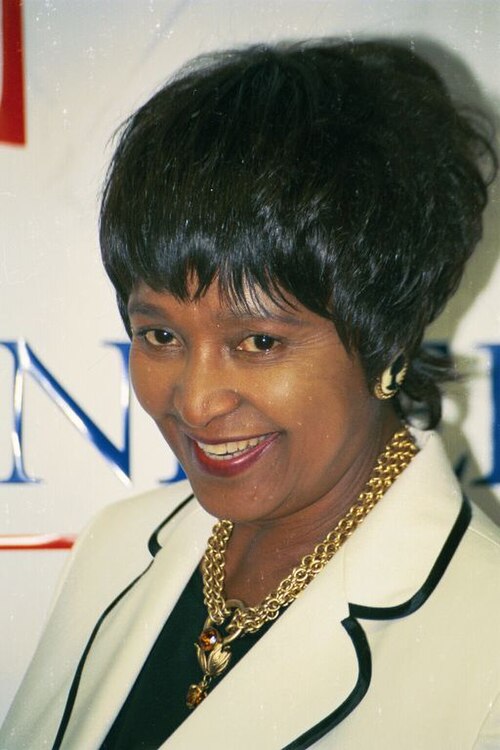
Winnie Madikizela-Mandela† stands as one of the most iconic, controversial, and indomitable figures in the history of the South African liberation struggle. Known globally as "Mother of the Nation," her life was a testament to fierce resistance against the oppressive apartheid regime. While her legacy is inextricably linked to her marriage to Nelson Mandela, Winnie Madikizela-Mandela† carved her own formidable identity as an activist, enduring relentless state persecution, banishment, and imprisonment. Her key achievement lies in her unwavering, often militant, public defiance that kept the spirit of the anti-apartheid movement alive during Nelson Mandela's 27-year incarceration. However, her story is a complex tapestry of immense courage, profound personal sacrifice, and later-life controversies that continue to spark intense debate within the Politics & Government landscape of modern South Africa.
Early Life & Education: Forging a Path
Born Nomzamo Winifred Zanyiwe Madikizela on September 26, 1936, in the village of eMbongweni, Bizana, in what is now the Eastern Cape, her early life was marked by both ambition and tragedy. She was the fourth of nine children to Columbus, a history teacher and later a minister of the Transkei government, and Gertrude, a domestic science teacher. The name "Nomzamo," meaning "she who must endure," proved prophetic. Despite the relative privilege of an educated family, she experienced loss early with her mother's death when she was nine.
Winnie excelled academically, becoming the first black female social worker in South Africa after graduating from the Jan H. Hofmeyr School of Social Work in Johannesburg in 1955. This professional training placed her in direct contact with the brutal realities of apartheid, as she worked at Baragwanath Hospital. Witnessing the devastating effects of poverty, pass laws, and racial discrimination on black families was a pivotal formative experience. It politicized her worldview and steered her towards the burgeoning anti-apartheid movement, setting the stage for her entry into a life of Activist & Symbol of Resistance; EC; F.
Career & Major Achievements: Unbroken Defiance
Winnie Madikizela-Mandela's political career began in earnest after marrying Nelson Mandela in 1958. Following his arrest in 1962 and subsequent life sentence in 1964, she was thrust into the forefront of the struggle. The state targeted her incessantly, aiming to break her spirit. Her major achievements are defined by her survival and resistance under extreme pressure:
Relentless Activism and State Persecution
For over two decades, Winnie Madikizela-Mandela† became the public face of the African National Congress (ANC) and the Mandela name. She was subjected to:
- Bans and House Arrest: Served her first banning order in 1962, severely restricting her movement and speech.
- Detention and Torture: Endured 17 months in solitary confinement in 1969 under the Terrorism Act, where she was tortured.
- Banishment: In 1977, she was forcibly removed from her Soweto home and banished to the remote town of Brandfort in the Orange Free State, where she lived under house arrest for nine years. Characteristically, she turned this exile into a platform, organizing and mobilizing the local community.
The Militant Turn and the Mandela United Football Club
By the mid-1980s, her rhetoric and methods grew increasingly militant, mirroring the heightened tensions of the era. Her famous 1986 speech in Munsieville, where she declared, "Together, hand in hand, with our boxes of matches and our necklaces, we shall liberate this country," cemented her image as a radical force. She formed the Mandela United Football Club, a group of young men who acted as her bodyguards but were later implicated in intimidation, violence, and murder in Soweto. This period culminated in the 1991 conviction for kidnapping and being an accessory to assault in connection with the death of 14-year-old activist Stompie Moeketsi. The sentence was reduced to a fine on appeal.
Political Career in Democratic South Africa
In the post-apartheid era, Winnie Madikizela-Mandela† continued her political work. She was elected to the ANC's National Executive Committee and served as a Member of Parliament from 1994 until her death. She also held the position of Deputy Minister of Arts and Culture in 1994-1995 before being dismissed following allegations of corruption. Despite official positions, her most significant role remained that of a vocal critic within the ANC, championing the cause of the economically marginalized and accusing the post-1994 government of failing the poor—a stance that maintained her popularity among many grassroots supporters.
Personal Life & Legacy: A Contested Icon
Winnie Madikizela-Mandela's personal life was dominated by her marriage and family, yet marked by immense strain. Her relationship with Nelson Mandela, strained by decades of separation and differing political approaches, ended in a divorce finalized in 1996. They had two daughters, Zenani and Zindziwa. Her personal interests were largely subsumed by the political struggle, though she was known for her distinctive style and powerful oratory.
Her legacy is profoundly dualistic. To her supporters, she remains an uncompromising revolutionary who bore the brunt of apartheid's cruelty and never wavered. She is celebrated as the fierce woman who kept the Mandela name and the flame of resistance burning. To critics, her association with violent methods and later corruption scandals tarnishes her record. The Truth and Reconciliation Commission found her "politically and morally accountable for the gross violations of human rights" committed by the MUFC. Ultimately, Winnie Madikizela-Mandela† embodies the complexities of the Liberation Era—a symbol of both immense courage and the morally ambiguous tactics that can emerge from prolonged, brutal conflict. She passed away on April 2, 2018, and was accorded a state funeral, a testament to her indelible mark on the nation's history.
Net Worth & Business Ventures
While not a business magnate, Winnie Madikizela-Mandela's financial affairs were often the subject of public scrutiny and controversy. Her net worth was difficult to ascertain but was reported to be relatively modest compared to other political figures, especially given her legal troubles and fines. Her income primarily derived from her parliamentary salary and various business ventures, some of which were entangled in allegations of corruption. Notably, in the 1990s, she was involved in a scandal related to fraudulent bank loans obtained through her connections, which led to her conviction for fraud in 2003 (later overturned on appeal). These financial controversies contributed to the complex narrative of her post-apartheid life, where she was simultaneously a champion of the poor and a figure accused of leveraging her political status for personal gain. Her financial story remains a footnote to her larger political legacy, yet it reflects the challenges of transition and accountability in the new South Africa.
Sources: South African History Online (SAHO), Truth and Reconciliation Commission (TRC) reports, biographical works by Anne Mérie and Emma Gilbey, and archival news reports from The Guardian, BBC, and South African media.
Net Worth Analysis
Winnie Madikizela-Mandela was a political activist, not a business figure, and her wealth was not substantial; she faced significant legal debts and financial struggles during her lifetime.
Quick Stats
Related People
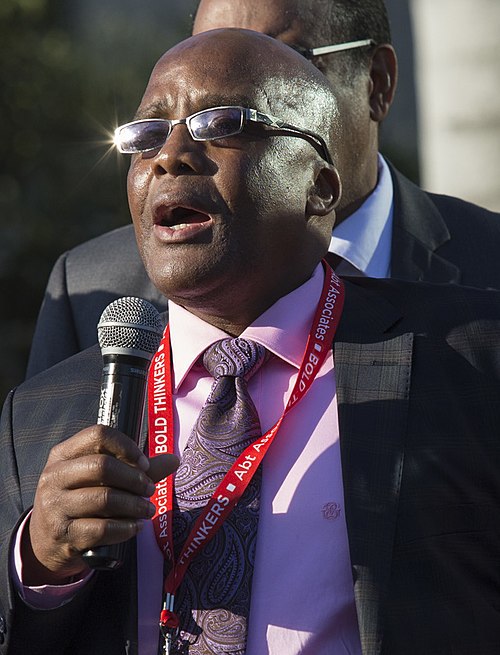
Aaron Motsoaledi
LP; Minister of Home Affairs
Abane Ramdane†
FLN Leader & Strategist
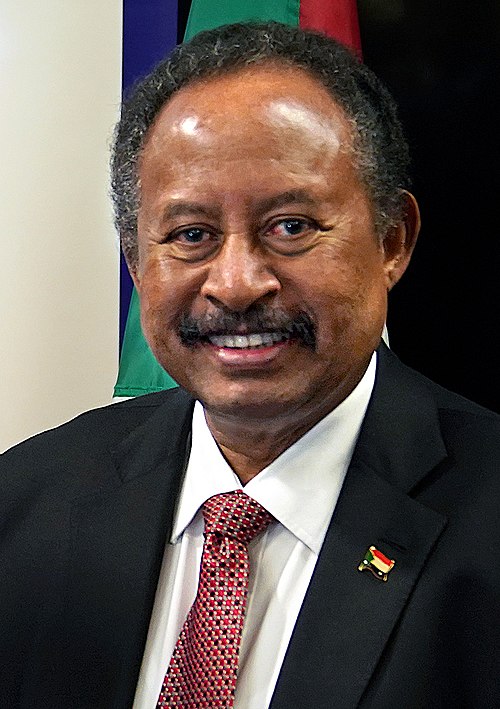
Abdalla Hamdok
Ex-Prime Minister
Abdallah Kigoda
Ex-Minister of Natural Resources