$5M
Estimated Net Worth
As of 2024 • medium confidence
Financial Breakdown
Asset Distribution
Assets vs Liabilities
Assets
Disclaimer: These financial estimates are based on publicly available information and should be considered approximate. Last updated: 12/30/2025
Biography
Introduction: The Leader Who Preserved Nigeria
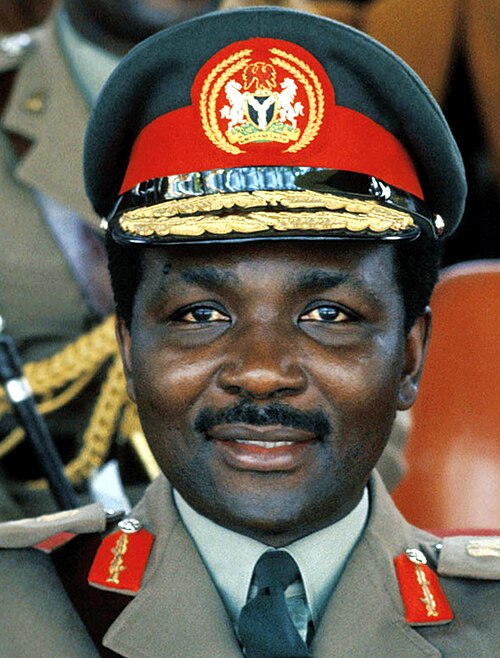
General Yakubu "Jack" Dan-Yumma Gowon stands as a pivotal figure in the complex tapestry of Nigerian Politics & Government. As the Ex-Head of State & Elder Statesman who led the Federal Military Government from 1966 to 1975, his tenure was defined by one of Africa's most tragic conflicts and its subsequent reconciliation. Born on October 19, 1934, Yakubu Gowon ascended to power amidst the chaos of Nigeria's first military coup and a counter-coup, becoming the country's youngest head of state at age 31. His most notable, and often debated, achievement was leading the Nigerian side through the brutal Nigerian Civil War (1967-1970), also known as the Biafran War, ultimately preserving the federation's unity. His declaration of "no victor, no vanquished" at the war's end and his policy of the "Three Rs" – Reconciliation, Rehabilitation, and Reconstruction – remain central to his legacy, marking him as a leader who sought healing in the aftermath of profound national trauma.
Early Life & Education: From Plateau to Sandhurst
Yakubu Gowon was born in Lur, a village in present-day Kanke Local Government Area of Plateau State, to parents from the Ngas (Angas) ethnic group. His early life was rooted in the diverse Middle Belt region of Nigeria, an experience that would later inform his pan-Nigerian outlook. Demonstrating academic promise, he attended St. Bartholomew's School in Wusasa, Zaria, and the Government College in Zaria (now Barewa College), a prestigious institution known for educating many of Nigeria's future elites.
His formative path took a decisive turn in 1954 when he enlisted in the Nigerian Army. His potential was quickly recognized, leading to his selection for training at the renowned Royal Military Academy, Sandhurst, in the United Kingdom in 1955. Commissioned as a second lieutenant upon his return, Yakubu Gowon continued his military education, attending the Staff College in Camberley and the Joint Services Staff College in the UK. These experiences equipped him with both the tactical knowledge and the broad strategic perspective that would be tested during the national crisis of the mid-1960s. His rise through the ranks was steady, and by January 1966, he had been promoted to Lieutenant Colonel and appointed Chief of Army Staff.
Career & Major Achievements: Steering a Nation Through Crisis
The trajectory of Gowon's career was irrevocably altered by the tumultuous events of 1966. After the January coup (which took the life of the first military head of state, Major General Aguiyi-Ironsi) and the July counter-coup by northern officers, the senior military leadership sought a unifying figure. Yakubu Gowon, a Christian from the minority Middle Belt, was seen as a compromise candidate acceptable to both the north and the south. On August 1, 1966, he was appointed Head of the Federal Military Government and Commander-in-Chief of the Armed Forces.
The Nigerian Civil War and "No Victor, No Vanquished"
His government's immediate challenge was the secession of the Eastern Region, which declared itself the Republic of Biafra on May 30, 1967. Gowon responded by declaring a state of emergency and dividing Nigeria's four regions into twelve states, a strategic move to decentralize power and weaken regional secessionist impulses. War broke out in July 1967. For 30 grueling months, General Gowon commanded the federal forces against Biafran secessionists. The war concluded with Biafra's surrender on January 15, 1970. In a historic broadcast, Gowon famously stated, "The tragic chapter of violence is just ended. We are at the dawn of national reconciliation. Once again, we have an opportunity to build a new nation." His policy of granting a general amnesty and pursuing the "Three Rs" was a conscious effort to avoid punitive measures and foster national unity, a stance that defined his post-war leadership.
Post-War Governance and the "Nine-Year Plan"
Following the war, Gowon focused on reconstruction and development. His administration embarked on ambitious infrastructure projects, including the founding of the National Youth Service Corps (NYSC) in 1973, a program designed to promote national integration by having graduates serve in states other than their own. He also oversaw the creation of new universities and the initiation of Nigeria's first indigenization decree, which sought to transfer economic control to Nigerians. His government launched a Nine-Year Plan for development and successfully hosted the All-Africa Games in 1973, showcasing a recovering Nigeria.
Ouster and Exile
Despite these achievements, his regime began to face criticism over corruption, postponement of the promised return to civilian rule, and economic challenges. On July 29, 1975, while Gowon was attending an Organization of African Unity (OAU) summit in Kampala, Uganda, he was overthrown in a bloodless coup led by Brigadier Murtala Muhammed. Yakubu Gowon went into exile in the United Kingdom, where he pursued academic studies, earning a Ph.D. in Political Science from the University of Warwick in 1984.
Personal Life, Legacy & Later Years
In exile, Gowon married Miss Victoria Zakari, a nurse, in 1969. They have children together. Following a pardon, he returned to Nigeria in the 1980s and has since assumed the role of an Elder Statesman. He is a devout Christian and is actively involved in the "Nigeria Prays" movement, a national prayer network he helped found, reflecting his deep religious faith and continued concern for the nation's well-being.
The legacy of Yakubu Gowon is complex and multifaceted. To many, he is the soldier who kept Nigeria one, a unifying force during its most existential threat. His post-war reconciliation policy is widely praised as an act of statesmanship. However, critics point to the human cost of the war and the failures of his administration to curb corruption or effectively manage the oil boom of the early 1970s. Despite this, his enduring commitment to Nigerian unity is unquestioned. In his later years, he has served as an advisor and moral voice, often called upon to mediate in national disputes. His life journey from a young Sandhurst-trained officer to a wartime leader, exiled former head of state, and finally a reconciled elder statesman, mirrors the turbulent yet resilient story of Nigeria itself.
Net Worth & Business Ventures
As a former military ruler who has lived a long life in public service, specifics regarding General Yakubu Gowon's net worth are not publicly verified and remain a private matter. Unlike some of his contemporaries, he has not been widely associated with major commercial business ventures or significant private sector involvement. His post-head of state life has been primarily dedicated to academic pursuits, international diplomacy (including roles with the World Council of Churches), and his work as a moral and religious advocate through the "Nigeria Prays" initiative. Any personal wealth is likely derived from pensions, investments, and possibly book royalties or speaking engagements, consistent with the profile of a retired statesman. His public image has largely been that of a modest elder statesman focused on national and spiritual issues rather than overt commercial enterprise.
Key Facts at a Glance
- Full Name: Yakubu Dan-Yumma Gowon
- Born: October 19, 1934 (Lur, Plateau State, Nigeria)
- Title: Former Head of State, Federal Military Government of Nigeria
- Term in Office: August 1, 1966 – July 29, 1975
- Major Event: Led Nigeria during the Nigerian Civil War (Biafran War), 1967-1970.
- Famous Policy: "No victor, no vanquished" and the "Three Rs" (Reconciliation, Rehabilitation, Reconstruction).
- Notable Creation: Founded the National Youth Service Corps (NYSC) in 1973.
- Education: Royal Military Academy, Sandhurst; Ph.D., University of Warwick (1984).
- Current Status: Elder Statesman and religious advocate.
Net Worth Analysis
As a former military head of state with a modest public pension and no known major business interests, his wealth is estimated from his public service career and elder statesman role.
Quick Stats
Related People
Aaron Motsoaledi
LP; Minister of Home Affairs
Abane Ramdane†
FLN Leader & Strategist
Abdalla Hamdok
Ex-Prime Minister
Abdallah Kigoda
Ex-Minister of Natural Resources