$50M
Estimated Net Worth
As of 2024 • low confidence
Financial Breakdown
Asset Distribution
Assets vs Liabilities
Assets
Disclaimer: These financial estimates are based on publicly available information and should be considered approximate. Last updated: 12/30/2025
Biography
Introduction: The Pillar of Modern Uganda
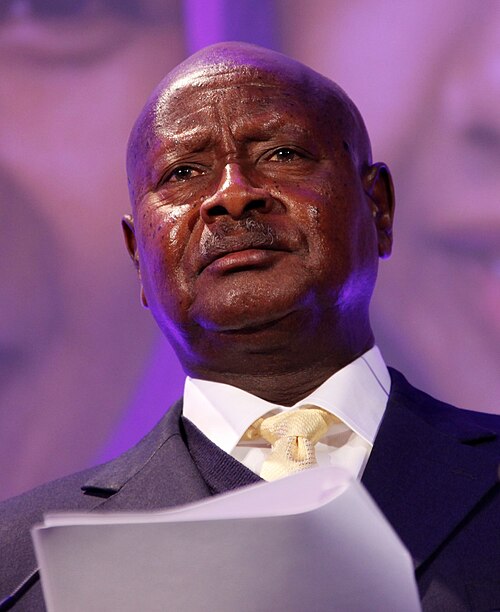
Yoweri Kaguta Museveni is a defining figure in modern African Politics & Government, having served as the President of Uganda since January 1986. His tenure, one of the longest of any head of state in the world, has profoundly shaped the nation's trajectory for nearly four decades. Museveni rose to power as a rebel leader, overthrowing a brutal military junta and promising stability, security, and economic transformation. His rule has been characterized by significant achievements in macroeconomic growth, infrastructure development, and regional security leadership, particularly through Uganda's involvement in Somalia with the African Union. However, his presidency is also marked by intense debate over democratic governance, human rights, and political succession. Understanding Yoweri Museveni is essential to understanding contemporary Uganda and its role in East Africa.
Early Life & Education: The Making of a Revolutionary
Yoweri Museveni was born in 1944 in Ntungamo, then part of the British colonial territory of Uganda. He hails from the Ankole sub-group of the Banyankole people. His formative years were influenced by the political activism of his father, a cattle herder, and the turbulent transition of Uganda to independence in 1962. Museveni attended Mbarara High School and later Ntare School, where his political consciousness began to take shape.
In 1967, he enrolled at the University of Dar es Salaam in Tanzania, a hotbed for anti-colonial and pan-Africanist thought. This period was crucial. He studied economics and political science, immersing himself in the works of revolutionary thinkers like Frantz Fanon and Julius Nyerere. At university, he led a student activist group and forged connections with liberation movements across southern Africa. It was here that Yoweri Museveni developed his core ideology, blending Marxist-Leninist concepts with a strong African nationalist perspective. He graduated in 1970, returning to Uganda just as the political situation under Prime Minister Milton Obote was deteriorating, setting the stage for his military and political career.
Career & Major Achievements: From Guerrilla Leader to Statesman
Yoweri Museveni's career is a chronicle of Uganda's modern political history. After the 1971 coup by Idi Amin, Museveni went into exile and formed the Front for National Salvation (FRONASA), a guerrilla group that fought alongside Tanzanian forces to oust Amin in 1979. Dissatisfied with the subsequent chaotic and contested elections in 1980, which he deemed rigged, he returned to the bush to launch a guerrilla war.
The Bush War and Seizing Power
In 1981, Museveni formed the National Resistance Army (NRA) and its political wing, the National Resistance Movement (NRM). The ensuing five-year bush war culminated in the NRA's capture of Kampala on January 26, 1986. Upon assuming the presidency, the 42-year-old Yoweri Museveni famously declared, "This is not a mere change of guards, but a fundamental change." He established a "no-party" system known as the Movement system, arguing that political parties were divisive in Africa's ethnically diverse societies.
Economic Reforms and Regional Influence
In the 1990s, his government implemented World Bank and IMF-prescribed structural adjustment programs. Key achievements include:
- Macroeconomic Stabilization: Taming hyperinflation, which peaked at over 200% in the 1980s, to single digits.
- Poverty Reduction: According to World Bank data, the percentage of Ugandans living in poverty fell from 56% in 1992 to about 20% by 2020.
- HIV/AIDS Response: Implemented an early and aggressive public health campaign, reducing HIV prevalence from a peak of 18% in the 1990s to around 5%.
- Regional Security Actor: Uganda under Museveni has played a pivotal military role in the region, including involvement in the Congo Wars and leading the African Union Mission in Somalia (AMISOM) since 2007.
Political Evolution and Controversies
Under international and domestic pressure, Museveni restored multi-party politics in 2005 via a constitutional referendum. That same year, he had the presidential term limits removed, allowing him to run for re-election repeatedly. He has since won contested elections in 2006, 2011, 2016, and 2021, with each poll marred by allegations from opposition figures and international observers of intimidation, harassment, and electoral irregularities. The longevity of Yoweri Museveni's rule has led to a consolidation of power, with key positions in the military, security services, and government often held by close allies or family members.
Personal Life & Legacy
Yoweri Museveni is married to Janet Kataaha Museveni, who has served as First Lady, Member of Parliament, and, since 2016, as Minister of Education and Sports. They have four children, some of whom are prominent in Ugandan business, military, and Politics & Government. Museveni is known for his personal discipline, often seen in his signature wide-brimmed hat and safari suits. He is a published author, with works like "Sowing the Mustard Seed" detailing his early life and political philosophy. His legacy is intensely polarized. Supporters credit him with bringing stability, economic growth, and a strong voice for Africa on the global stage. Critics argue his rule has become increasingly authoritarian, stifling dissent, and failing to manage the critical issue of presidential succession. His impact on Uganda is indelible, shaping its institutions, economy, and place in the world for generations.
Net Worth & Business Interests
While the official salary of the President of Uganda is publicly known, the full extent of Yoweri Museveni's personal wealth and that of his family is a subject of much speculation and is not officially transparent. He is not considered a businessman in the traditional sense, but his long tenure at the apex of power coincides with the rise of a significant business class with close ties to the state. The Museveni family has been reported by various international media and watchdog groups to have interests in ranching, dairy production (through the family's "Muhoozi" brand), and other sectors. These reports often highlight the blurred lines between state, ruling party, and private family business interests in Uganda. The president has consistently framed his family's economic activities as lawful private enterprise and models of agricultural success. Accurate net worth figures remain unverified, as is common with many long-serving leaders in the region.
For further reading on the political context of Uganda, visit resources like the U.S. Department of State's Uganda page or the World Bank's Uganda overview.
Net Worth Analysis
No credible public net worth estimate exists; his wealth is not listed on Forbes and is considered private, but his long tenure as president and family business interests suggest substantial wealth.
Quick Stats
Related People
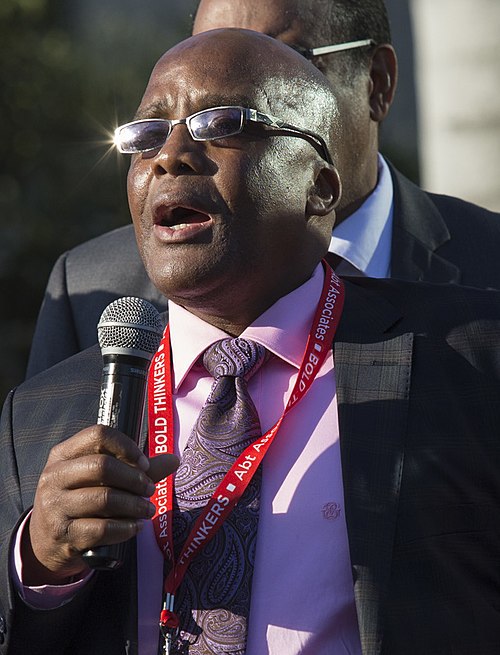
Aaron Motsoaledi
LP; Minister of Home Affairs
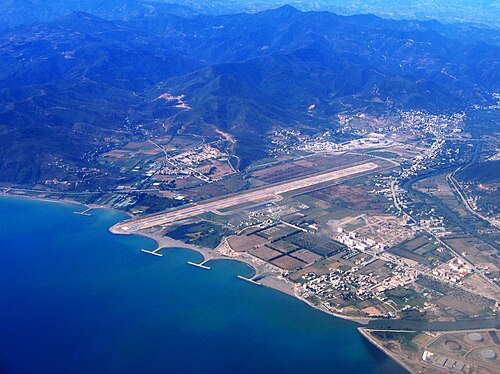
Abane Ramdane†
FLN Leader & Strategist
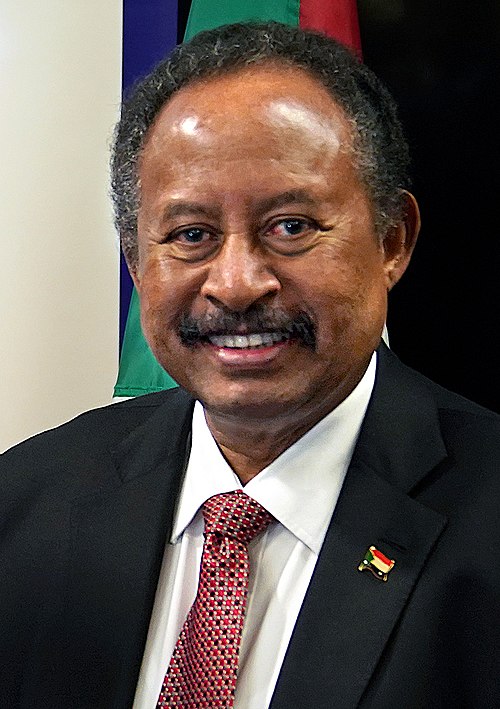
Abdalla Hamdok
Ex-Prime Minister
Abdallah Kigoda
Ex-Minister of Natural Resources