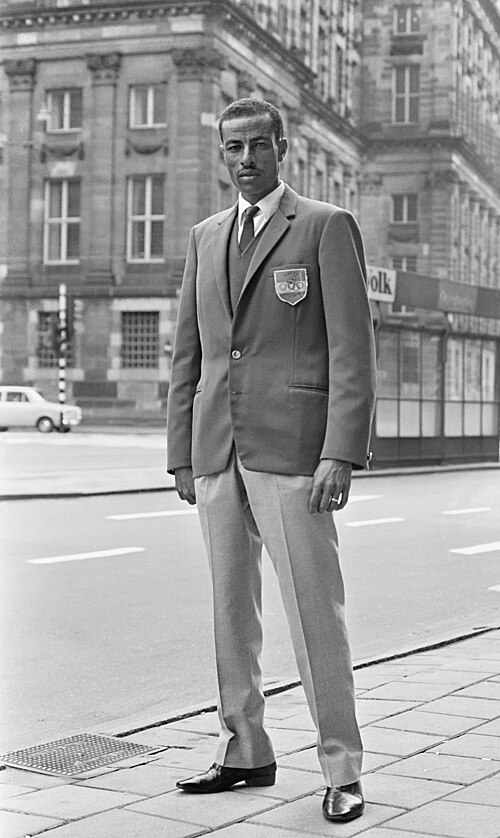
Biography
Introduction: An Unforgettable Olympic Triumph
In the annals of sports history, few moments are as iconic and transformative as the victory of Abebe Bikila† at the 1960 Rome Olympics. An unknown soldier from the Ethiopian Imperial Guard, Bikila did not just win the marathon; he redefined possibility. On September 10, 1960, running barefoot along the ancient Appian Way under the light of Roman torches, Abebe Bikila† crossed the finish line in a world-record time of 2:15:16.2. This monumental achievement made him the first African Olympic gold medalist, shattering stereotypes and heralding the dawn of East African dominance in long-distance running. His victory was a powerful symbol of pride and potential for the entire continent of Africa, cementing his status as a national hero of Ethiopia and a global sporting legend.
Early Life & Education: The Making of a Marathoner
Abebe Bikila† was born on August 7, 1932, in the small village of Jato, approximately 130 kilometers from the Ethiopian capital, Addis Ababa. His upbringing was rural and rugged, typical of the Ethiopian highlands. From a young age, Bikila developed exceptional endurance through daily activities such as running to school and herding livestock across vast, mountainous terrain. This foundational strength, built at altitudes over 2,000 meters, would become the physiological bedrock of his running career.
His formal education was limited, and at the age of 17, he moved to Addis Ababa. In 1952, he joined the Imperial Guard, an elite unit responsible for protecting Emperor Haile Selassie. It was during his military service that his athletic talent was formally recognized. Coach Onni Niskanen, a Swedish-born officer tasked with developing Ethiopian athletics, noticed Bikila's natural stamina and disciplined demeanor. Niskanen became his lifelong mentor, crafting a rigorous training regimen that honed Bikila's innate abilities. Unlike many modern athletes, Abebe Bikila's† "education" was not in a classroom but on the dirt tracks and highland paths of Ethiopia, under the watchful eye of a coach who believed in his extraordinary potential.
Career & Major Achievements: A Legacy Forged in Gold
The career of Abebe Bikila† is a story of two Olympic triumphs, each more dramatic than the last. His selection for the 1960 Rome Games was itself a surprise, and his decision to run barefoot—reportedly due to discomfort with new shoes—became the stuff of legend. His victory was not just a win; it was a statement of simplicity and connection to the earth.
The 1960 Rome Olympics: A Barefoot Revolution
His strategy in Rome was audacious. He and his teammate, Abebe Wakgira, stayed with the lead pack before Bikila made a decisive break after the halfway point. He ran past the Obelisk of Axum, a monument looted from Ethiopia by Italian forces decades earlier, adding a layer of poetic justice to his performance. His record-breaking win announced Ethiopia and Africa onto the world sporting stage.
The 1964 Tokyo Olympics: Defying All Odds
Just six weeks before the 1964 Tokyo Olympics, Abebe Bikila† underwent an emergency appendectomy. Many doubted he could recover in time, let alone defend his title. Defying all medical expectations, he not only competed but delivered one of the most dominant performances in marathon history. This time wearing shoes, he led from start to finish, breaking his own world record with a time of 2:12:11.2. He became the first athlete ever to win the Olympic marathon twice, a feat that solidified his immortality in the sport of athletics.
Notable Career Highlights:
- 1960 Rome Olympics: Gold Medal, Marathon (World Record 2:15:16.2) – First African Olympic Gold.
- 1964 Tokyo Olympics: Gold Medal, Marathon (World Record 2:12:11.2) – First back-to-back marathon champion.
- 1963: Won the Boston Marathon (Course Record).
- 1960s: Won numerous international races, establishing Ethiopian distance running supremacy.
Tragically, his running career ended abruptly in 1969. Following a car accident in Addis Ababa, Abebe Bikila† was paralyzed from the waist down. He never walked again, but his spirit remained unbroken.
Personal Life & Legacy: The Enduring Spirit
Outside of running, Abebe Bikila† was a private family man, married to Yewebdar Wolde-Giorgis with four children. He was known for his quiet humility, discipline, and dignified demeanor. After his accident, he demonstrated incredible fortitude. He took up archery and table tennis, competing in the Paralympic Games in 1970 in Norway and winning a gold medal in archery. He also became a respected sports ambassador and coach.
The legacy of Abebe Bikila† is immeasurable. He is the patriarch of Ethiopian running, the inspiration for generations of champions like Mamo Wolde, Haile Gebrselassie, Kenenisa Bekele, and Eliud Kipchoge. He transformed the marathon from a Western-dominated event into an African forte. In Ethiopia, he is a revered national icon; the national stadium in Addis Ababa bears his name. His story is one of breathtaking triumph, heartbreaking adversity, and indomitable courage. He passed away on October 25, 1973, from a cerebral hemorrhage related to his accident, but his memory is eternally celebrated.
Net Worth & Post-Career Endeavors
In the amateur sports era of the 1960s, athletes did not earn prize money or lucrative endorsements as they do today. Therefore, quantifying Abebe Bikila's† net worth in modern terms is challenging. His rewards were primarily symbolic and honorific. Following his Olympic victories, Emperor Haile Selassie promoted him to the rank of Lieutenant in the Imperial Guard and gifted him a Volkswagen Beetle. He received a pension from the state and later from the Ethiopian Athletics Federation.
His "business" was his service to his country's athletic development. After his accident, he remained involved in sports through coaching and ambassadorial roles. While he did not engage in commercial ventures, his value lies in the immense cultural and sporting capital he generated for Ethiopia. Today, his name and image are protected assets of his estate and the Ethiopian state, used to inspire and promote athletic excellence. The true wealth of Abebe Bikila† is his everlasting legacy, which continues to motivate millions around the globe and remains priceless.
Sources: International Olympic Committee archives, Ethiopian Athletics Federation, biographical records including "The Barefoot Runner" and "Bikila: Ethiopia's Barefoot Olympian," and historical Olympic reports.
Frequently Asked Questions
What is Abebe Bikila†'s estimated net worth?
Net worth details for Abebe Bikila† are currently being updated.
What is Abebe Bikila†'s role and nationality?
Abebe Bikila† is a First African Olympic Gold Medalist from Ethiopia.
How did Abebe Bikila† make their money?
Abebe Bikila† built their fortune primarily through Abebe Bikila was a celebrated athlete who passed away in 1973, and his legacy is not associated with significant personal wealth accumulation..
How old is Abebe Bikila†?
Abebe Bikila† was born in 1932 (94 years old).
Which category is Abebe Bikila† listed under?
Abebe Bikila† is featured under the Sports category on NetWorth Africa.
How is Abebe Bikila†'s net worth calculated?
NetWorth Africa estimates financial valuations using publicly available stock equity holdings, company ownership records, real estate assets, and verified market data.
Net Worth Analysis
Abebe Bikila was a celebrated athlete who passed away in 1973, and his legacy is not associated with significant personal wealth accumulation.
Quick Stats


Related People
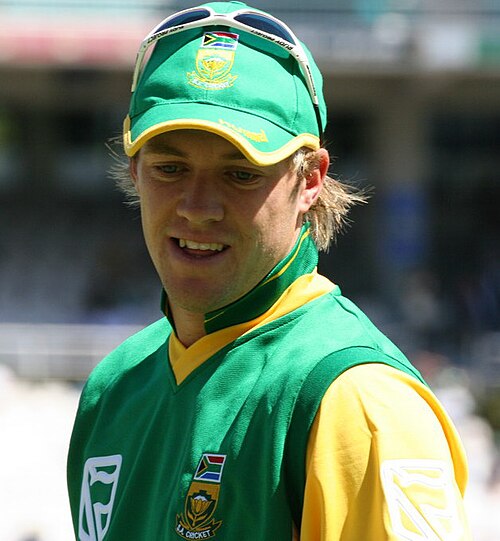
AB de Villiers
Proteas Legend • South Africa
Abdallahi Mahmoud
Mourabitounes Midfielder • Mauritania

Abderrahmane Hammad
High Jump World Champion • Algeria
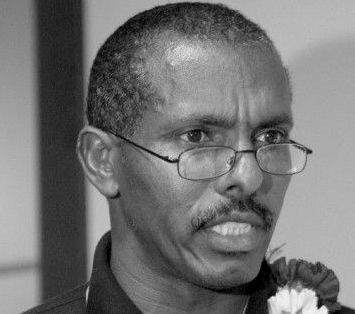
Abdi Bile
1500m World Champion • Somalia