Biography
Introduction: The Guardian of Wisdom
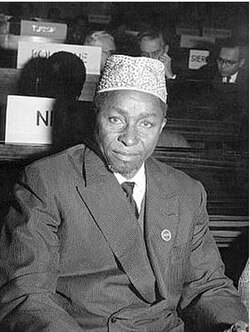
Amadou Hampâté Bâ stands as a monumental figure in 20th-century African literature and ethnology. A Malian writer, ethnologist, poet, and diplomat, he dedicated his life to a single, profound mission: preserving the rich oral heritage and spiritual wisdom of West Africa for future generations. His most famous aphorism, "In Africa, when an old man dies, a library burns to the ground," encapsulates the urgency of his work. Operating at the intersection of Academia & Research and profound literary artistry, Amadou Hampâté Bâ became a crucial bridge between the deep, pre-colonial knowledge systems of the Sahel and the written word. His key achievement lies in his extensive transcription and publication of epic narratives, initiatory tales, and historical chronicles, most notably the monumental Empire Peul du Macina, ensuring that the libraries of living memory would not be lost to time.
Early Life & Education: Between Two Worlds
Born in 1900 (or 1901) in Bandiagara, in the heart of present-day Mali, Amadou Hampâté Bâ was shaped by a unique confluence of cultures and traditions. He was born into a noble Peul (Fulani) family deeply entrenched in the Islamic and animist traditions of the region. His early childhood was marked by the death of his father, after which he was adopted by the second wife of his mother, a descendant of the Fulani conqueror El Hadj Oumar Tall. This placed him at the nexus of two major spiritual and political lineages.
His formal education began at the French colonial school in Bandiagara, which he attended under protest, as his family initially distrusted the foreign system. This experience, however, made him bilingual and bicultural—a critical asset for his future work. Simultaneously, and more significantly, he received an intensive traditional education. He studied the Quran under Tierno Bokar, a Sufi sage who would become his lifelong spiritual mentor, and immersed himself in the oral traditions, histories, and customs of the Fulani and Bambara peoples. This dual formation—colonial and traditional—equipped Amadou Hampâté Bâ with the tools to translate one world for the other, making him an unparalleled interpreter of African thought.
Career & Major Achievements: From Clerk to Cultural Ambassador
Amadou Hampâté Bâ's professional journey began in the colonial administration, where he worked as a clerk from 1915 to 1932. While this role was bureaucratic, it allowed him to travel extensively throughout West Africa, observing and documenting diverse cultures. His break into Academia & Research came in 1942 when he was appointed to the French Institute for Black Africa (IFAN) in Dakar, under the directorship of the renowned ethnologist Théodore Monod. This position provided the institutional support and legitimacy for his lifelong passion for collection and preservation.
Pioneering Ethnological Work
At IFAN, Amadou Hampâté Bâ embarked on systematic fieldwork, transcribing the words of griots, hunters, and elders. His research output was prodigious:
- "Empire Peul du Macina" (1955): A foundational historical and ethnographical study of the 19th-century Fulani empire, based on Arabic manuscripts and oral testimonies.
- Collaboration with Marcel Cardaire on "Tierno Bokar: Le Sage de Bandiagara" (1957), preserving the teachings of his spiritual master.
- Extensive contributions to IFAN's journal, Notes Africaines, documenting proverbs, rituals, and social structures.
Literary Masterpieces and Global Recognition
In the latter part of his career, Amadou Hampâté Bâ turned his meticulous research into literary works accessible to a global audience. His writings masterfully blended autobiography, ethnology, and allegory.
- "L'Étrange Destin de Wangrin" (1973) (The Fortunes of Wangrin): This acclaimed novel, which won the Grand Prix littéraire d'Afrique noire, is a picaresque tale based on the life of a cunning interpreter in colonial service. It serves as a sharp, humorous, and profound critique of the colonial encounter.
- "Amkoullel, l'enfant peul" (1991) and "Oui mon commandant!" (1994): Published posthumously, these autobiographical memoirs are considered his magnum opus. They offer an unparalleled vivid portrait of his childhood and early career, painting a rich tapestry of West African society in transition.
- "Kaïdara" (1969): A published version of a profound Fulani initiatory tale, presented with his scholarly commentary.
Personal Life & Legacy: The Enduring Sage
Beyond his public achievements, Amadou Hampâté Bâ was revered as a sage—a living repository of patience, tolerance, and wisdom. His personal philosophy was deeply ecumenical, seeking harmony between Islam, traditional beliefs, and humanist values. He was a devout follower of the Tijaniyya Sufi order, and his spiritual quest was central to his identity. This spiritual dimension infused all his work, framing knowledge not merely as information but as a path to understanding the human condition.
The legacy of Amadou Hampâté Bâ is immense and multifaceted:
- Academic Foundation: He laid the groundwork for modern African ethnology and historiography, insisting on the use of indigenous sources.
- Literary Inspiration: He demonstrated that African oral genres could form the basis of world-class literature, inspiring subsequent generations of writers across the continent.
- Cultural Preservation: Thousands of pages of transcribed tales, histories, and customs exist today because of his efforts, serving as an invaluable resource for researchers and communities.
- Philosophical Voice: His emphasis on dialogue, intercultural understanding, and the wisdom of elders continues to resonate in global discourses on peace and knowledge.
Net Worth & Business: The Economy of Wisdom
It is not meaningful to discuss Amadou Hampâté Bâ in terms of conventional net worth or business ventures. His life was not oriented toward financial accumulation or commercial enterprise. His "wealth" was cultural and spiritual. His income derived from his salaried positions at IFAN and later UNESCO, as well as from his book royalties. However, his true capital was the trust granted to him by the traditional custodians of knowledge—the elders and griots—who shared their secrets with him. He viewed himself not as an owner of this knowledge, but as a humble scribe and transmitter. In the modern context, the value of his literary estate and published works is significant within academic and literary circles, but its greater worth is incalculable, constituting a foundational pillar of Mali's and Africa's intangible cultural heritage. His work was a lifelong, non-profit venture in service of humanity's memory.
Sources & Further Reading: For those interested in the primary works and scholarship on Amadou Hampâté Bâ, his major texts (such as Amkoullel and Wangrin) are published in English and French by reputable presses like Penguin Random House and Éditions du Seuil. Academic analyses can be found through resources like JSTOR and the publications of the Institut Fondamental d'Afrique Noire (IFAN).
Net Worth Analysis
Amadou Hampâté Bâ was a renowned writer and ethnologist, not a business figure, and he passed away in 1991, so he has no applicable net worth in 2024.
Quick Stats
Related People
Abdullahi Ahmed An-Na'im
Professor Emory University
Adame Ba Konaré
Historian & Ex-First Lady
Adelaide Casely-Hayford†
Feminist & Educator

Aminata Dramane Traoré
Ex-Minister & Author