$1M
Estimated Net Worth
As of 2024 • medium confidence
Financial Breakdown
Asset Distribution
Assets vs Liabilities
Assets
Disclaimer: These financial estimates are based on publicly available information and should be considered approximate. Last updated: 12/31/2025
Biography
Introduction: The Unwavering Critic of Neoliberalism
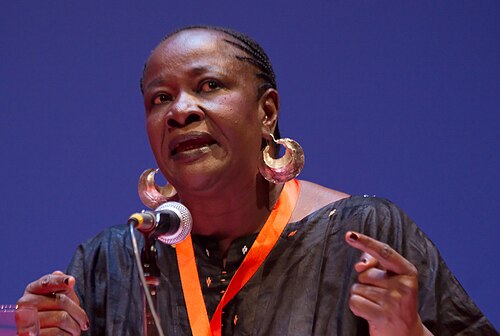
Aminata Dramane Traoré is a formidable Malian intellectual, political figure, and author whose life's work has been a powerful critique of the global economic order and its impact on Africa. Born in 1947 in Mali, she has carved a unique space as a Ex-Minister & Author who bridges the worlds of high-level policy and grassroots activism. A former Minister of Culture and Tourism of Mali (1997-2000), Traoré is most notable for her relentless analysis of Economics from a distinctly Pan-African and human-centric perspective. Her key achievement lies in her decades-long advocacy for alternative development models that prioritize human dignity, cultural integrity, and ecological sustainability over the prescriptions of international financial institutions. Through her prolific writing and speaking, Aminata Dramane Traoré has become a leading voice challenging the narrative of globalization and demanding economic justice for the African continent.
Early Life & Education: Forging a Pan-African Consciousness
The formative years of Aminata Dramane Traoré were instrumental in shaping her critical worldview. Growing up in Mali during the post-independence era, she witnessed both the aspirations of a newly sovereign nation and the emerging challenges of development. Her academic prowess led her to pursue higher education, first at the École Normale Supérieure in Bamako. She then continued her studies in France, earning a doctorate in social psychology from the University of Paris IV-Sorbonne and a postgraduate degree in clinical psychology.
This dual training in social and clinical psychology provided Traoré with a unique lens to analyze the socio-economic ills plaguing her continent. She did not merely see poverty as a statistical failure but as a profound psychological and social trauma inflicted by external systems. Her time in Europe also allowed her to critically observe the Western world, solidifying her understanding of the unequal power dynamics in North-South relations. These formative experiences in Academia & Research equipped her not with conventional economic theory, but with a deep, humanistic framework that would define her later critiques of structural adjustment programs and debt mechanisms. Her education was the bedrock upon which she built her argument that true development must heal the mind and spirit as well as improve material conditions.
Career & Major Achievements: From Minister to Global Advocate
The career of Aminata Dramane Traoré is a multifaceted journey through public service, international advocacy, and intellectual leadership.
Public Service and Ministerial Tenure
Traoré served as Mali's Minister of Culture and Tourism under President Alpha Oumar Konaré from 1997 to 2000. In this role, she championed culture not as a mere sector but as the foundational pillar for authentic and sustainable development. She argued against the commodification of African culture for tourist consumption and worked to promote cultural policies that empowered local communities and preserved heritage. This hands-on experience with governance further exposed her to the constraints placed on African nations by international debt and conditionalities.
Intellectual Contributions and Authorship
Upon leaving government, Aminata Dramane Traoré dedicated herself fully to writing and activism. Her body of work constitutes her most significant achievement. Key publications include:
- L'Étau (The Grip) (1999): An acute analysis of how structural adjustment policies strangle African economies.
- Le Viol de l'Imaginaire (The Rape of the Imagination) (2002): A powerful critique of how global capitalism and aid distort African self-perception and agency.
- L'Afrique humiliée (Africa Humiliated) (2008): A forceful condemnation of the international community's treatment of the continent.
Her books, translated into multiple languages, are essential texts for understanding anti-globalization thought from an African perspective. She co-founded the Forum pour un autre Mali (Forum for Another Mali) and has been a central figure in alter-globalization movements, including the World Social Forum.
Leadership in International Dialogues
Traoré has consistently used international platforms to challenge dominant narratives. She served as the Coordinator of the United Nations Development Programme's "Human Development Report" team in the early 1990s, an experience that informed her internal critique of the development industry. She was also a special advisor to the former UN Secretary-General on Africa's development. Perhaps one of her most notable actions was her leadership role in the Bamako 2000 counter-summit, organized as a critical response to the G7 summit in Okinawa, showcasing African civil society's alternative visions.
Personal Life, Activism, and Lasting Legacy
Beyond her public persona, Aminata Dramane Traoré is known for her unwavering personal integrity and deep connection to Malian society. She resides in Bamako and remains actively engaged in local and continental issues. Her activism is not confined to conferences; she is involved in initiatives supporting small-scale farmers, women's cooperatives, and cultural preservation projects in Mali. This grassroots engagement keeps her analysis grounded in the lived realities of her people.
Her personal interests are inextricably linked to her work: a deep love for African art, literature, and oral traditions, which she sees as repositories of alternative knowledge systems. Traoré's legacy is that of a fearless intellectual who deconstructed the language of development to reveal its often-colonial underpinnings. She has inspired a generation of scholars, activists, and policymakers to question externally imposed economic models. Her lasting impact is a robust intellectual framework that asserts the right of Africa to define its own path to prosperity—one based on solidarity, ecological balance, and the valorization of its own cultural and human resources. She stands as a testament to the power of critical thought rooted in a profound love for one's continent.
Net Worth, Ventures, and Philosophical Stance
Unlike many figures in the Academia & Research and political spheres, Aminata Dramane Traoré is not known for significant personal wealth or business ventures. Her life's work is a direct critique of the accumulation of wealth within unequal global systems. There is no publicly available or reliable information regarding her net worth, and she has not pursued commercial business interests. This is consistent with her philosophical stance. Traoré's "venture" is intellectual and activist in nature.
Her primary enterprise is her thought leadership and the platforms she has helped build, such as the Forum pour un autre Mali. Any financial success is secondary to her mission of advocacy. She derives her influence not from capital, but from the potency of her ideas, the respect she commands in civil society circles, and her prolific output as an author. In a world often measured by material gain, Aminata Dramane Traoré represents the power of principle, proving that impact and legacy are currencies that far exceed monetary valuation. Her life underscores her belief that Africa's true wealth lies in its people, culture, and sovereignty, not in individual financial portfolios aligned with global capital.
Sources & Further Reading: Interested readers can explore the works of Aminata Dramane Traoré directly. Key references include her authored books mentioned above. For verified biographical details and her contributions to international discourse, reputable sources include UNESCO profiles, interviews published by Le Monde and Africanews, and documentation from the World Social Forum archives.
Net Worth Analysis
Aminata Dramane Traoré is a former minister and intellectual author from Mali, not a business figure; her wealth is derived from public service, writing, and speaking, not corporate ownership.
Quick Stats
Related People

Abdullahi Ahmed An-Na'im
Professor Emory University
Adame Ba Konaré
Historian & Ex-First Lady
Adelaide Casely-Hayford†
Feminist & Educator
Amadou Hampâté Bâ†
Writer & Ethnologist