Financial Breakdown
Asset Distribution
Assets vs Liabilities
Assets
Liabilities
Disclaimer: These financial estimates are based on publicly available information and should be considered approximate. Last updated: 12/30/2025
Biography
Introduction: The Professor-President
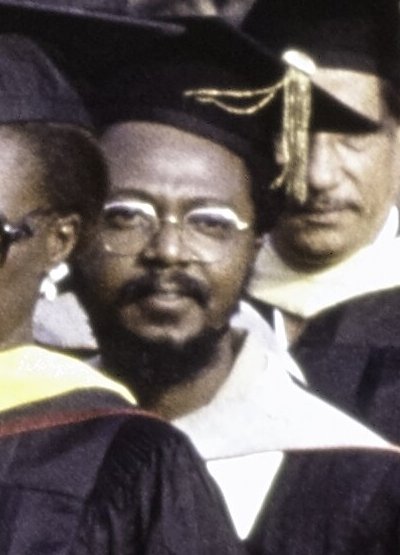
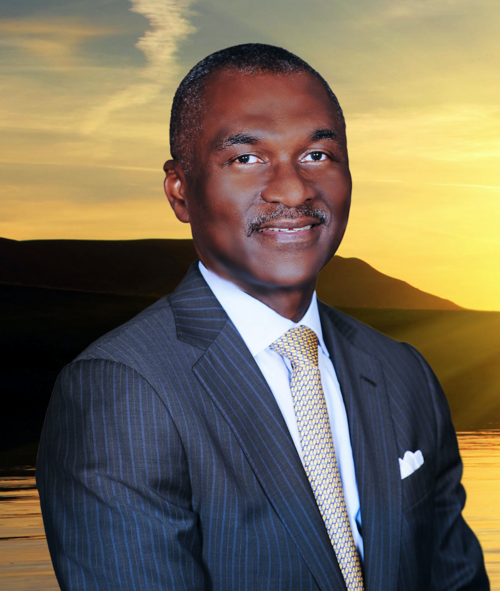
Amos Claudius Sawyer† (1945-2022) stands as a unique and pivotal figure in modern Liberian history, embodying the rare fusion of deep Academia & Research with the tumultuous demands of national Interim Leadership. A political scientist and professor of profound intellect, Sawyer was thrust into the nation's highest office during its most devastating crisis. His key achievement was serving as the Interim President of Liberia from 1990 to 1994, leading the internationally recognized Government of National Unity during the brutal First Liberian Civil War. Unlike the soldiers and warlords who dominated the era, Amos Claudius Sawyer† represented a principled commitment to democratic governance, constitutional order, and intellectual rigor, striving to steer a shattered nation toward peace from the besieged capital of Monrovia. His tenure, though constrained by war, cemented his legacy as a moral compass and a dedicated public servant whose primary tools were dialogue and institutional knowledge.
Early Life and Education: Formative Years in Liberia
Amos Claudius Sawyer was born on June 15, 1945, in Greenville, Sinoe County, Liberia. He was born into a prominent family; his father, Joseph Sawyer, served as a judge and his mother was a teacher, embedding in him early values of justice and education. His upbringing coincided with a period of significant social and political tension in Liberia, dominated by the Americo-Liberian elite, a context that would later deeply inform his academic work.
Sawyer's intellectual journey began at the University of Liberia, where he earned his first degree. His exceptional academic promise led him to the United States for graduate studies. He obtained a Master's degree in Political Science from Northwestern University in Illinois. He then pursued and earned his Ph.D. in the same field, also from Northwestern University, in 1973. His doctoral dissertation, which examined municipal governance in Liberia, foreshadowed his lifelong interest in decentralization, participatory democracy, and the challenges of national integration. These formative academic experiences equipped Amos Claudius Sawyer† with a critical, analytical framework to understand the complex socio-political dynamics of his homeland, setting the stage for his future roles as both a critic and a builder of the Liberian state.
Career and Major Achievements: From Academia to the Executive Mansion
The career of Amos Claudius Sawyer† can be divided into two interconnected phases: his influential work in Academia & Research, and his demanding period of national service.
Academic Leadership and Political Activism
Returning to Liberia, Sawyer became a towering intellectual figure at the University of Liberia. He served as a professor and later as Dean of the College of Social Sciences and Humanities. His scholarship focused on governance, democracy, and African political systems. In 1980, following the coup d'état led by Samuel Doe, Sawyer was appointed as the Chairman of the National Constitution Commission. In this critical role, he led the drafting of the 1986 Liberian Constitution, a document that, despite the conflicts that followed, remains the foundational law of Liberia today. His commitment to progressive politics saw him co-found the Liberian People's Party (LPP) and later the Movement for Justice in Africa (MOJA), a Pan-Africanist organization advocating for social justice and democratic reforms.
Interim Presidency During Civil War
The assassination of President Samuel Doe in 1990 plunged Liberia into complete chaos, with multiple armed factions vying for control. In August 1990, an ECOWAS-brokered peace conference in The Gambia selected Amos Claudius Sawyer† as the Interim President. His appointment was based on his intellectual integrity, lack of ties to the military factions, and his vision for a unified government. From 1990 to 1994, President Sawyer led the Government of National Unity (GNU) from the Executive Mansion in Monrovia, a city constantly under threat and siege. His administration's authority was largely confined to the capital, protected by the ECOWAS Monitoring Group (ECOMOG) peacekeeping force.
Despite near-impossible conditions—including a collapsed economy, humanitarian disaster, and relentless military pressure—Sawyer's achievements were significant:
- Constitutional Legitimacy: He maintained a government that upheld constitutional continuity, providing a focal point for international diplomacy and recognition.
- Diplomatic Engagement: He tirelessly worked with ECOWAS, the UN, and other international bodies to negotiate peace and coordinate humanitarian aid.
- Institutional Stewardship: He struggled to keep the basic functions of the civil service and judiciary alive in Monrovia, preserving a skeleton of state structure.
His presidency ended with the Cotonou Peace Agreement and the installation of a transitional council in 1994. Though he could not end the war, his leadership provided a crucial bridge of legitimacy and a demonstration of civilian, intellectual governance amidst the anarchy.
Post-Presidency and Continued Influence
After his presidency, Sawyer returned to his academic roots but remained deeply engaged in Liberian and African governance. He served as the Director of the Governance Reform Commission in Liberia (2005-2006) and as an advisor to President Ellen Johnson Sirleaf. He also chaired the International Institute for Democracy and Electoral Assistance (IDEA) in Africa. He continued to write, teach, and consult, emphasizing the importance of strong institutions, decentralization, and grassroots democracy until his passing in 2022.
Personal Life, Legacy, and Lasting Impact
Outside the political arena, Amos Claudius Sawyer† was known as a quiet, thoughtful, and deeply principled family man. He was married and had children. His personal interests remained closely tied to his professional passions: reading, research, and mentoring the next generation of African scholars and leaders. He was a man of modest personal habits, whose wealth was measured in knowledge and respect rather than material possessions.
The legacy of Amos Claudius Sawyer is profound and multifaceted. He is remembered as:
- The Scholar-President: A testament to the role of intellectual clarity in governance.
- A Moral Anchor: His leadership during the war provided a symbol of lawful authority and ethical governance when both were in desperately short supply.
- A Constitutional Architect: His work on the 1986 Constitution left an enduring legal framework for Liberia.
- A Mentor: He inspired countless students and young professionals in Liberia and across Africa.
His death on February 16, 2022, in Baltimore, Maryland, USA, was mourned nationally and internationally as the passing of a true statesman. His life's work continues to influence discussions on democracy, post-conflict reconstruction, and the essential role of Academia & Research in nation-building.
Net Worth and Business Ventures
Unlike many political figures, Amos Claudius Sawyer† was not known for significant personal wealth or private business ventures. His career was overwhelmingly dedicated to public service, academia, and civil society. His "capital" was intellectual and social. Any financial compensation he received would have stemmed from his presidential salary—which was administered under the dire economic conditions of wartime—and later from his positions as a university professor, consultant for international governance organizations, and author. There is no public record or indication of substantial business holdings or a high personal net worth. Sawyer's life exemplified a model of public service where influence and impact were not correlated with personal financial accumulation. His enduring value to Liberia lies in his contributions to its political thought, constitutional foundation, and his steadfast leadership during a national nightmare.
Frequently Asked Questions
What is Amos Claudius Sawyer†'s estimated net worth?
Amos Claudius Sawyer† has an estimated net worth of $500,000.
What is Amos Claudius Sawyer†'s role and nationality?
Amos Claudius Sawyer† is a Interim President from Liberia.
How did Amos Claudius Sawyer† make their money?
Amos Claudius Sawyer† built their fortune primarily through Amos Sawyer was an academic and political figure who served as Interim President of Liberia; his wealth was not from business but from public service and academia, and he is not on any billionaire list..
How old is Amos Claudius Sawyer†?
Amos Claudius Sawyer† was born in 1945 (81 years old).
Which category is Amos Claudius Sawyer† listed under?
Amos Claudius Sawyer† is featured under the Academia & Research category on NetWorth Africa.
How is Amos Claudius Sawyer†'s net worth calculated?
NetWorth Africa estimates financial valuations using publicly available stock equity holdings, company ownership records, real estate assets, and verified market data.
Net Worth Analysis
Amos Sawyer was an academic and political figure who served as Interim President of Liberia; his wealth was not from business but from public service and academia, and he is not on any billionaire list.
Quick Stats
Related People
Abdullahi Ahmed An-Na'im
Professor Emory University • Somalia
Adame Ba Konaré
Historian & Ex-First Lady • Mali
Adelaide Casely-Hayford†
Feminist & Educator • Sierra Leone
Amadou Hampâté Bâ†
Writer & Ethnologist • Mali