Financial Breakdown
Asset Distribution
Assets vs Liabilities
Assets
Liabilities
Disclaimer: These financial estimates are based on publicly available information and should be considered approximate. Last updated: 12/30/2025
Biography
Introduction: A Champion on and off the Track
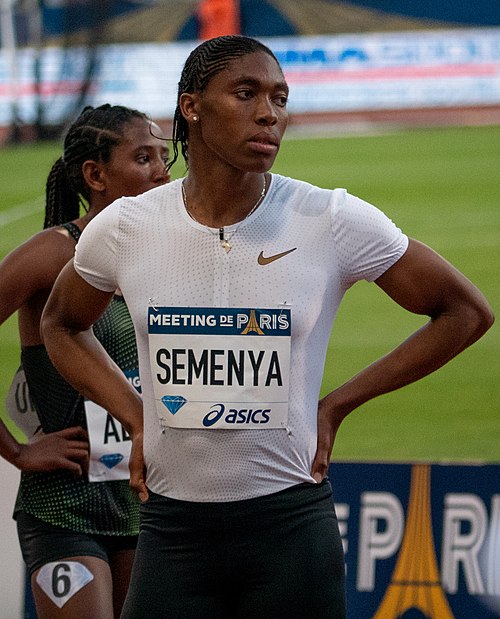
Caster Semenya is not just a name in the annals of athletics; she is a symbol of resilience, excellence, and a fierce advocate for human rights. Born in South Africa in 1991, Semenya rose from a rural village to become a global Olympic champion, dominating the women's 800-meter event for over a decade. Her powerful running style and unparalleled success brought her worldwide fame, but it was the intense scrutiny and discrimination she faced regarding her natural physiological characteristics that forged her into a formidable human rights advocate. Caster Semenya's legacy is a dual one: a collection of gold medals that cement her as one of the greatest middle-distance runners of all time, and a courageous legal battle against regulations that she argues are discriminatory, fighting for the rights of all female athletes with Differences of Sex Development (DSD).
Early Life & Education: Roots in Ga-Masehlong
Caster Semenya was born on January 7, 1991, in the rural village of Ga-Masehlong, in the Limpopo province of South Africa. Growing up in a modest environment, she displayed a natural affinity for sports from a young age, often playing football with boys, which earned her the nickname "The Little Boy." Her raw talent for running was evident early on, but it wasn't until her teenage years that she began to focus seriously on athletics. She attended Nthema Secondary School and later studied Sports Science at the University of Pretoria, a period that coincided with the rapid development of her athletic career.
Her formative experiences were shaped by a close-knit family and a community that supported her ambitions. The path from her village to the world stage was not a conventional one, but her formidable physical gifts and fierce competitive spirit quickly propelled her through the ranks of South African junior athletics. By 2008, she had won gold in the 800m and 1500m at the African Junior Athletics Championships, signaling the arrival of a formidable new talent in global sports. This early period laid the foundation for a career that would be as much about breaking records as it would be about challenging societal and institutional norms.
Career & Major Achievements: Dominance and Controversy
Caster Semenya's international breakthrough was both spectacular and immediately controversial. In 2009, at the age of 18, she won the 800m gold at the World Athletics Championships in Berlin, improving her personal best by an astonishing seven seconds. Her victory, however, was overshadowed by the International Association of Athletics Federations (now World Athletics) publicly subjecting her to gender verification testing. This humiliating ordeal thrust the young athlete into a global media storm, unfairly focusing on her private medical details rather than her athletic prowess.
Despite this immense pressure, Caster Semenya’s competitive spirit only grew stronger. Her career is a testament to her incredible ability to perform under the most intense scrutiny. Her major achievements include:
- Olympic Gold Medals: Champion in the women's 800m at the 2012 London Olympics and the 2016 Rio de Janeiro Olympics.
- World Championship Titles: Three-time World Champion in the 800m (2009, 2011, 2017).
- Commonwealth Games Gold: Winner of the 800m and 1500m at the 2018 Commonwealth Games on the Gold Coast.
- Unbeaten Streak: She remained undefeated in the 800m event from 2015 until 2023, a period spanning over 80 races.
The Fight for Fairness and Human Rights
Parallel to her athletic success, Caster Semenya became the central figure in a global debate about fairness, sex, and gender in sport. World Athletics introduced regulations requiring female athletes with DSD to medically lower their naturally high testosterone levels to compete in certain women's events, including the 800m, Semenya's signature race. Semenya has consistently refused to comply with these rules, arguing they are unscientific, discriminatory, and a violation of her human rights.
Her legal battles have reached the highest courts, including the Court of Arbitration for Sport (CAS) and the Swiss Federal Tribunal. Although these courts have largely upheld the regulations, they have acknowledged they are discriminatory. Semenya's fight has expanded beyond her own career; she has taken her case to the European Court of Human Rights, which in 2023 found in her favor, stating her human rights had been violated. This landmark decision, while not immediately overturning the sports regulations, solidified her role as a leading human rights advocate. Her defiance has inspired countless athletes and brought critical attention to the ethics of sports governance.
Personal Life & Legacy: Beyond the Track
Away from the public eye, Caster Semenya leads a life centered on family and community. She is married to fellow athlete Violet Raseboya, and the couple has two children. Semenya often speaks about the strength she draws from her family and her South African roots. She has ventured into football, playing for several clubs in South Africa's women's league, demonstrating her versatile athleticism.
Her legacy is profound and multifaceted. As an athlete, she is one of South Africa's most decorated Olympians, a national hero whose victories brought immense pride to a post-apartheid nation. As an advocate, she has forced the world of international sport to confront uncomfortable questions about biology, identity, and equality. The Caster Semenya Foundation, which she established, focuses on empowering young women and girls through education and sport, extending her impact beyond her own battles. Her memoir, "The Race to Be Myself," published in 2023, offers a powerful personal account of her journey. Caster Semenya's story is ultimately one of unwavering authenticity—a champion who refused to be medically altered to fit a narrow definition of womanhood, forever changing the conversation in sports and society.
Net Worth & Business Ventures
While exact figures are private, Caster Semenya's net worth is estimated to be in the range of several million dollars, accrued through a combination of prize money, endorsements, and public speaking. Her athletic success, particularly her Olympic and World Championship victories, came with significant financial rewards. She has been supported by major sponsors, including Nike, though some partnerships have been impacted by the controversies surrounding her career.
Her business and financial interests are increasingly aligned with her advocacy. Public speaking engagements on topics of diversity, inclusion, and resilience command substantial fees. The establishment of the Caster Semenya Foundation also represents a significant venture, channeling resources into philanthropic causes. Furthermore, her foray into football and the publication of her memoir represent strategic diversifications of her personal brand. As her legal battles continue, much of her financial resources are directed towards funding this unprecedented fight for human rights in sport, making her financial journey inseparable from her principled stand.
Sources: Official statements from Caster Semenya and her legal team, rulings from the Court of Arbitration for Sport (CAS) and the European Court of Human Rights, World Athletics official results, International Olympic Committee database, and reputable news archives including BBC Sport and The New York Times.
Frequently Asked Questions
What is Caster Semenya's estimated net worth?
Caster Semenya has an estimated net worth of R 32.4 Million.
What is Caster Semenya's role and nationality?
Caster Semenya is a NW; Olympic Champion & Human Rights Advocate from South Africa.
How did Caster Semenya make their money?
Caster Semenya built their fortune primarily through Net worth is estimated based on career prize money, endorsements, and advocacy work, as she is not a business figure and is not listed on any billionaire ranking..
How old is Caster Semenya?
Caster Semenya was born in 1991 (35 years old).
Which category is Caster Semenya listed under?
Caster Semenya is featured under the Sports category on NetWorth Africa.
How is Caster Semenya's net worth calculated?
NetWorth Africa estimates financial valuations using publicly available stock equity holdings, company ownership records, real estate assets, and verified market data.
Net Worth Analysis
Net worth is estimated based on career prize money, endorsements, and advocacy work, as she is not a business figure and is not listed on any billionaire ranking.
Quick Stats
Related People

AB de Villiers
Proteas Legend • South Africa
Abdallahi Mahmoud
Mourabitounes Midfielder • Mauritania

Abderrahmane Hammad
High Jump World Champion • Algeria
Abdi Bile
1500m World Champion • Somalia