Financial Breakdown
Asset Distribution
Assets vs Liabilities
Assets
Disclaimer: These financial estimates are based on publicly available information and should be considered approximate. Last updated: 12/31/2025
Biography
Introduction: A Cultural Icon's Resonance
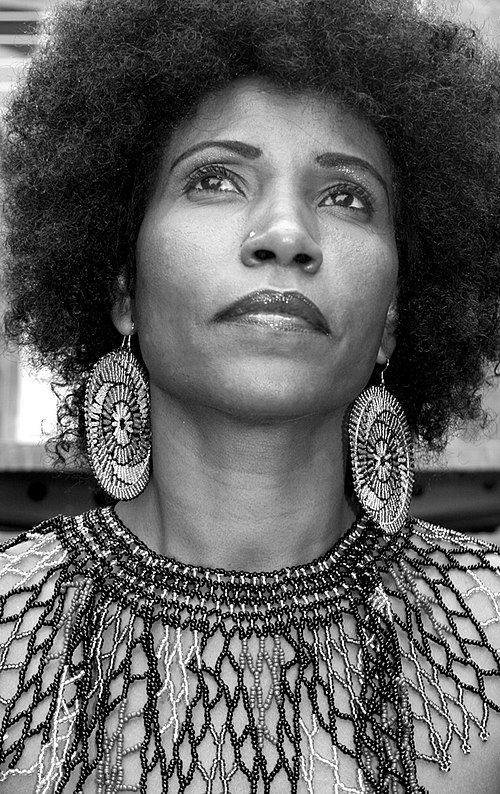
In the vibrant tapestry of African music, few voices carry the historical weight and melodic grace of Dehab Faytinga. Born in 1965, Faytinga has ascended to become one of Eritrea's most celebrated and influential cultural ambassadors. Her journey from a freedom fighter to an internationally acclaimed singer is a testament to the resilience and rich artistic heritage of her nation. More than just a musician, Dehab Faytinga is a storyteller, weaving the narratives of Eritrea's nine ethnic groups into a harmonious and powerful sound that resonates on global stages. Her key achievement lies in her unparalleled role in preserving and popularizing Eritrean folk traditions, introducing the world to the unique pentatonic scales and poetic lyricism of her homeland's music. As a pivotal figure in Entertainment from the Horn of Africa, her career embodies the fusion of cultural preservation and contemporary artistic expression.
Early Life & Education: Forging Identity in Struggle
Dehab Faytinga was born into the Kunama ethnic group, one of Eritrea's smallest indigenous communities, in a period of escalating conflict. Her early years were profoundly shaped by the Eritrean War of Independence (1961-1991). In a remarkable and defining turn, Faytinga joined the Eritrean People's Liberation Front (EPLF) at the tender age of 12. Her life in the liberation movement was not solely about combat; it was here that her artistic foundations were solidified. The EPLF placed a strong emphasis on cultural expression as a tool for unity and morale, and Faytinga became a member of the cultural troupe, "Mahber Tewasewet Dimtsi Hafash."
This period served as her unconventional yet profound education. She learned traditional songs, dances, and instruments from various regions of Eritrea, absorbing the diverse musical heritage she would later champion. The troupe performed for soldiers and civilians in liberated areas, honing her stage presence and deepening her connection to the patriotic and folkloric repertoire. This immersive experience during her formative years instilled in her a deep sense of national identity and a mission to safeguard the cultural patrimony of her people. It was a unique schooling where the classroom was the rugged landscape of the Sahel, and the curriculum was the survival and celebration of Eritrean spirit through art.
Career & Major Achievements: From National Heroine to Global Star
Following Eritrea's independence in 1991, Dehab Faytinga transitioned from a cultural soldier to a professional artist, embarking on a mission to build the nation's post-war cultural identity. Her solo career took flight in the mid-1990s, marked by the release of her debut album. Her music is characterized by its authentic roots, often featuring traditional instruments like the krar (lyre), wata (fiddle), and kebero (drum). Faytinga's powerful, husky voice, capable of both great strength and delicate nuance, became instantly recognizable.
International Breakthrough and Acclaim
Her major international breakthrough came with her inclusion on the seminal 1998 compilation "Éthiopiques, Vol. 7: Ere Mela Mela" by the French label Buda Musique. This exposure introduced her to a worldwide audience of world music enthusiasts. She subsequently performed at prestigious venues and festivals across Europe, Africa, and North America, including the WOMAD festival and the African Music Festival in Würzburg. Each performance was more than a concert; it was a diplomatic mission showcasing Eritrea's cultural richness.
Discography and Artistic Evolution
Over the years, Dehab Faytinga has released several critically acclaimed albums, such as "Numey" and "Eritrea's Golden Voice." Her work expertly balances pure traditionalism with subtle contemporary arrangements, ensuring accessibility without dilution. A major achievement in her career is her dedication to singing in multiple Eritrean languages—including Kunama, Tigrinya, and Tigre—promoting linguistic diversity and national unity through her art. Her songs often address themes of love, patriotism, social issues, and the beauty of the Eritrean landscape, making her a voice for the collective memory and aspirations of her people.
- Cultural Ambassador: Recognized globally as the foremost representative of Eritrean music.
- Pioneering Role: One of the first Eritrean female artists to achieve significant international fame post-independence.
- Preservationist Work: Her extensive repertoire acts as a living archive for endangered folk songs and musical styles.
- Collaborations: Has worked with other renowned African and world music artists, further bridging cultural gaps.
Personal Life & Legacy: Beyond the Stage
While Dehab Faytinga is intensely private about her personal life, her public persona is deeply intertwined with her love for her country and its heritage. Her experiences as a former fighter have imbued her with a discipline and focus that is evident in her meticulous approach to music. She is known to be a dedicated mother and a figure of great respect within her community. Beyond performance, her interests lie in the continuous research and documentation of Eritrea's intangible cultural heritage, often traveling to remote areas to learn from elders.
Her legacy is multifaceted. For Eritreans at home and in the diaspora, she is a source of immense pride and a living link to their roots, especially during significant national celebrations. For the global Entertainment and world music scene, she has carved out a permanent space for Eritrean sounds, influencing a new generation of musicians in the Horn of Africa. Dehab Faytinga's ultimate contribution is her demonstration that art is a powerful vessel for history, identity, and healing. She has ensured that the stories and melodies of Eritrea's past are not silenced but are instead sung to the world with dignity and beauty.
Net Worth & Business Ventures
While specific figures regarding Dehab Faytinga's net worth are not publicly disclosed, as is common with many artists focused on cultural preservation over commercialism, her financial success can be inferred from her sustained international career. Her primary revenue streams stem from album sales, both physical and digital, royalties from compilations and streaming platforms, and fees from live performances at international festivals and concert halls. As a top-tier world music act, these engagements command significant respect and compensation. Unlike many artists, Faytinga's "business" is intrinsically linked to her mission; she has not ventured into unrelated commercial enterprises. Her investment is in the production and global distribution of her music, which requires funding for research, studio time with traditional musicians, and international travel. Her wealth, therefore, is not merely monetary but is profoundly cultural, measured in the enduring legacy of her recordings and the elevated global profile of Eritrean arts. Her career stands as a successful model of how authentic cultural expression can achieve sustainable international acclaim in the music industry.
Frequently Asked Questions
What is Dehab Faytinga's estimated net worth?
Dehab Faytinga has an estimated net worth of £740,439.
What is Dehab Faytinga's role and nationality?
Dehab Faytinga is a Singer from Eritrea.
How did Dehab Faytinga make their money?
Dehab Faytinga built their fortune primarily through Dehab Faytinga is a celebrated Eritrean singer, but she is not a business mogul or on any billionaire list; her wealth is estimated from her music career and cultural prominence in Eritrea..
How old is Dehab Faytinga?
Dehab Faytinga was born in 1965 (61 years old).
Which category is Dehab Faytinga listed under?
Dehab Faytinga is featured under the Entertainment category on NetWorth Africa.
How is Dehab Faytinga's net worth calculated?
NetWorth Africa estimates financial valuations using publicly available stock equity holdings, company ownership records, real estate assets, and verified market data.
Net Worth Analysis
Dehab Faytinga is a celebrated Eritrean singer, but she is not a business mogul or on any billionaire list; her wealth is estimated from her music career and cultural prominence in Eritrea.
Quick Stats
Related People
2Baba (Innocent Idibia)
Veteran Artist & Activist • Nigeria
Aar Maanta
Singer & Composer • Somalia
Abdel Aziz al-Mubarak
Oud Master • Sudan
Abdel Halim Hafez†
Legend; “Nightingale”; “The Dark-Skinned Nightingale” • Egypt