Financial Breakdown
Asset Distribution
Assets vs Liabilities
Assets
Liabilities
Disclaimer: These financial estimates are based on publicly available information and should be considered approximate. Last updated: 7/31/2026
Biography
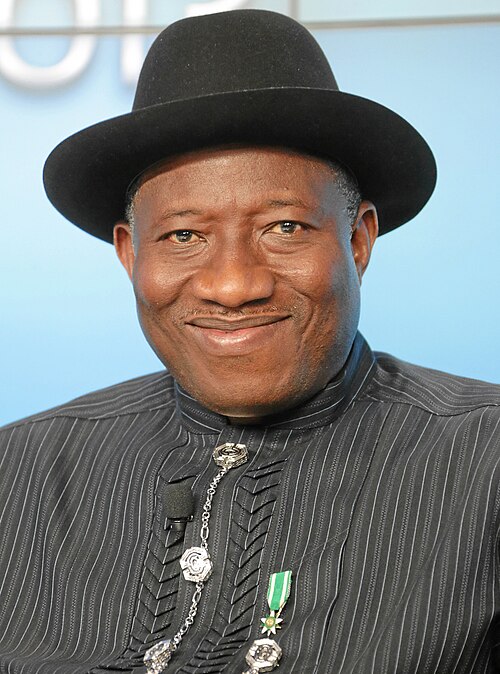
Goodluck Jonathan: The Accidental President Who Redefined Nigerian Democracy
Goodluck Ebele Azikiwe Jonathan (born 20 November 1957) is a Nigerian politician who served as the President of Nigeria from 2010 to 2015. He is widely regarded as one of the most consequential figures in modern Politics & Government in Africa, primarily because he became the first incumbent president in Nigerian history to lose a re-election bid, peacefully handing over power to opposition candidate Muhammadu Buhari in 2015. This act of democratic statesmanship earned him global acclaim and cemented his legacy as a champion of electoral integrity. Jonathan’s rise from a humble background in the Niger Delta to the highest office in Nigeria is a story of resilience, humility, and unexpected leadership. His tenure was marked by significant economic growth, infrastructure development, and controversial security challenges, including the Boko Haram insurgency. Despite criticisms, his decision to concede defeat in 2015 is widely seen as a turning point for African democracy. Today, Goodluck Jonathan remains an influential voice in regional peace initiatives, election mediation, and governance reforms across the continent.
Early Life & Education
Goodluck Jonathan was born on 20 November 1957 in Otuoke, a small riverine community in present-day Bayelsa State, Nigeria. He was the third of seven children in a family of canoe carvers and fishermen. His father, Lawrence Ebele Jonathan, was a canoe maker, and his mother, Eunice Ayi Ebele Jonathan, was a farmer and trader. The family’s modest means meant that young Goodluck often helped his father carve canoes and fish in the creeks of the Niger Delta. Despite economic hardship, his parents prioritized education. He attended St. Michael’s Primary School in Otuoke and later Otuoke Community Secondary School, where he developed a passion for the natural sciences. After completing secondary education, he enrolled at the University of Port Harcourt, where he earned a Bachelor of Science degree in Zoology in 1981. He continued his studies at the same university, obtaining a Master’s degree in Hydrobiology and Fisheries Biology in 1985, and later a PhD in Zoology (specializing in Environmental Toxicology) in 1995. His academic background in aquatic ecology would later influence his policy focus on the environmental degradation of the Niger Delta, a region plagued by oil pollution. During his university years, Jonathan worked as a teacher and research assistant, and he briefly served as a lecturer at the University of Port Harcourt before entering politics. His formative experiences in the creeks and classrooms of the Niger Delta shaped his worldview as a leader sensitive to the plight of marginalized communities.
Career & Major Achievements
From Academia to Deputy Governor
Goodluck Jonathan entered politics in the late 1990s during Nigeria’s return to civilian rule. In 1999, he was appointed as the Deputy Governor of Bayelsa State under Governor Diepreye Alamieyeseigha. He served in this role until 2005, when he became Governor following Alamieyeseigha’s impeachment on corruption charges. As governor, Jonathan focused on education, rural development, and environmental remediation in the oil-rich but impoverished state. His administration built schools, improved healthcare, and initiated a scholarship program for Bayelsa indigenes.
Vice President and President
In 2007, Jonathan was selected as the running mate to Umaru Yar’Adua under the People’s Democratic Party (PDP). He was elected Vice President and served until Yar’Adua’s death in May 2010. Jonathan was then sworn in as President, becoming the first Ijaw leader to hold the office. He completed Yar’Adua’s term and won a full term in the 2011 elections, defeating Muhammadu Buhari of the Congress for Progressive Change (CPC). His presidency (2010–2015) saw several landmark achievements:
- Economic Growth: Nigeria became the largest economy in Africa in 2014 after a GDP rebasing exercise, with growth driven by telecommunications, banking, and services. Jonathan’s administration also implemented the Transformation Agenda, which aimed to diversify the economy away from oil.
- Infrastructure Development: Major road and rail projects were completed, including the Abuja-Kaduna railway line and the second Niger Bridge (initiated during his tenure). The Nigerian National Petroleum Corporation (NNPC) also saw reforms under his watch.
- Education and Youth Empowerment: Jonathan launched the YouWIN (Youth Enterprise with Innovation in Nigeria) program, providing grants and mentorship to young entrepreneurs. He also increased funding for tertiary education and established new federal universities.
- Electoral Reform: He oversaw the 2011 elections, which were deemed relatively free and fair by international observers, and his decision to accept defeat in 2015 set a precedent for peaceful transitions in Africa.
- Security Challenges: His tenure was marred by the Boko Haram insurgency, which escalated after 2011. The 2014 kidnapping of over 200 schoolgirls in Chibok drew global condemnation. Jonathan’s government faced criticism for its slow response, but he later cooperated with international partners to combat the group.
Post-Presidency and Global Statesmanship
After leaving office in 2015, Goodluck Jonathan transitioned into a role as an elder statesman and election mediator. He has led observer missions for the African Union, Commonwealth, and Economic Community of West African States (ECOWAS) in countries such as Kenya, Ghana, Liberia, and the Democratic Republic of Congo. In 2020, he was appointed as the ECOWAS Special Envoy for the Sahel, focusing on conflict resolution and counter-terrorism. He also founded the Goodluck Jonathan Foundation, which promotes democracy, peace, and good governance across Africa.
Personal Life & Legacy
Goodluck Jonathan is married to Dame Patience Faka Jonathan, a former teacher and businesswoman. The couple has two children: a son, Ariwera Jonathan, and a daughter, Faith Jonathan. Patience Jonathan was a prominent first lady, known for her charitable work and sometimes controversial political involvement. The family maintains a low-profile life in Otuoke and Abuja, with Jonathan often returning to his hometown for traditional festivals and community events. His legacy is complex: praised for his humility, religious tolerance (he is a Christian who appointed Muslims to key positions), and democratic credentials, but criticized for perceived corruption in his administration and a lack of decisive action against Boko Haram. Nevertheless, his concession speech in 2015—“I promised the country free and fair elections. I have kept my word”—is taught in political science courses worldwide. He has received numerous awards, including the Grand Commander of the Order of the Niger (GCON), and honorary doctorates from several universities. In 2023, he was named a United Nations Sustainable Development Goals Advocate.
Net Worth & Business
Estimates of Goodluck Jonathan’s net worth vary widely, with most sources placing it between £3.7 Million and £7.4 Million. Unlike many former Nigerian leaders, Jonathan has not been publicly linked to vast business empires. His wealth comes from his presidential salary, pensions, book royalties (he authored My Transition Hours, a memoir), and speaking engagements. He owns modest properties in Abuja, Bayelsa, and Port Harcourt. His wife, Patience, has been involved in real estate and hospitality ventures, including a hotel in Yenagoa. Jonathan has no known holdings in the oil and gas sector, though he has faced allegations of corruption—none proven—related to the NNPC and the Office of the National Security Adviser. In 2020, he voluntarily declared his assets to the Code of Conduct Bureau, a move intended to promote transparency. His foundation, funded by donations and grants, supports scholarships, microcredit schemes, and conflict resolution programs in the Niger Delta and beyond. While not among the wealthiest Nigerian politicians, Jonathan’s post-presidency influence and global network have ensured financial stability and continued relevance in African affairs.
Frequently Asked Questions
What is Goodluck Jonathan's estimated net worth?
Goodluck Jonathan has an estimated net worth of £11.1 Million.
What is Goodluck Jonathan's role and nationality?
Goodluck Jonathan is a Ex-President of Nigeria from Nigeria.
How did Goodluck Jonathan make their money?
Goodluck Jonathan built their fortune primarily through Goodluck Jonathan's net worth is estimated based on his political career, speaking engagements, and modest business interests, typical for former Nigerian presidents without major corporate holdings..
How old is Goodluck Jonathan?
Goodluck Jonathan was born in 1957 (69 years old).
Which category is Goodluck Jonathan listed under?
Goodluck Jonathan is featured under the Politics & Government category on NetWorth Africa.
How is Goodluck Jonathan's net worth calculated?
NetWorth Africa estimates financial valuations using publicly available stock equity holdings, company ownership records, real estate assets, and verified market data.
Net Worth Analysis
Goodluck Jonathan's net worth is estimated based on his political career, speaking engagements, and modest business interests, typical for former Nigerian presidents without major corporate holdings.
Quick Stats
Related People
Aaron Motsoaledi
LP; Minister of Home Affairs • South Africa
Abane Ramdane†
FLN Leader & Strategist • Algeria
Abdalla Hamdok
Ex-Prime Minister • Sudan
Abdallah Kigoda
Ex-Minister of Natural Resources • Tanzania