Financial Breakdown
Asset Distribution
Assets vs Liabilities
Assets
Liabilities
Disclaimer: These financial estimates are based on publicly available information and should be considered approximate. Last updated: 8/1/2026
Biography
Hamza al-Mustapha: The Enigmatic Military Officer and Former Chief Security Officer
Hamza al-Mustapha is a retired Nigerian Army major, intelligence officer, and politician who remains one of the most controversial and consequential figures in Nigeria's military and political history. Best known for his role as Chief Security Officer (CSO) to General Sani Abacha, Nigeria's head of state from 1993 to 1998, al-Mustapha was the gatekeeper of power during one of the most repressive and opaque regimes in the nation's history. His proximity to Abacha placed him at the center of Nigeria's security apparatus, intelligence operations, and political machinations during a period marked by human rights abuses, political repression, and allegations of state-sponsored violence. Following Abacha's sudden death on 8 June 1998, al-Mustapha was arrested, tried, and ultimately acquitted after years of legal battles. His life story—spanning military service, intelligence work, and political ambition—offers a compelling lens into Nigeria's complex Politics & Government landscape and the enduring legacy of military rule. Today, Hamza al-Mustapha remains a polarizing figure, admired by some as a loyal officer and condemned by others as a symbol of an authoritarian era.
Early Life & Education
Hamza al-Mustapha was born into a modest family in northern Nigeria, a region that has historically produced many of the country's military and political elites. Growing up in the post-independence era, he was shaped by the political turbulence and military coups that defined Nigeria's early decades. His formative years were marked by a strong sense of discipline, loyalty, and ambition—qualities that would later define his military career.
Al-Mustapha attended local primary and secondary schools before gaining admission into the prestigious Nigerian Defence Academy (NDA), the country's foremost military training institution. At the NDA, he underwent rigorous physical and academic training, excelling in military tactics, intelligence studies, and leadership development. His performance at the academy earned him a commission as an officer in the Nigerian Army, where he quickly distinguished himself as a sharp, capable, and dependable soldier.
Beyond his formal military education, al-Mustapha pursued specialized training in intelligence and security operations, both within Nigeria and abroad. He attended several advanced courses in counterintelligence, surveillance, and protective security, which prepared him for high-stakes roles in the nation's security infrastructure. These formative experiences—combining academic rigor, military discipline, and intelligence specialization—laid the groundwork for his eventual rise to the pinnacle of Nigeria's security establishment.
Career & Major Achievements
Rise Through the Ranks
Hamza al-Mustapha began his military career as a young officer in the Nigerian Army, serving in various capacities that demonstrated his competence and loyalty. His early postings included infantry commands and security assignments, where he earned a reputation for meticulous attention to detail and unwavering dedication to duty. His superiors recognized his potential and recommended him for intelligence and security roles, setting him on a trajectory that would eventually place him at the heart of Nigeria's power structure.
Chief Security Officer to General Sani Abacha
Al-Mustapha's most significant and defining role came in 1993, when he was appointed Chief Security Officer (CSO) to General Sani Abacha, who had just seized power in a military coup. As CSO, al-Mustapha was responsible for the personal security of the head of state, as well as overseeing intelligence gathering, threat assessment, and security operations at the highest level. He worked closely with Abacha on a daily basis, controlling access to the leader and managing the flow of information within the presidential villa.
During his tenure from 1993 until Abacha's death on 8 June 1998, al-Mustapha became one of the most powerful and feared figures in Nigeria. He was instrumental in building and managing the regime's security apparatus, which included the State Security Service (SSS), the police, and military intelligence units. His role extended beyond mere security; he was a key advisor on political matters, involved in covert operations, and a central figure in the regime's efforts to suppress opposition. Under his watch, the Abacha regime became notorious for human rights abuses, including the detention of political prisoners, the suppression of press freedom, and the execution of activists such as Ken Saro-Wiwa in 1995.
Post-Abacha Legal Battles
Following Abacha's sudden death in June 1998, Nigeria transitioned to civilian rule under General Abdulsalami Abubakar and later President Olusegun Obasanjo. Al-Mustapha was arrested in 1999 and charged with multiple counts, including conspiracy to murder, attempted murder, and involvement in the 1996 bomb blast at Lagos Airport and the 1995 attempted coup plot. His trial became one of the longest and most sensational in Nigerian legal history, spanning over a decade.
In 2012, al-Mustapha was acquitted by a Lagos High Court due to lack of evidence, a decision that sparked widespread debate. The prosecution appealed, but the Court of Appeal upheld his acquittal in 2013, and the Supreme Court finally dismissed the case in 2014, granting him permanent freedom. Throughout his legal ordeal, al-Mustapha maintained his innocence, insisting that he was a loyal soldier who followed orders and was being scapegoated for the sins of the Abacha regime.
Political Ambitions
After his release, Hamza al-Mustapha transitioned into politics, seeking to rehabilitate his image and contribute to Nigeria's democratic development. He contested for public office under the platform of the Peoples Democratic Party (PDP) and later the All Progressives Congress (APC), though he did not achieve electoral success. His political forays have been marked by controversy, with critics questioning his suitability for office given his past, while supporters argue that he deserves a second chance and has valuable experience to offer.
Personal Life & Legacy
Hamza al-Mustapha is married with children, and his family has remained largely out of the public eye, shielding themselves from the intense scrutiny that has surrounded his life. He is known to be a devout Muslim who values discipline, loyalty, and service—qualities he often cites as foundational to his military career.
In terms of philanthropy, al-Mustapha has been involved in community development initiatives in his native northern Nigeria, focusing on education, healthcare, and youth empowerment. He has also spoken at various forums about security, governance, and national unity, positioning himself as a elder statesman of sorts, despite the controversies that continue to shadow him.
Al-Mustapha's legacy is deeply contested. To his supporters, he is a loyal soldier who served his country with distinction and was unfairly persecuted for doing his duty. To his detractors, he is a symbol of the brutality and repression of the Abacha era, a man who presided over a security apparatus that terrorized Nigerians. His acquittal in court did little to resolve these polarized views, and he remains a figure who evokes strong emotions across Nigeria's political and social spectrum.
Nevertheless, his life story offers a unique window into Nigeria's military history, the nature of power under authoritarian rule, and the challenges of transitional justice. As one of the few surviving senior figures from the Abacha regime, al-Mustapha continues to be a reference point in discussions about Nigeria's Politics & Government, military legacy, and the long road to democratic consolidation.
Net Worth & Business
Hamza al-Mustapha has not publicly disclosed detailed information about his net worth or business holdings, and estimates remain speculative. Following his military career and subsequent legal battles, he has been involved in various business ventures, primarily in security consulting, real estate, and agriculture. He is believed to own properties in Nigeria's major cities, including Abuja and Kaduna, and may have investments in farming and agribusiness, sectors that align with his northern Nigerian roots.
Al-Mustapha has also worked as a security consultant, leveraging his extensive experience in intelligence and protective security to advise private clients and organizations. However, his financial standing has been the subject of much rumor and speculation, with some alleging that he accumulated significant wealth during his time as CSO, while others argue that his prolonged legal battles drained his resources. Without verified financial disclosures, his net worth remains a matter of conjecture, but it is clear that his primary legacy lies not in material wealth but in his enduring and controversial place in Nigeria's political and military history.
Frequently Asked Questions
What is Hamza al-Mustapha's estimated net worth?
Hamza al-Mustapha has an estimated net worth of €4.3 Million.
What is Hamza al-Mustapha's role and nationality?
Hamza al-Mustapha is a military officer from Nigeria.
How did Hamza al-Mustapha make their money?
Hamza al-Mustapha built their fortune primarily through Hamza al-Mustapha, as a retired military officer and security chief, had a modest salary and no publicly known major business ventures; his net worth is estimated based on typical Nigerian military pension and assets from his political role..
How old is Hamza al-Mustapha?
Hamza al-Mustapha was born in 2000 (26 years old).
Which category is Hamza al-Mustapha listed under?
Hamza al-Mustapha is featured under the Politics & Government category on NetWorth Africa.
How is Hamza al-Mustapha's net worth calculated?
NetWorth Africa estimates financial valuations using publicly available stock equity holdings, company ownership records, real estate assets, and verified market data.
Net Worth Analysis
Hamza al-Mustapha, as a retired military officer and security chief, had a modest salary and no publicly known major business ventures; his net worth is estimated based on typical Nigerian military pension and assets from his political role.
Quick Stats

Related People
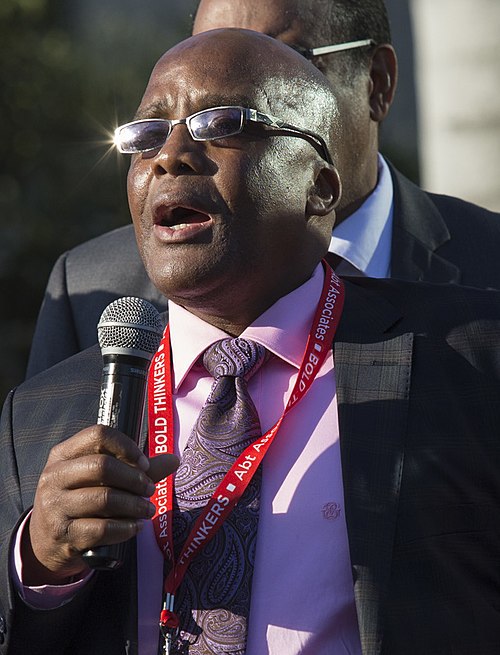
Aaron Motsoaledi
LP; Minister of Home Affairs • South Africa
Abane Ramdane†
FLN Leader & Strategist • Algeria
Abdalla Hamdok
Ex-Prime Minister • Sudan
Abdallah Kigoda
Ex-Minister of Natural Resources • Tanzania