Financial Breakdown
Asset Distribution
Assets vs Liabilities
Assets
Liabilities
Disclaimer: These financial estimates are based on publicly available information and should be considered approximate. Last updated: 7/31/2026
Biography
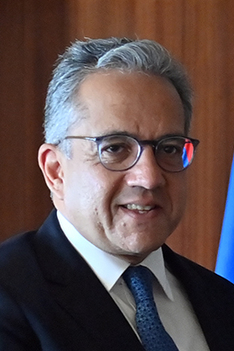
Khaled El-Enany: The Egyptologist Who Shaped a Nation’s Heritage and Now Leads UNESCO
Khaled El-Enany stands as one of the most transformative figures in the global heritage and museum sectors. An esteemed Egyptologist and a seasoned politician, he is best known for serving as Egypt’s Minister of Tourism and Antiquities from 2016 to 2022, where he spearheaded the creation of the National Museum of Egyptian Civilization (NMEC) in Fustat. His crowning achievement, however, arrived in November 2025 when he was elected as the 12th Director-General of the United Nations Educational, Scientific and Cultural Organization (UNESCO), becoming the first Egyptian to hold this prestigious post. Born in 1972, El-Enany’s career bridges rigorous academia, high-stakes government administration, and international diplomacy. He is widely credited with revitalizing Egypt’s tourism industry following years of political instability and for championing the repatriation of stolen antiquities. As the Founder of the NMEC, he established a new benchmark for museology in the Arab world, blending cutting-edge technology with ancient history. His journey from a university professor to a global cultural leader represents a powerful narrative of dedication, scholarship, and visionary leadership in the fields of Politics & Government and Museums.
Early Life & Education
Born Khaled Ahmed El-Enany Ali Ezz in 1972, Khaled El-Enany grew up in a period of profound change for modern Egypt. His fascination with the ancient world was ignited during his childhood, inspired by the monumental temples and artifacts that dot the Egyptian landscape. He pursued his passion for history at the highest academic levels, earning a Bachelor’s degree in Egyptology from the Faculty of Archaeology at Cairo University. Driven by a desire to deepen his expertise, he continued his studies in France, where he obtained a Master’s degree in Egyptology from the University of Montpellier and subsequently a Ph.D. in the same field. His doctoral research focused on the religious and funerary practices of ancient Thebes, establishing him as a meticulous scholar with a deep understanding of the Pharaonic period.
El-Enany’s formative experiences were not limited to the classroom. He participated in several archaeological excavations in Luxor and the Nile Delta, gaining hands-on experience in the preservation of heritage. He began his academic career as a lecturer at Helwan University in Cairo, where he taught courses on ancient Egyptian history, language, and archaeology. His reputation as a dedicated educator and a clear communicator quickly grew. During this period, he also served as the director of the university’s archaeological museum, honing the administrative and curatorial skills that would later define his career. This blend of European academic rigor and deep-rooted Egyptian knowledge provided him with a unique, global perspective on heritage management, setting the stage for his rapid ascent in the world of Museums and governance.
Career & Major Achievements
From Academia to the Ministry of Antiquities
Khaled El-Enany’s transition from academia to public service began in 2016 when he was appointed as Egypt’s Minister of Antiquities (later merged with Tourism). At the time, Egypt’s tourism sector was reeling from the aftermath of the 2011 revolution. El-Enany faced the monumental task of restoring global confidence in Egypt as a safe and culturally rich destination. He immediately launched a series of high-profile initiatives, including the “Night in the Museum” events at the Egyptian Museum in Tahrir and the grand reopening of the Luxor Temple after extensive restoration. He prioritized security and visitor experience, implementing strict protocols that led to a steady recovery of tourist arrivals.
Founding the National Museum of Egyptian Civilization (NMEC)
El-Enany’s most significant legacy in Egypt is the founding of the National Museum of Egyptian Civilization (NMEC). This project, long delayed, became his personal mission. He oversaw every detail of the museum’s creation, from the architectural design to the curation of its 50,000 artifacts. The NMEC’s opening in 2021 was a global sensation, highlighted by the Pharaohs’ Golden Parade, a spectacular event in which 22 royal mummies were transported from the Egyptian Museum in Tahrir to their new resting place in the NMEC. This event, broadcast worldwide, solidified El-Enany’s reputation as a master of cultural diplomacy. The NMEC became the first museum in the Arab world to use immersive holographic displays and AI-driven interactive exhibits, setting a new global standard for Museums in the 21st century.
Antiquities Repatriation and Tourism Recovery
As Minister, El-Enany was relentless in his pursuit of stolen and illegally exported Egyptian artifacts. He successfully negotiated the return of thousands of items from countries including the United States, the United Kingdom, and Germany. His legal team, working under his direction, secured the repatriation of the famous Green Coffin from the Houston Museum of Natural Sciences and the Stela of Neferhotep from the Louvre. These victories were not just legal triumphs; they were powerful statements of Egyptian sovereignty. By the end of his tenure in 2022, El-Enany had overseen the recovery of over 30,000 artifacts. His efforts directly contributed to a 70% increase in tourism revenue, proving that cultural heritage could be a powerful economic engine for Egypt.
Election as UNESCO Director-General
In November 2025, Khaled El-Enany achieved the pinnacle of his international career by being elected as the 12th Director-General of UNESCO. His campaign focused on three pillars: the protection of cultural heritage in conflict zones, the promotion of quality education through digital innovation, and the use of science for sustainable development. His election was widely celebrated in the Arab world and Africa, as he became the first person from the region to lead the organization. As Director-General, he immediately announced a new initiative to use blockchain technology to track and protect artifacts from looting, a direct extension of his work in Egypt. His leadership is expected to reshape UNESCO’s approach to heritage preservation, leveraging his unique experience as both a scholar and a hands-on museum founder.
Personal Life & Legacy
Despite his high-profile career, Khaled El-Enany is known for his modest and approachable demeanor. He is married and has two children, and he often credits his family’s support for his ability to navigate the demanding worlds of politics and international diplomacy. He is an avid reader of both historical fiction and contemporary political theory, and he maintains a personal interest in digital photography, often capturing archaeological sites during his travels. He has received numerous honors, including Egypt’s Order of the Republic (First Class) and the French Legion of Honour, recognizing his contributions to cultural exchange.
El-Enany’s legacy is multifaceted. In Egypt, he is remembered as the man who saved the tourism industry and gave the nation a world-class museum. On the global stage, he is seen as a bridge-builder between the West and the Global South in matters of cultural heritage. His philanthropic work includes founding the Egyptian Heritage Fund, a private foundation that provides scholarships for underprivileged students to study archaeology. His career demonstrates that expertise in Museums and Politics & Government can coexist to produce truly transformative leadership. He has inspired a new generation of Egyptian archaeologists to believe that their work has global significance.
Net Worth & Business
As a former government minister and a career academic, Khaled El-Enany’s wealth is modest compared to business tycoons, but his influence is vast. His primary income has historically come from his university salary and ministerial compensation. Since leaving the cabinet, he has engaged in select advisory roles for heritage foundations and international cultural organizations. He serves as a non-executive board member of the World Heritage Foundation, a role that provides a modest stipend. His net worth is estimated to be in the range of £1.1 Trilliono £2.2 Million, primarily consisting of real estate in Cairo and a small collection of replica antiquities. He does not own or operate any for-profit companies, maintaining a strict separation between his public service and private finances. His true wealth lies in his unparalleled network of contacts in the global heritage community and his reputation as the Ex-Minister & NMEC Founder who put Egypt back on the cultural map of the world.
Frequently Asked Questions
What is Khaled El-Enany's estimated net worth?
Khaled El-Enany has an estimated net worth of £1.5 Million.
What is Khaled El-Enany's role and nationality?
Khaled El-Enany is a Ex-Minister & NMEC Founder; Founder; NMEC Founder from Egypt.
How did Khaled El-Enany make their money?
Khaled El-Enany built their fortune primarily through Khaled El-Enany is a career Egyptologist and politician, not a business tycoon; his net worth is estimated based on typical government salaries and academic positions, likely in the low millions USD..
How old is Khaled El-Enany?
Khaled El-Enany was born in 1972 (54 years old).
Which category is Khaled El-Enany listed under?
Khaled El-Enany is featured under the Politics & Government category on NetWorth Africa.
How is Khaled El-Enany's net worth calculated?
NetWorth Africa estimates financial valuations using publicly available stock equity holdings, company ownership records, real estate assets, and verified market data.
Net Worth Analysis
Khaled El-Enany is a career Egyptologist and politician, not a business tycoon; his net worth is estimated based on typical government salaries and academic positions, likely in the low millions USD.
Quick Stats
Related People
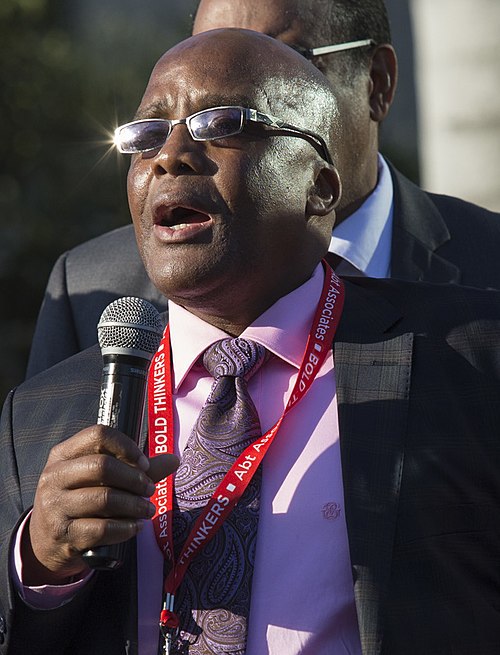
Aaron Motsoaledi
LP; Minister of Home Affairs • South Africa
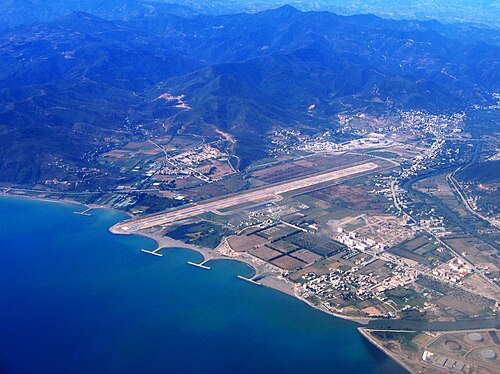
Abane Ramdane†
FLN Leader & Strategist • Algeria
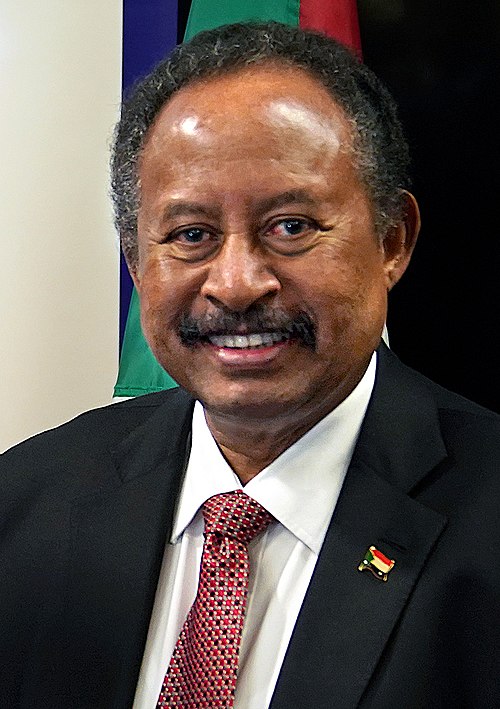
Abdalla Hamdok
Ex-Prime Minister • Sudan
Abdallah Kigoda
Ex-Minister of Natural Resources • Tanzania