Financial Breakdown
Asset Distribution
Assets vs Liabilities
Assets
Liabilities
Disclaimer: These financial estimates are based on publicly available information and should be considered approximate. Last updated: 7/31/2026
Biography
Kwesi Amissah-Arthur: A Life in Economics & Public Service
Paa Kwesi Bekoe Amissah-Arthur (born 1951) was a distinguished Ghanaian economist, academic, and statesman who left an indelible mark on the economic trajectory of Ghana. Best known as the sixth vice president of Ghana, he served under President John Dramani Mahama from August 2012 to January 2017. Before entering the highest echelons of political leadership, Amissah-Arthur established himself as one of Ghana's most respected monetary experts, holding the position of 12th governor of the Bank of Ghana from 2009 to 2012. His tenure at the central bank came during a period of global financial turbulence, and his steady hand helped stabilize Ghana's banking sector and contain inflation. A quiet but deeply principled leader, Amissah-Arthur was widely admired for his intellectual rigor, integrity, and commitment to evidence-based policy. His transition from academia to central banking and ultimately to the vice presidency exemplifies a career dedicated to the economic advancement of Ghana. This biography traces his journey from his early years in Ghana through his formative education, his pivotal role in shaping monetary policy, and the legacy he left as a guardian of fiscal discipline and democratic governance.
Early Life & Education
Kwesi Amissah-Arthur was born in 1951 in Ghana, into a family that valued education and public service. Growing up in the post-independence era, he witnessed firsthand the aspirations and challenges of a young nation building its economic foundations. His early schooling took place in Ghana, where he demonstrated exceptional aptitude in mathematics and the social sciences — subjects that would later define his professional life.
After completing secondary education, Amissah-Arthur pursued a Bachelor of Science degree in Economics at the University of Ghana, Legon, one of West Africa's premier institutions. At Legon, he was exposed to both classical economic theory and the developmental challenges facing newly independent African states. His professors recognized his analytical depth and encouraged him to continue his studies abroad. He subsequently earned a Master's degree in Economics from the University of Oxford in the United Kingdom, where he specialized in monetary economics and public finance. The Oxford years were formative: he studied under leading economists, engaged in rigorous debate about development policy, and built a network of peers who would later occupy influential roles across the continent.
Beyond formal education, Amissah-Arthur's formative experiences included teaching economics at the university level. He returned to Ghana and joined the faculty of the University of Ghana, Legon, where he lectured for more than a decade. This period allowed him to refine his economic philosophy — one that emphasized sound monetary policy, fiscal responsibility, and the importance of strong institutions. His academic work focused on inflation dynamics, exchange rate policy, and the role of central banks in developing economies, themes that would become central to his career.
Career & Major Achievements
Academic Foundations and Early Policy Influence
Amissah-Arthur began his professional journey as a lecturer in economics at the University of Ghana, Legon, where he taught for over twelve years. During this time, he published research on monetary policy and economic development, and served as a consultant to various government agencies and international organizations. His reputation as a clear-eyed, non-partisan economist grew steadily, and he was frequently called upon to advise on fiscal planning and banking regulation.
Governor of the Bank of Ghana (2009–2012)
In 2009, President John Evans Atta Mills appointed Amissah-Arthur as the 12th governor of the Bank of Ghana. He assumed leadership of the central bank during a period of global economic uncertainty following the 2008 financial crisis. As governor, he implemented a series of prudent monetary policies aimed at curbing inflation, stabilizing the cedi, and strengthening the banking sector. He oversaw the introduction of new regulatory frameworks that enhanced transparency and reduced non-performing loans. His tenure also saw improvements in Ghana's foreign reserves and a more disciplined approach to government borrowing. Under his guidance, the Bank of Ghana gained credibility both domestically and internationally, and Ghana's economy posted steady growth. His leadership was widely praised by the International Monetary Fund and the World Bank.
Vice President of Ghana (2012–2017)
Following the sudden death of President John Atta Mills in July 2012, then-Vice President John Dramani Mahama ascended to the presidency and selected Amissah-Arthur as his running mate for the 2012 general election. The Mahama-Amissah-Arthur ticket won the election, and on 7 August 2012, Kwesi Amissah-Arthur was sworn in as the sixth vice president of Ghana. In this role, he chaired the Economic Management Team and was the principal architect of several key economic policies, including the Ghana Shared Growth and Development Agenda. He worked tirelessly to maintain macroeconomic stability amid challenging global commodity prices and fiscal pressures. He also represented Ghana at numerous international forums, advocating for debt sustainability and fair trade policies for African nations. His calm demeanor and technocratic approach earned him respect across party lines, even during periods of political tension.
Key Policy Contributions
- Monetary Policy Reform: Introduced inflation-targeting frameworks and improved monetary policy communication at the Bank of Ghana.
- Banking Sector Stability: Strengthened capital adequacy requirements and supervisory oversight, reducing systemic risk.
- Fiscal Discipline: As vice president, championed expenditure controls and revenue mobilization measures to narrow the fiscal deficit.
- Energy Sector Oversight: Played a key role in managing the financial aspects of Ghana's energy crisis, helping to restructure debts of state-owned utilities.
- International Advocacy: Represented Ghana at the African Union, ECOWAS, and United Nations conferences on economic development and governance.
Personal Life & Legacy
Kwesi Amissah-Arthur was known for his modest and reserved personal style, a stark contrast to the often flamboyant nature of political life. He was a devoted family man, married to Matilda Amissah-Arthur, with whom he had children. Those who worked closely with him described him as a man of deep faith, quiet conviction, and unwavering integrity. He was an avid reader and maintained a lifelong passion for teaching, often mentoring young economists and public servants.
Amissah-Arthur's legacy is most profoundly felt in Ghana's economic governance architecture. He is remembered as a guardian of fiscal discipline who placed the long-term health of the economy above short-term political gain. The monetary policy frameworks he helped institutionalize at the Bank of Ghana continue to guide the central bank's operations. Beyond policy, his example of clean, technocratic leadership has inspired a generation of Ghanaian economists to enter public service. In recognition of his contributions, he received several national and international honours, and his name is frequently invoked in discussions about Ghana's economic resilience. He passed away on 29 June 2018, but his influence endures in the institutions he strengthened and the lives he touched.
Net Worth & Business Holdings
Unlike many prominent political figures, Kwesi Amissah-Arthur was not known for accumulating significant personal wealth. His career was defined by public service, academia, and central banking — sectors that prioritize institutional contribution over private gain. Public records and financial disclosures from his time as vice president indicate a modest asset profile, consisting primarily of his salary, pension entitlements, and a family home. He held no major equity stakes in private corporations and was not involved in large-scale business ventures. His net worth at the time of his death was estimated to be modest by international standards, reflecting a life dedicated to service rather than commerce. This financial restraint further cemented his reputation as a leader of integrity. His legacy is measured not in monetary terms but in the economic stability and institutional reforms he helped secure for Ghana.
— A comprehensive biography of Kwesi Amissah-Arthur, Ghanaian economist, vice president, and central bank governor. Prepared for educational and reference purposes.
```Frequently Asked Questions
What is Kwesi Amissah-Arthur's estimated net worth?
Kwesi Amissah-Arthur has an estimated net worth of €1.3 Million.
What is Kwesi Amissah-Arthur's role and nationality?
Kwesi Amissah-Arthur is a economist from Ghana.
How did Kwesi Amissah-Arthur make their money?
Kwesi Amissah-Arthur built their fortune primarily through Kwesi Amissah-Arthur was a Ghanaian economist and former vice president, but not a business magnate; his net worth is estimated based on typical public service career and modest assets, likely in the low millions..
How old is Kwesi Amissah-Arthur?
Kwesi Amissah-Arthur was born in 1951 (75 years old).
Which category is Kwesi Amissah-Arthur listed under?
Kwesi Amissah-Arthur is featured under the Business & Economics category on NetWorth Africa.
How is Kwesi Amissah-Arthur's net worth calculated?
NetWorth Africa estimates financial valuations using publicly available stock equity holdings, company ownership records, real estate assets, and verified market data.
Net Worth Analysis
Kwesi Amissah-Arthur was a Ghanaian economist and former vice president, but not a business magnate; his net worth is estimated based on typical public service career and modest assets, likely in the low millions.
Quick Stats
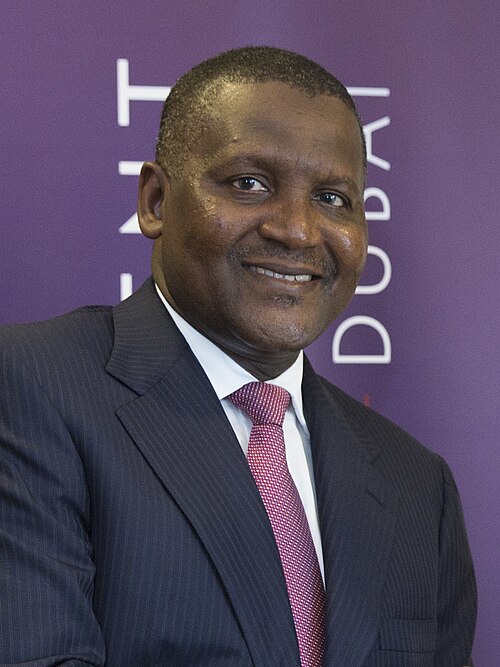
Related People
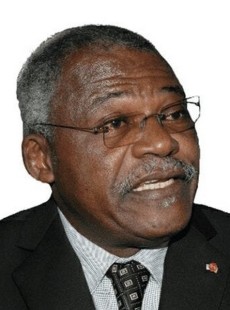
Abbas Bonfoh
Governor BEAC Gabon • Gabon
Abdel Kader Taleb Ould Abderrahmane
Governor Central Bank • Mauritania
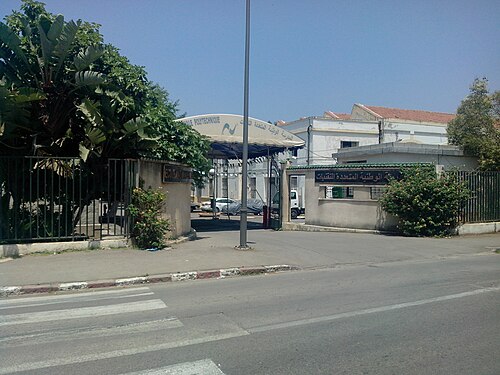
Abdelmoumen Ould Kaddour
Ex-CEO Sonatrach • Algeria

Abderrahmane Benhamadi
CEO Saidal • Algeria