Financial Breakdown
Asset Distribution
Assets vs Liabilities
Assets
Liabilities
Disclaimer: These financial estimates are based on publicly available information and should be considered approximate. Last updated: 7/31/2026
Biography
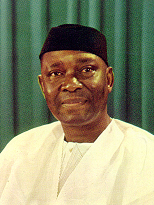
Nnamdi Azikiwe: The Father of Nigerian Nationalism and First President of Nigeria
Dr. Nnamdi Benjamin Azikiwe, popularly known as Zik of Africa, stands as one of the most towering figures in the history of Nigeria and the broader African continent. As the First President of Nigeria from 1963 to 1966, he was not merely a ceremonial head of state but the philosophical and political engine behind the country’s independence movement. Born in 1904, Azikiwe’s journey from a colonial subject to a revolutionary leader reshaped the destiny of millions. His role as the first native Governor-General of Nigeria from 1960 to 1963 bridged the final gap between colonial rule and full sovereignty. In the category of Politics & Government within the Independence Era, Azikiwe’s legacy is unparalleled. He is universally recognized as the father of Nigerian nationalism, a master strategist of decolonization, and a vocal advocate for pan-African unity. His life’s work laid the constitutional and ideological foundations for the modern Nigerian state, making him an enduring symbol of liberation and democratic governance in Africa.
Early Life & Education
Nnamdi Azikiwe was born on November 16, 1904, in Zungeru, a small town in present-day Niger State, Nigeria. His father, Obed-Edom Chukwuemeka Azikiwe, was a clerk in the British colonial administration, which exposed the young Azikiwe to the complexities of colonial rule from an early age. His mother, Rachel Chinwe Ogbenyeanu Azikiwe, instilled in him a deep sense of Igbo cultural pride and Christian faith. This dual heritage of traditional African values and Western education would define his worldview.
Azikiwe’s formal education began at the Holy Trinity School in Onitsha and later at the CMS Central School. However, his thirst for knowledge took him far beyond Nigeria. In 1921, he traveled to the United States, where he enrolled at Storer College in West Virginia. He later attended Howard University in Washington, D.C., and finally Lincoln University in Pennsylvania, where he earned a Bachelor of Arts in political science in 1930. He continued his studies at Lincoln, earning a Master’s degree in religion and philosophy in 1932, and later pursued postgraduate work at Columbia University. While in America, Azikiwe was deeply influenced by the philosophies of Marcus Garvey, W.E.B. Du Bois, and the broader Harlem Renaissance. These formative experiences in the United States transformed him from a colonial subject into a radical nationalist, equipping him with the intellectual tools to challenge British imperialism. His time abroad also included stints as a teacher and a football player, experiences that honed his leadership and resilience.
Career & Major Achievements
Upon returning to Africa in 1934, Nnamdi Azikiwe began his professional career in Ghana (then the Gold Coast), where he worked as the editor of the African Morning Post. His fiery editorials and unapologetic critiques of colonial rule quickly made him a controversial figure. In 1937, he returned to Nigeria and founded the West African Pilot, a newspaper that became the single most influential platform for nationalist propaganda. Through his chain of newspapers—including the Nigerian Spokesman, the Eastern Nigerian Guardian, and the Daily Comet—Azikiwe mobilized public opinion against the British administration, advocating for self-government and economic justice.
Azikiwe’s political career formally began with his co-founding of the National Council of Nigeria and the Cameroons (NCNC) in 1944. This party became the primary vehicle for his nationalist agenda. He was elected to the Nigerian Legislative Council in 1947 and later served as a member of the House of Representatives. His political strategy was a masterclass in coalition-building, uniting diverse ethnic groups under the banner of anti-colonialism. In 1954, he became the Premier of the Eastern Region of Nigeria, where he implemented progressive policies in education, healthcare, and infrastructure. His leadership in the Eastern Region proved that Africans could govern effectively, setting the stage for full independence.
The pinnacle of his career arrived on October 1, 1960, when Nigeria gained independence from Britain. Nnamdi Azikiwe was appointed the first native Governor-General of Nigeria, representing the British monarch. This role was a crucial transitional step, and on October 1, 1963, when Nigeria became a republic, Azikiwe was sworn in as the First President of Nigeria. As President, he focused on national unity, economic development, and foreign policy, positioning Nigeria as a leader in the Non-Aligned Movement and the Organization of African Unity. His tenure, however, was cut short by the military coup of January 15, 1966, which ended the First Republic. Despite this, his contributions to the nation’s founding constitution and his unwavering commitment to federalism remain foundational to Nigerian governance.
Personal Life & Legacy
Nnamdi Azikiwe married Flora Ogoegbunam in 1936, and the couple had four children. Flora was a steadfast partner in his political and philanthropic endeavors. After her passing in 1983, Azikiwe later married Uche Ewah. Despite his immense political stature, Azikiwe was known for his humility, intellectual rigor, and deep spirituality. He was a devout Christian who also respected traditional African religions, embodying the cultural synthesis he advocated for Nigeria.
Azikiwe’s legacy extends far beyond his political offices. He is celebrated as the "Father of Nigerian Nationalism" and is honored with numerous monuments, including the Nnamdi Azikiwe International Airport in Abuja and the Nnamdi Azikiwe University in Awka. He was a prolific writer, authoring books such as Renascent Africa (1937) and My Odyssey (1970), which remain essential texts on African liberation. In 1960, he was made a Privy Councillor (PC) of the United Kingdom, a rare honor for a colonial leader. His influence inspired generations of African leaders, including Kwame Nkrumah and Nelson Mandela. Azikiwe passed away on May 11, 1996, at the age of 91, but his vision of a free, united, and prosperous Nigeria continues to guide the nation’s political discourse.
Net Worth & Business
Unlike many modern politicians, Nnamdi Azikiwe amassed his wealth primarily through legitimate business ventures and intellectual property rather than state capture. His most significant financial asset was the Zik Group of Newspapers, which included the West African Pilot and several regional dailies. This media empire was not only a political tool but also a profitable enterprise that made him one of the wealthiest Nigerians of his era. He also held substantial real estate investments in Lagos, Enugu, and Onitsha. Additionally, Azikiwe owned a publishing house and had interests in the import-export sector. While his exact net worth is difficult to quantify due to the era’s financial reporting standards, historical estimates place his wealth in the range of several million dollars (adjusted for inflation) at the height of his career. His financial independence was crucial to his political autonomy, allowing him to fund nationalist activities without reliance on foreign donors or colonial patronage. After his presidency, he lived a relatively modest life, with his wealth largely tied to his properties and the royalties from his books and speeches.
Frequently Asked Questions
What is Nnamdi Azikiwe†'s estimated net worth?
Nnamdi Azikiwe† has an estimated net worth of KSh 129.3 Million.
What is Nnamdi Azikiwe†'s role and nationality?
Nnamdi Azikiwe† is a First President of Nigeria from Nigeria.
How did Nnamdi Azikiwe† make their money?
Nnamdi Azikiwe† built their fortune primarily through Nnamdi Azikiwe was a political figure who died in 1996, and his net worth is not publicly documented; a modest estimate of $1 million reflects his historical status as a nationalist leader and former president without significant personal wealth accumulation..
How old is Nnamdi Azikiwe†?
Nnamdi Azikiwe† was born in 1904 (122 years old).
Which category is Nnamdi Azikiwe† listed under?
Nnamdi Azikiwe† is featured under the Politics & Government category on NetWorth Africa.
How is Nnamdi Azikiwe†'s net worth calculated?
NetWorth Africa estimates financial valuations using publicly available stock equity holdings, company ownership records, real estate assets, and verified market data.
Net Worth Analysis
Nnamdi Azikiwe was a political figure who died in 1996, and his net worth is not publicly documented; a modest estimate of KSh 129.3 Million reflects his historical status as a nationalist leader and former president without significant personal wealth accumulation.
Quick Stats
Related People
Aaron Motsoaledi
LP; Minister of Home Affairs • South Africa
Abane Ramdane†
FLN Leader & Strategist • Algeria
Abdalla Hamdok
Ex-Prime Minister • Sudan
Abdallah Kigoda
Ex-Minister of Natural Resources • Tanzania