$400M
Estimated Net Worth
As of 2024 • medium confidence
Financial Breakdown
Asset Distribution
Assets vs Liabilities
Assets
Disclaimer: These financial estimates are based on publicly available information and should be considered approximate. Last updated: 12/29/2025
Biography
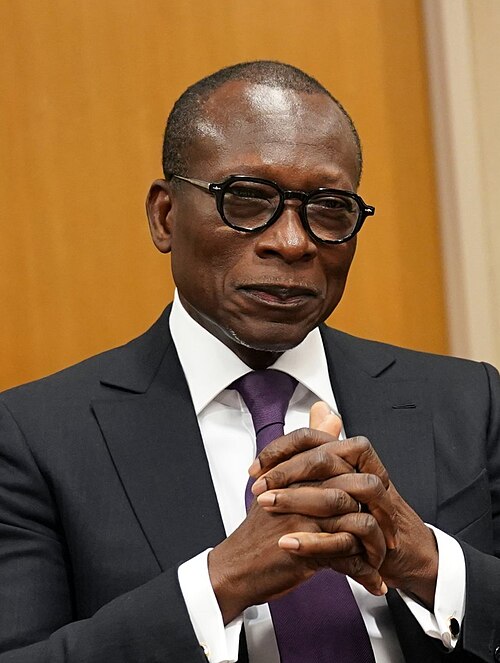
In the landscape of modern African leadership, few figures embody the fusion of Business & Economics and Politics & Government as distinctly as Patrice Talon. Known widely as the "Cotton King," Talon ascended from being Benin's most successful agribusiness entrepreneur to become its President, a journey that defines his unique legacy. Born in 1958 in the coastal town of Ouidah, his story is one of calculated ambition, transforming the economic backbone of his nation before seeking to steer its political destiny. Elected as President of Benin in 2016 and re-elected in 2021, Talon's administration is characterized by a business-like approach to governance, focusing on economic reform, infrastructure development, and controversial political restructuring. His life and career offer a compelling study of how private sector acumen is applied to the public sphere, with significant impacts on the West African nation of Benin.
Early Life & Education: Foundations of a Future Leader
Patrice Guillaume Talon was born on May 1, 1958, in Ouidah, a historic city in the then-French colony of Dahomey. His father was a civil servant and a prominent merchant, providing young Patrice with early exposure to commerce and the realities of economic life in colonial and post-colonial Africa. This upbringing instilled in him a pragmatic understanding of value chains and market dynamics from a young age.
For his secondary education, Talon attended the Lycée Robert Gamel in the capital, Porto-Novo. Demonstrating academic promise, he pursued higher education abroad, a common path for the elite of his generation. He enrolled at the University of Dakar in Senegal, followed by studies at the National School of Civil Aviation (ENAC) in Toulouse, France, where he earned a degree as a civil aviation engineer. This technical education provided him with a structured, analytical mindset. However, his true calling lay not in aviation but in the fertile fields of his homeland. Returning to Benin in the 1980s, a period of Marxist-Leninist rule under President Mathieu Kérékou, Talon entered the business world with a clear vision, initially distributing agricultural inputs. This experience on the ground would become the bedrock of his future empire.
Career & Major Achievements: Building an Empire and Steering a Nation
The Ascent of the "Cotton King"
Patrice Talon's business career is inextricably linked to cotton, the "white gold" of Benin. In 1985, he founded the Société de Distribution des Intrants du Bénin (SDIB), a company specializing in importing and distributing fertilizers, pesticides, and other agricultural inputs. This venture gave him unparalleled insight into the bottlenecks of Benin's most important cash crop sector. He astutely identified that control over inputs and ginning (processing) was key to profitability and influence.
His major breakthrough came in the early 1990s following Benin's transition to democracy and a market economy. Talon acquired several state-owned cotton ginning companies during privatization, consolidating them under his holding group, Compagnie Béninoise pour le Développement des Textiles (CBDT). Through strategic investments and partnerships, including a crucial alliance with the French agro-industrial giant Groupement des Producteurs de Coton du Burkina (SOFITEX), he gained dominant control over Benin's cotton production. At its peak, his empire controlled:
- Over 70% of the country's cotton ginning capacity.
- A vast network for supplying seeds and chemicals to farmers.
- Significant interests in port logistics and shipping.
Political Ascent and Presidential Tenure
Patrice Talon's move into Politics & Government was gradual. He was a key financier and close advisor to President Thomas Boni Yayi (2006-2016), wielding significant behind-the-scenes influence. A falling out in 2012 led to a brief exile in France and even legal troubles, but Talon returned, his political ambitions now overt. Campaigning as a successful businessman who could "manage the state like a company," he won the 2016 presidential election, promising economic modernization and good governance.
His presidency, under the banner of the "Revealing Benin" program, has been marked by decisive action and controversy. Key achievements and focus areas include:
- Agricultural Reform: Launching a major reform of the cotton sector in 2017, aiming to increase production, which has seen volumes rise to record levels exceeding 700,000 tons annually.
- Infrastructure Boom: Initiating large-scale projects like the Glo-Djigbé Industrial Zone (GDIZ), major road networks, port expansions, and water supply systems.
- Digital & Economic Modernization: Implementing a national digital identification system and reforming the tax administration to boost revenue.
- Political Controversy: His administration has overseen a constitutional revision and a contentious electoral code that critics argue have weakened Benin's once-robust democracy, concentrating power in the Executive Presidency.
Personal Life, Philanthropy & Legacy
Despite his public profile, Patrice Talon maintains a relatively private personal life. He is married and has children. Known for his disciplined, workaholic nature, he brings a CEO's schedule and precision to the presidential palace. His personal interests are seldom publicized, as his public image remains firmly tied to his work as a statesman and former businessman.
His philanthropic efforts, often channeled through the Patrice Talon Foundation, have focused on areas close to his professional roots:
- Healthcare initiatives, including funding medical equipment and facilities.
- Support for education and youth entrepreneurship.
- Contributions to community development projects across Benin.
Net Worth & Business Ventures
While exact figures are private, Patrice Talon's net worth is estimated to be in the hundreds of millions of dollars, primarily accumulated through his agribusiness empire. Before assuming the presidency, he placed his vast business holdings, including the CBDT group and his interests in the port of Cotonou, into a blind trust to avoid conflicts of interest, as required by law. His core business ventures centered on a vertically integrated model in the cotton sector, controlling everything from farm inputs to export logistics. Beyond cotton, his investments spanned:
- Shipping and port operations via the Société Béninoise de Manutention Portuaire (SOBEMAP).
- Real estate and hospitality.
- Distribution networks for consumer goods.
Net Worth Analysis
Patrice Talon is a wealthy businessman known as the 'Cotton King' of Benin, but he is not listed on major billionaire indices like Forbes. His wealth is primarily tied to his private cotton and port operations, with most credible estimates placing it in the hundreds of millions.
Quick Stats
Related People
Aziz Akhannouch
CEO Akwa Group; Prime Minister of Morocco
Dr. Joyce Aryee
Ex-Minister & CEO
Dr. Papa Kwesi Nduom
CR; M
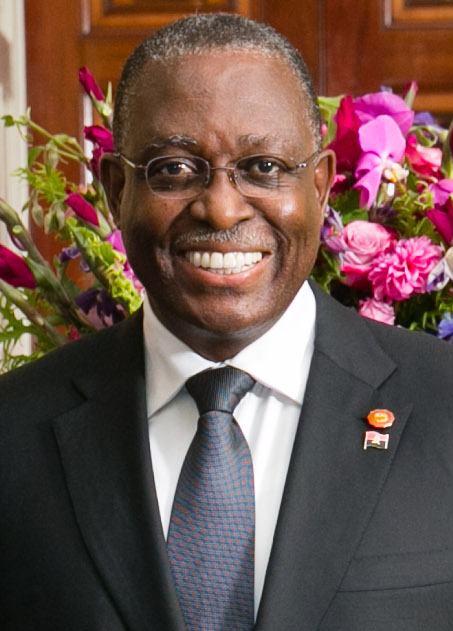
Manuel Vicente
Ex-VP & Sonangol Chair; Ex-Vice President & Sonangol Chair