Financial Breakdown
Asset Distribution
Assets vs Liabilities
Assets
Disclaimer: These financial estimates are based on publicly available information and should be considered approximate. Last updated: 12/29/2025
Biography
Introduction: The Pillar of Cameroonian Politics
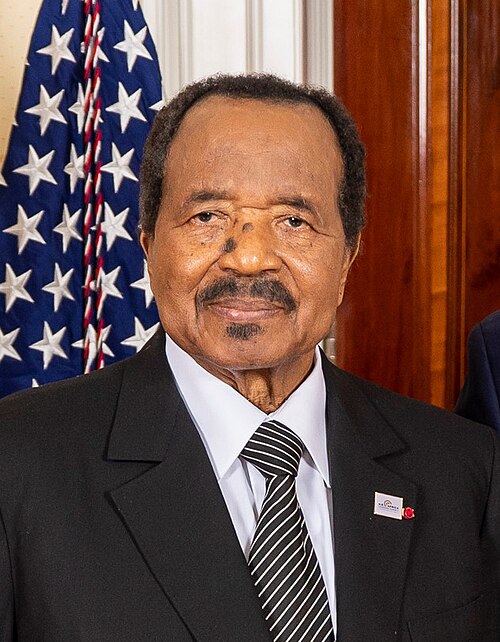
Paul Biya stands as one of the most enduring figures in modern African Politics & Government. As the President of Cameroon since November 6, 1982, he has overseen the nation's political landscape for over four decades, making him one of the world's longest-serving non-royal heads of state. His tenure, which began following the resignation of the nation's first president, Ahmadou Ahidjo, has been marked by a philosophy of "rigor and moralization," periods of significant economic challenge, and a steadfast commitment to national unity. The political journey of Paul Biya is intrinsically linked with the contemporary history of Cameroon itself, encompassing efforts to navigate the country's complex bilingual and bicultural heritage, manage its oil wealth, and maintain stability in a often turbulent region. Understanding his rule is essential to understanding the modern Central African state.
Early Life & Education: Formative Years in French Cameroon
Paul Barthélemy Biya'a Bi Mvondo was born on February 13, 1933, in the village of Mvomeka'a, located in the then-French-administered region of Cameroon (now the South Region). His early education was rooted in Catholic missionary schools, reflecting the strong influence of the church during the colonial period. A brilliant student, Biya's academic prowess paved his way out of his rural beginnings. He attended the Lycée Général Leclerc in Yaoundé, the elite secondary school that served as a training ground for the country's future leaders.
His pursuit of higher education took him to Paris, France. He studied at the Institut des Hautes Études d'Outre-Mer, a prestigious institution that trained administrators for the French colonial empire. Here, Biya earned degrees in public law and political science, graduating in 1960. This formative period in France coincided with the wave of African independence movements. While his homeland gained independence in 1960, Biya was acquiring the administrative and legal expertise that would define his technocratic approach to governance. He returned to a newly independent Cameroon in 1962, equipped with the skills favored by the nascent post-colonial administration.
Career & Major Achievements: The Path to Executive Presidency
Paul Biya's rise within the Cameroonian government was swift and steady, characterized by loyalty and administrative competence. Upon his return, he entered the civil service, holding several key positions:
- 1962-1964: Chargé de Mission at the Presidency of the Republic.
- 1964-1965: Director of the Cabinet of the Minister of National Education.
- 1965-1968: Secretary-General of the Ministry of National Education.
His big break came in 1968 when President Ahmadou Ahidjo appointed him as the Secretary-General of the Presidency, a role of immense trust and influence. This was followed by his appointment as Prime Minister in 1975, a position newly created and clearly designating him as the constitutional successor. When Ahidjo unexpectedly resigned on November 6, 1982, Paul Biya assumed the presidency, as planned.
Consolidation of Power and Political Evolution
The early years of Biya's presidency were turbulent, involving a failed coup attempt in 1984 and a decisive break from his predecessor. He survived the coup and emerged with greater authority. In 1985, he rebranded the sole political party, the Cameroon National Union (CNU), into the Cameroon People's Democratic Movement (CPDM/RDPC), which remains the ruling party today. A significant shift occurred in the early 1990s following domestic and international pressure for democratization. Biya introduced multi-party politics, though the political landscape has remained dominated by the CPDM.
Key Policies and National Challenges
Biya's long tenure has been defined by several overarching themes. He has consistently emphasized national unity between the English-speaking (Anglophone) and French-speaking (Francophone) regions, a legacy of the 1961 federation. Economically, his presidency has weathered boom-and-bust cycles tied to commodity prices, with structural adjustment programs in the late 1980s and 1990s. Major infrastructure projects, like the deep-sea port in Kribi and various hydroelectric dams, have been launched under his "Great Achievements" agenda. However, his presidency has also faced significant criticism over issues of corruption, political freedoms, and, most acutely, the ongoing Anglophone Crisis that began in 2016, a severe conflict rooted in the grievances of the English-speaking minority regions.
Personal Life & Legacy: The Man Behind the Presidency
Paul Biya is known for a reserved and discreet personal demeanor, often described as a "sphinx." He is a devout Roman Catholic. He has been married twice; his first wife, Jeanne-Irène Biya, passed away in 1992. In 1994, he married Chantal Vigouroux, who has since become a prominent and fashionable figure as Cameroon's First Lady, known for her philanthropic work through her foundation, African Synergy. Biya is known to spend considerable periods at the Intercontinental Hotel in Geneva, Switzerland, a practice that has drawn periodic criticism from opposition groups.
The legacy of Paul Biya is complex and subject to intense debate. Supporters credit him with maintaining peace and stability for much of his rule in a region plagued by conflict, preserving national unity, and overseeing incremental development. Detractors point to allegations of endemic corruption, a lack of political alternation, and a failure to decisively address the Anglophone crisis, which has led to significant violence and humanitarian need. As the President of Cameroon for over 40 years, his impact on the nation's institutions, political culture, and international standing is undeniable and profound.
Net Worth & Financial Standing
The precise net worth of President Paul Biya is not publicly disclosed and remains a topic of speculation. As a career public servant who has held the highest office since 1982, his official income is derived from the state. However, like many long-serving leaders, questions about the sources of personal and familial wealth are frequently raised by transparency advocates and opposition figures. International observers, including organizations like Transparency International, have often cited Cameroon as facing significant challenges with public sector corruption and governance. While no formal charges or verified accounts of personal business ventures exist in the public domain, the opacity surrounding the finances of the political elite is a persistent feature of discussions on Cameroonian Politics & Government. His lifestyle, including extended stays abroad, contributes to the ongoing public and international curiosity about the financial dimensions of his lengthy tenure.
For further reading on the political context of Cameroon, you may refer to resources from the CIA World Factbook or reports from international bodies like the Human Rights Watch.
Frequently Asked Questions
What is Paul Biya's estimated net worth?
Paul Biya has an estimated net worth of KSh 25.9 Billion.
What is Paul Biya's role and nationality?
Paul Biya is a President of Cameroon from Cameroon.
How did Paul Biya make their money?
Paul Biya built their fortune primarily through Paul Biya (Cameroon) - Net Worth: $200 million.
How old is Paul Biya?
Paul Biya was born in 1933 (93 years old).
Which category is Paul Biya listed under?
Paul Biya is featured under the Politics & Government category on NetWorth Africa.
How is Paul Biya's net worth calculated?
NetWorth Africa estimates financial valuations using publicly available stock equity holdings, company ownership records, real estate assets, and verified market data.
Net Worth Analysis
Paul Biya (Cameroon) - Net Worth: KSh 25.9 Billion
Quick Stats
Related People
Aaron Motsoaledi
LP; Minister of Home Affairs • South Africa
Abane Ramdane†
FLN Leader & Strategist • Algeria
Abdalla Hamdok
Ex-Prime Minister • Sudan
Abdallah Kigoda
Ex-Minister of Natural Resources • Tanzania