Financial Breakdown
Asset Distribution
Assets vs Liabilities
Assets
Liabilities
Disclaimer: These financial estimates are based on publicly available information and should be considered approximate. Last updated: 12/31/2025
Biography
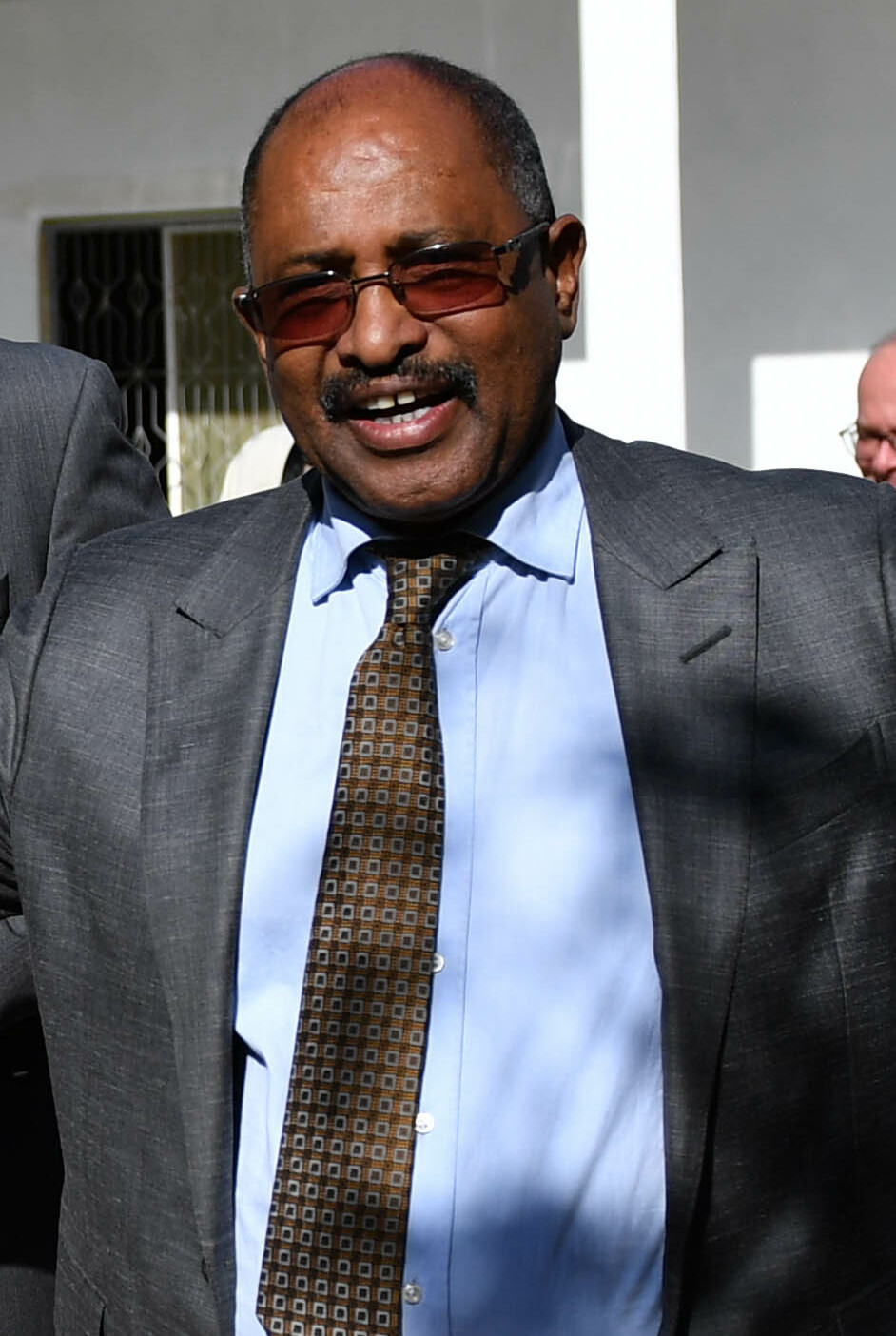
In the intersecting worlds of Academia & Research, human geography, and African development studies, few voices carry the weight and clarity of Prof. Abdi Ismail Samatar. A distinguished Professor at the University of Minnesota, Samatar has carved an intellectual legacy that bridges rigorous scholarly analysis with a deep, abiding commitment to social justice and the future of the African continent, particularly his homeland of Somalia. Born in 1955, his journey from the Horn of Africa to a preeminent position in global Academia & Research is a testament to the power of critical thought. His key achievement lies not in a single publication, but in the foundational framework he has provided for understanding the political geography of Africa, the perils of post-colonial state failure, and the possibilities for ethical leadership and development. As a geographer, his work fundamentally reorients how we see space, power, and society in the African context.
Early Life & Education: Formative Years in the Horn of Africa
Prof. Abdi Ismail Samatar was born in 1955 in what was then British Somaliland, a region that would later become part of the independent Republic of Somalia. His formative years were shaped by the optimism of early independence and the subsequent disillusionment with the military dictatorship of Siad Barre, which seized power in 1969. This direct experience with the promise and subsequent unraveling of a post-colonial state provided the visceral, real-world grounding for his later scholarly pursuits. It instilled in him urgent questions about governance, nationalism, and social equity that would define his career.
His academic journey is marked by a global search for knowledge and analytical tools. He completed his undergraduate education at the University of Wisconsin–Eau Claire, earning a Bachelor of Arts. He then pursued a Master of Science degree at the University of North Dakota. The cornerstone of his theoretical training came from the University of California, Berkeley, where he earned both his M.A. and Ph.D. in Geography. At Berkeley, a leading center for critical geography, Samatar was immersed in theories of political economy, development, and spatial analysis. This elite education, combined with his personal history, equipped him with a unique ability to dissect the structural and historical forces shaping African societies.
Career & Major Achievements: Scholar, Critic, and Public Intellectual
Prof. Abdi Ismail Samatar has built his career primarily at the University of Minnesota, where he has been a professor in the Department of Geography, Environment and Society. He also served as the Dean of the College of Liberal Arts and Professional Studies at the University of Johannesburg in South Africa from 2011 to 2013, a role that underscored his pan-African stature and commitment to advancing higher education on the continent.
Intellectual Contributions and Publications
Samatar's scholarly output is prolific and paradigm-shifting. His work consistently challenges orthodox narratives about African development and statehood. Key themes in his research include:
- The African State and Leadership: In his seminal book, An African Miracle: State and Class Leadership and Colonial Legacy in Botswana Development (1999), he provided a counter-narrative to the pervasive story of African failure by analyzing Botswana's relative success, attributing it to a "pact of social solidarity" and an ethical, developmentalist state elite.
- Critique of the "New World Order": His work, including Africa's First Democrats: Somalia's Aden A. Osman and Abdirazak H. Hussen (2016), co-authored with his brother, historian Ahmed I. Samatar, excavates indigenous democratic experiments, arguing that Somalia's early leaders embodied a brief but genuine democratic spirit crushed by later authoritarianism.
- Political Geography of the Horn: He has extensively analyzed the disintegration of Somalia, framing it not as a case of primordial "tribalism" but as a catastrophic failure of a predatory state and the destructive impact of global geopolitics during the Cold War.
Academic Leadership and Recognition
Beyond his publications, Prof. Abdi Ismail Samatar has shaped the field through leadership and mentorship. He is a past President of the African Studies Association (ASA) (2014-2015), the premier global organization for the advancement of African studies. This role highlighted his central position in defining the direction of the field. He has also been a Senior Research Fellow at the University of Pretoria and a visiting professor at numerous institutions worldwide. His influence is evident in the generations of students and scholars he has mentored in Geography and African studies.
Public Engagement and Civic Duty
Samatar's role extends beyond the academy. He served as a Member of the Parliament of Somalia in the Transitional Federal Government (2004-2009), attempting to translate his scholarly insights into practical statecraft during a period of profound national crisis. Although his political tenure was fraught with the immense challenges of rebuilding a failed state, it reflected his deep commitment to participatory and ethical governance. He remains a sought-after analyst and commentator on Somali and Horn of Africa politics.
Personal Life & Legacy: The Intellectual as a Public Trust
While Prof. Abdi Ismail Samatar maintains a dignified privacy regarding his family life, his public persona is that of a deeply principled intellectual. His work is characterized by a moral clarity and a profound empathy for the marginalized. His legacy is multifaceted. Firstly, within Academia & Research, he has established a robust school of thought that insists on historical specificity, ethical accountability, and the agency of African peoples in analyses of the continent. He has moved geography beyond mere physical description into the heart of political and moral philosophy as it pertains to space and society.
Secondly, for Somalia and the Somali diaspora, he represents an intellectual beacon. In a context often dominated by divisive clan politics or superficial media narratives, Samatar offers a rigorous, historically-informed framework for understanding the nation's tragedies and envisioning its potential reconstruction. His work with his brother, Ahmed, stands as a monumental effort to reclaim and re-examine Somali history and political thought. His legacy is one of unyielding critical thought combined with patriotic commitment, demonstrating that the highest form of love for one's country is the honest, scholarly examination of its successes and failures.
Net Worth & Business: The Currency of Intellectual Capital
As with most tenured professors in the Academia & Research sector, the primary measure of Prof. Abdi Ismail Samatar's success is not in conventional business ventures or publicly disclosed net worth, but in his immense intellectual capital and influence. His financial standing is consistent with that of a senior, endowed professor at a major American research university like the University of Minnesota, which provides a stable and respected livelihood. His "wealth" is accrued in the form of seminal publications, prestigious awards, leadership roles in global academic bodies, and the respect of peers and policymakers.
He has not been known for commercial business ventures; his enterprise is the production of knowledge and the cultivation of critical minds. Any financial engagements are likely tied to academic pursuits—research grants, book royalties, and honoraria for lectures and consultations. The true value of Prof. Abdi Ismail Samatar's work lies in its power to reshape understanding and inform policy, a currency far more enduring than monetary wealth. His career exemplifies that the most significant investment one can make is in the rigorous, ethical pursuit of truth for the betterment of society.
Frequently Asked Questions
What is Prof. Abdi Ismail Samatar's estimated net worth?
Prof. Abdi Ismail Samatar has an estimated net worth of $1.0 Million.
What is Prof. Abdi Ismail Samatar's role and nationality?
Prof. Abdi Ismail Samatar is a Professor University of Minnesota from Somalia.
How did Prof. Abdi Ismail Samatar make their money?
Prof. Abdi Ismail Samatar built their fortune primarily through As a university professor and academic, his wealth is derived from salary, publications, and speaking engagements, not corporate ownership or business ventures placing him on billionaire lists..
How old is Prof. Abdi Ismail Samatar?
Prof. Abdi Ismail Samatar was born in 1955 (71 years old).
Which category is Prof. Abdi Ismail Samatar listed under?
Prof. Abdi Ismail Samatar is featured under the Academia & Research category on NetWorth Africa.
How is Prof. Abdi Ismail Samatar's net worth calculated?
NetWorth Africa estimates financial valuations using publicly available stock equity holdings, company ownership records, real estate assets, and verified market data.
Net Worth Analysis
As a university professor and academic, his wealth is derived from salary, publications, and speaking engagements, not corporate ownership or business ventures placing him on billionaire lists.
Quick Stats

Related People
Abdullahi Ahmed An-Na'im
Professor Emory University • Somalia
Adame Ba Konaré
Historian & Ex-First Lady • Mali
Adelaide Casely-Hayford†
Feminist & Educator • Sierra Leone
Amadou Hampâté Bâ†
Writer & Ethnologist • Mali