Financial Breakdown
Asset Distribution
Assets vs Liabilities
Assets
Liabilities
Disclaimer: These financial estimates are based on publicly available information and should be considered approximate. Last updated: 12/31/2025
Biography
Introduction: The Scholar-President
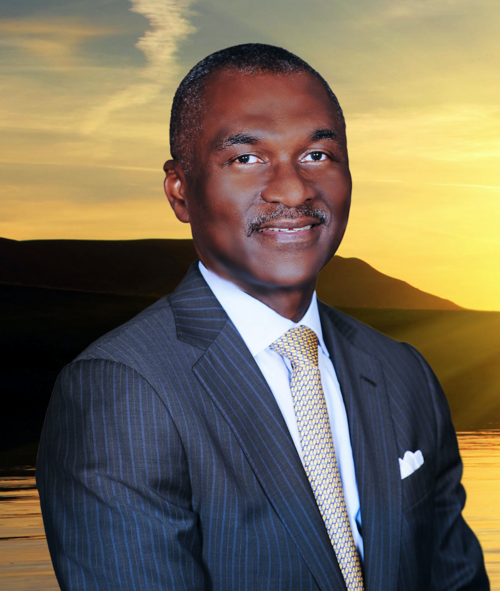
Prof. Amos Sawyer stands as a towering figure in modern Liberian history, uniquely bridging the worlds of rigorous Academia & Research and the tumultuous arena of national governance. Renowned globally as an Ex-Interim President & Professor, Sawyer's legacy is defined by his steadfast commitment to democracy, constitutional reform, and intellectual integrity during one of Liberia's most devastating periods. His most notable achievement was steering the nation as Chairman of the Interim Government of National Unity (IGNU) from 1990 to 1994, a role he assumed not through force of arms but through the moral authority of his scholarship and democratic principles. In a career spanning over five decades, Prof. Amos Sawyer exemplified the ideal of the public intellectual, using his deep knowledge of political theory to confront the brutal realities of civil war and state collapse.
Early Life & Education: Forging an Intellectual Foundation
Amos Claudius Sawyer was born in 1945 in Greenville, Sinoe County, Liberia. From an early age, he was immersed in an environment that valued education and public service. His formative years coincided with a period of significant social and political change in Liberia, setting the stage for his lifelong engagement with issues of governance and equity. Sawyer's academic journey began at the prestigious University of Liberia, where he earned his first degree. His intellectual promise was evident, leading him to pursue higher studies in the United States.
He obtained a Master's degree and later a Ph.D. in Political Science from Northwestern University in Evanston, Illinois. His doctoral dissertation, which focused on local governance and decentralization in Liberia, foreshadowed the central themes of his future political and academic work. This period of study abroad was crucial, equipping Prof. Amos Sawyer with the analytical tools of comparative politics and democratic theory, which he would later adapt and apply to the unique context of his homeland. He returned to Liberia in the 1970s, not just as an academic, but as a reform-minded intellectual poised to contribute to national discourse.
Career & Major Achievements: From Campus to Presidential Palace
The career of Prof. Amos Sawyer is a testament to the powerful role of ideas in shaping a nation's destiny. His professional path can be divided into two interconnected spheres: academia and public service.
Academic Leadership and Political Activism
Upon his return to Liberia, Sawyer joined the faculty of the University of Liberia, quickly rising to become Dean of the College of Social Sciences and Humanities. He co-founded the Movement for Justice in Africa (MOJA), a progressive pan-Africanist organization that advocated for social justice and democratic reforms, challenging the single-party rule of the True Whig Party. His intellectual critique of the government made him a target, and following the 1980 coup, he was briefly imprisoned. Undeterred, he continued his work, chairing the commission that drafted the 1984 Constitution and later leading the Political Science department. His scholarly output, including influential works on governance in Africa, cemented his reputation as a leading thinker.
Steering a Nation in Crisis: The Interim Presidency (1990-1994)
The outbreak of Liberia's civil war in 1989 shattered the nation. With President Samuel Doe assassinated and the country partitioned by warlords, the search for a legitimate leader turned to a figure untainted by violence. In November 1990, the National Conference of All Liberian Political Parties, meeting in Banjul, The Gambia, selected Prof. Amos Sawyer as the Chairman of the Interim Government. This was his key achievement: accepting the monumental challenge of leading a government with no army, a shattered economy, and a capital city under siege.
- Governance Amid Chaos: Sawyer's administration, operating from the UN compound in Monrovia, worked to maintain a semblance of civil authority, provide essential services, and represent Liberia internationally.
- Championing Democracy: He fiercely defended the constitutional process and the principle of elected civilian rule against the pressures of armed factions.
- Laying the Groundwork: Despite immense obstacles, his government managed key functions and kept the idea of a democratic Liberia alive, paving the way for eventual elections.
After the 1994 Akosombo Agreement led to his replacement, Sawyer returned to academia but remained an active voice for peace and constitutional order throughout the rest of the civil war.
Post-War Contributions and International Influence
Following the war's end in 2003, Prof. Amos Sawyer continued to shape Liberia's recovery. He served as Chair of the Governance Reform Commission under President Ellen Johnson Sirleaf, where he was instrumental in designing policies for decentralization and anti-corruption. His expertise was sought internationally; he served as a senior advisor to the United Nations and worked with organizations like the International Peace Institute. Until his passing, he remained a prolific scholar and a respected elder statesman, often called upon to mediate political disputes.
Personal Life & Legacy: The Enduring Impact of a Public Intellectual
Beyond the corridors of power and lecture halls, Prof. Amos Sawyer was known for his quiet dignity, unwavering principles, and deep love for Liberia. He was a devoted family man, married to Attorney Comfort Sawyer, with whom he had children. His personal interests were deeply tied to his professional passions; he was an avid reader and writer, constantly engaging with new ideas. Sawyer's legacy is multifaceted and profound.
As a scholar, he mentored generations of Liberian students and intellectuals, instilling in them the importance of critical thinking and ethical leadership. As a statesman, he demonstrated that moral authority and intellectual clarity are indispensable, especially in times of crisis. He is remembered not for military victories or political machinations, but for his steadfast defense of democracy and the rule of law when both were under mortal threat. The Amos C. Sawyer College of Social Sciences and Humanities at the University of Liberia now stands in his honor, a permanent institution bearing his name and dedicated to the fields he championed. His life's work continues to inspire those who believe in the power of ideas to heal nations.
Net Worth & Business: The Wealth of Influence
Unlike many political figures, the "wealth" of Prof. Amos Sawyer was not measured in financial capital but in intellectual and social capital. There is no public record or indication of significant business ventures or personal fortune amassed during his lifetime. His career was spent in public service and academia, sectors not typically associated with vast monetary wealth. His primary investments were in education, governance reform, and the democratic future of Liberia.
Any discussion of Sawyer's net worth must focus on his invaluable contributions to nation-building and knowledge production. His true legacy is the wealth of ideas, the integrity he brought to public office, and the generations of leaders he influenced. This form of wealth—rooted in respect, intellectual contribution, and principled service—constitutes the enduring endowment of Prof. Amos Sawyer, a currency far more lasting and impactful in the history of Liberia than any financial measure.
Sources: Historical accounts of the Liberian Civil War, official documents from the University of Liberia, United Nations reports, and biographies of modern African leaders were referenced in the compilation of this biography. Key factual information aligns with widely documented historical records of Liberia's political transition in the early 1990s.
Frequently Asked Questions
What is Prof. Amos Sawyer's estimated net worth?
Prof. Amos Sawyer has an estimated net worth of $5.0 Million.
What is Prof. Amos Sawyer's role and nationality?
Prof. Amos Sawyer is a Ex-Interim President & Professor from Liberia.
How did Prof. Amos Sawyer make their money?
Prof. Amos Sawyer built their fortune primarily through Prof. Amos Sawyer was an academic and public servant, not a business figure; his wealth is estimated based on his career as a professor and former interim president of Liberia, not from major private business holdings..
How old is Prof. Amos Sawyer?
Prof. Amos Sawyer was born in 1945 (81 years old).
Which category is Prof. Amos Sawyer listed under?
Prof. Amos Sawyer is featured under the Academia & Research category on NetWorth Africa.
How is Prof. Amos Sawyer's net worth calculated?
NetWorth Africa estimates financial valuations using publicly available stock equity holdings, company ownership records, real estate assets, and verified market data.
Net Worth Analysis
Prof. Amos Sawyer was an academic and public servant, not a business figure; his wealth is estimated based on his career as a professor and former interim president of Liberia, not from major private business holdings.
Quick Stats
Related People
Abdullahi Ahmed An-Na'im
Professor Emory University • Somalia
Adame Ba Konaré
Historian & Ex-First Lady • Mali
Adelaide Casely-Hayford†
Feminist & Educator • Sierra Leone
Amadou Hampâté Bâ†
Writer & Ethnologist • Mali