
Financial Breakdown
Asset Distribution
Assets vs Liabilities
Assets
Disclaimer: These financial estimates are based on publicly available information and should be considered approximate. Last updated: 12/31/2025
Biography
Introduction: The Public Intellectual
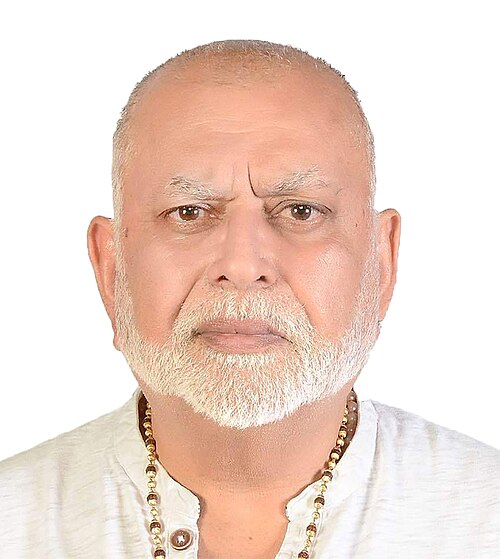
Prof. Mahmood Mamdani stands as one of the most influential and provocative intellectuals of our time. A preeminent scholar in the fields of Political Science, African studies, and postcolonial theory, his work has fundamentally reshaped debates on citizenship, colonialism, genocide, and the role of the state in Africa and the Global South. Born in 1946, his journey spans continents, from his early life in Uganda to prestigious academic appointments across the globe. A key achievement that cemented his reputation was his seminal 1996 book, Citizen and Subject: Contemporary Africa and the Legacy of Late Colonialism, which won the prestigious Herskovits Prize. Today, as the Director Makerere Institute of Social Research (MISR) at Makerere University in Kampala, Prof. Mahmood Mamdani continues to challenge conventional wisdom and mentor a new generation of African scholars, firmly positioning Uganda as a vital hub for critical Academia & Research.
Early Life & Education: Formative Years Across Continents
Prof. Mahmood Mamdani was born in 1946 into a Gujarati Muslim family in Kampala, Uganda, when the country was still a British protectorate. This early exposure to a colonial society, with its distinct racial and ethnic hierarchies, planted the seeds for his later scholarly critiques. His formal education began in Kampala, but a pivotal moment arrived in 1972 when he, along with thousands of other South Asians, was expelled from Uganda by the regime of Idi Amin. This traumatic experience of statelessness and displacement deeply informed his lifelong inquiry into the politics of identity, belonging, and citizenship.
His academic journey took him to the United States. He earned a Bachelor of Arts degree from the University of Pittsburgh in 1967, followed by a Master of Arts from the Fletcher School of Law and Diplomacy at Tufts University in 1969. He then pursued his PhD in Government at Harvard University, completing it in 1974. His doctoral research focused on the politics of rural change in colonial Tanzania, foreshadowing his enduring interest in the intersection of power, peasantry, and the colonial state. These formative experiences—growing up in colonial Uganda, facing expulsion, and being trained in Western institutions—equipped Prof. Mahmood Mamdani with a unique, multi-perspective lens through which to analyze power and society.
Career & Major Achievements: From Scholar to Institution Builder
The career of Prof. Mahmood Mamdani is marked by prolific scholarship, fearless intellectual engagement, and a commitment to decolonizing knowledge production. After teaching at the University of Dar es Salaam in Tanzania—a key intellectual center in the 1970s—he held positions at several leading universities, including the University of Cape Town and Columbia University in New York.
Seminal Publications and Theoretical Contributions
His body of work is extensive, but several key publications define his intellectual legacy:
- Citizen and Subject (1996): This groundbreaking book argued that post-colonial African states inherited a "bifurcated state" from colonial rulers. It created a distinction between urban "citizens" governed by civil law and rural "subjects" ruled through customary authority, a duality that continues to fuel political instability.
- When Victims Become Killers (2001): In this study of the 1994 Rwandan genocide, Mamdani challenged the dominant ethnic narrative. He situated the violence within the history of colonial-created political identities (Hutu/Tutsi) and the politics of citizenship, arguing that genocide represents a form of "political identity" murder.
- Saviors and Survivors (2009): Here, he offered a controversial critique of the humanitarian intervention in Darfur, framing the crisis within the global "War on Terror" and challenging Western representations of the conflict.
Leadership at Makerere Institute of Social Research
In 2010, Prof. Mahmood Mamdani returned to Uganda to take up the directorship of the Makerere Institute of Social Research (MISR). This move marked a significant shift towards institution-building in Africa. He spearheaded a radical reform of the institute's graduate program, establishing a pioneering, research-intensive PhD in Social Studies. The program, conducted entirely at MISR, requires two years of interdisciplinary coursework followed by dissertation research, breaking the mold of Western-centric doctoral training and aiming to produce scholars grounded in the African context. Under his leadership, MISR has become a vibrant center for cutting-edge Academia & Research, hosting conferences, publishing the Makerere Institute of Social Research Journal, and attracting top scholars from across the continent.
Global Recognition and Awards
Mamdani's contributions have been widely recognized. He was listed among the "Top 100 Public Intellectuals" by Foreign Policy and Prospect magazines in 2008. In 2001, he received the prestigious Distinguished Achievement Award from the American Sociological Association. His work continues to spark debate and inspire scholarship across disciplines, cementing his status as a global thought leader.
Personal Life & Legacy: Shaping Minds Beyond the Page
While intensely private about his personal life, it is known that Prof. Mahmood Mamdani is married to Mira Nair, the acclaimed Indian-American film director. This cross-cultural partnership reflects his own transnational existence. Beyond his written work, his most profound personal impact is felt through his mentorship. Students and junior colleagues at MISR and elsewhere speak of his demanding yet transformative guidance, pushing them to think independently and rigorously. His legacy is not merely in his books but in the intellectual community he is fostering. By centering critical research in Uganda and arguing for the "decolonization" of universities, he has inspired a movement that seeks to end the dependency of African academia on Western paradigms. Prof. Mahmood Mamdani leaves a legacy as an institution-builder who demonstrated that the Global South can be a producer, not just a consumer, of world-class theoretical knowledge.
Net Worth & Academic Influence
As a leading figure in Academia & Research, the "net worth" of Prof. Mahmood Mamdani is best measured in intellectual capital and institutional impact rather than purely financial terms. While the exact figures of his personal wealth are not publicly disclosed—as is typical for most academics—his career at elite global universities and as a renowned author undoubtedly affords a comfortable professional livelihood. His true "business ventures" are intellectual and institutional. The graduate program at MISR is his flagship enterprise, an ambitious project to reshape doctoral education in Africa. Furthermore, his extensive publications, translated into numerous languages, continue to generate scholarly discourse and royalties. His influence drives the "business" of ideas, attracting grants, fellowships, and prestige to the institutions he leads, most notably the Makerere Institute of Social Research. In this sense, his most valuable assets are his critical intellect, his reputation for fearless scholarship, and the vibrant academic community he has cultivated in Kampala.
Sources & Further Reading: For more on Prof. Mamdani's work, refer to his author page at Makerere Institute of Social Research, his published works from publishers like Princeton University Press, and profiles in academic journals and major publications like The London Review of Books where he is a frequent contributor.
Frequently Asked Questions
What is Prof. Mahmood Mamdani's estimated net worth?
Prof. Mahmood Mamdani has an estimated net worth of $5.0 Million.
What is Prof. Mahmood Mamdani's role and nationality?
Prof. Mahmood Mamdani is a Director Makerere Institute from Uganda.
How did Prof. Mahmood Mamdani make their money?
Prof. Mahmood Mamdani built their fortune primarily through Prof. Mahmood Mamdani is a renowned academic and intellectual, not a business figure; his wealth is derived from a career in academia, writing, and public speaking, not corporate ownership..
How old is Prof. Mahmood Mamdani?
Prof. Mahmood Mamdani was born in 1946 (80 years old).
Which category is Prof. Mahmood Mamdani listed under?
Prof. Mahmood Mamdani is featured under the Academia & Research category on NetWorth Africa.
How is Prof. Mahmood Mamdani's net worth calculated?
NetWorth Africa estimates financial valuations using publicly available stock equity holdings, company ownership records, real estate assets, and verified market data.
Net Worth Analysis
Prof. Mahmood Mamdani is a renowned academic and intellectual, not a business figure; his wealth is derived from a career in academia, writing, and public speaking, not corporate ownership.
Quick Stats
Related People
Abdullahi Ahmed An-Na'im
Professor Emory University • Somalia
Adame Ba Konaré
Historian & Ex-First Lady • Mali
Adelaide Casely-Hayford†
Feminist & Educator • Sierra Leone
Amadou Hampâté Bâ†
Writer & Ethnologist • Mali