Biography
Introduction: A Statesman in Times of Crisis
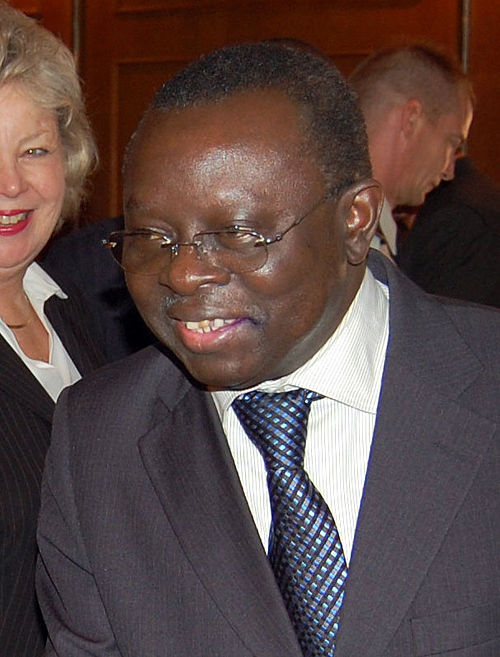
Raimundo Pereira† (1956 – 2022) stands as a defining figure in the modern Politics & Government of Guinea-Bissau. A jurist and seasoned politician, his legacy is intrinsically tied to his role as the Ex-Assembly President of the National People's Assembly. Pereira's most notable achievement was his ascent to the nation's highest office, serving as the interim President of Guinea-Bissau on two separate, critical occasions in 2009 and 2012. These transitions, dictated by constitutional succession following the assassinations of sitting presidents, placed Raimundo Pereira† at the helm during periods of profound instability. His steady, albeit brief, leadership underscored his commitment to constitutional order and provided crucial continuity for the fragile West African state, cementing his reputation as a stabilizing force in a nation plagued by coups and political violence.
Early Life & Education: Forging a Legal Mind
Born in 1956, Raimundo Pereira† came of age in the final decades of Portuguese colonial rule. While specific details of his early childhood are less documented in international sources, his educational and professional path clearly shaped his future in public service. Pereira pursued higher education in law, developing the expertise that would become the foundation of his political identity. He earned a law degree, which paved the way for his initial career as a practicing lawyer and legal scholar.
This formative period was crucial. Living through Guinea-Bissau's struggle for independence and its tumultuous early years as a republic gave Pereira firsthand experience with the legal and institutional challenges facing the new nation. His work in the legal field prior to entering full-time politics provided him with a deep understanding of Guinea-Bissau's constitutional framework and judicial system. This background as a jurist, rather than a military figure, set him apart in the political landscape and informed his later emphasis on procedural and constitutional legitimacy during his tenures as head of state.
Career & Major Achievements: Constitutional Steward
The career of Raimundo Pereira† is a testament to his role as an institutional anchor within Guinea-Bissau's volatile democracy. His political ascent was primarily through the legislative branch, where he honed his skills in governance.
Rise to Legislative Leadership
Pereira was a prominent member of the African Party for the Independence of Guinea and Cape Verde (PAIGC), the historically dominant political force in the country. His legal acumen led to his election as the President of the National People's Assembly, the nation's parliament. In this role as Ex-Assembly President, he was responsible for overseeing legislative proceedings, a task requiring negotiation and consensus-building among fiercely competitive political factions.
Interim Presidencies: 2009 and 2012
Raimundo Pereira's† most significant contributions to Guinea-Bissau came during constitutional crises. In March 2009, President João Bernardo "Nino" Vieira was assassinated. According to the constitution, the President of the National Assembly was next in the line of succession. Consequently, Raimundo Pereira† was sworn in as Interim President on March 3, 2009. His primary mandate was to ensure stability and organize presidential elections within 60 days, which he successfully accomplished, overseeing the election of Malam Bacai Sanhá.
History repeated itself in January 2012 when President Sanhá died after a prolonged illness. Once again, Raimundo Pereira† assumed the interim presidency on January 9, 2012. This second term was even more challenging. Just months later, on April 12, 2012, a military coup erupted hours before the second round of the presidential election. Soldiers detained Pereira, along with prime minister and presidential frontrunner Carlos Gomes Júnior, interrupting the democratic process. This event highlighted the extreme fragility of the state and the limits of civilian constitutional authority against military power.
Key Achievements and Impact
- Constitutional Continuity: Twice, he ensured a peaceful, constitutional transfer of executive power following the sudden death of a president, preventing immediate power vacuums.
- Electoral Stewardship: He successfully managed the 2009 presidential election, a key democratic exercise.
- Symbol of Civilian Rule: As a civilian jurist, his leadership contrasted with the strong military influence in Guinea-Bissau's politics, representing the principle of civilian constitutional governance.
Personal Life, Legacy, and Passing
Outside the intense arena of Politics & Government, Raimundo Pereira† was known as a reserved and intellectual figure, consistent with his legal background. He was deeply respected by peers and international partners for his integrity and commitment to the rule of law. His personal interests were overshadowed by his public service, but his legacy is defined by his steadfastness.
The legacy of Raimundo Pereira† is complex. He is remembered as a constitutionalist who upheld the letter of the law during extreme national trauma. His interim presidencies, though short, were critical junctures that demonstrated the resilience, however fragile, of Guinea-Bissau's democratic institutions. The 2012 coup that ended his second term was a stark reminder of the challenges he and other civilian leaders faced. Pereira passed away on April 14, 2022, in Bissau. His death was mourned nationally, with figures across the political spectrum acknowledging his significant role in the nation's history. He is recalled not for revolutionary change, but for providing essential stability and order when it was most desperately needed.
Net Worth & Business Ventures
Unlike many political figures, Raimundo Pereira† was not widely associated with significant personal business ventures or substantial private wealth. His professional life was almost entirely dedicated to public service and the legal profession. As a career politician and lawyer in one of the world's least developed nations, his financial standing was likely modest, especially when compared to political leaders in resource-rich countries. There is no substantial public record or credible reporting indicating that Pereira engaged in major commercial enterprises or amassed considerable personal fortune during his tenure. His primary "capital" was his expertise in law and his reputation for institutional loyalty. In the context of Guinea-Bissau's political economy, Raimundo Pereira† was perceived more as a legal technocrat and a stabilizing institutional figure rather than a business-oriented politician, with his influence derived from positional authority and respect rather than economic power.
For further reading on the political context of his leadership, credible sources include the BBC News archives for 2009 and 2012, and analytical reports from institutions like the International Crisis Group focusing on West Africa.
Financial Breakdown
Connected People & Network
Explore Full Interactive Map
Net Worth Analysis
Raimundo Pereira was a political figure in Guinea-Bissau, a low-income country, and there are no credible public reports of significant personal wealth from business or other sources.
Frequently Asked Questions
What is Raimundo Pereira†'s estimated net worth?
Raimundo Pereira† has an estimated net worth of KSh 64.6 Million.
What is Raimundo Pereira†'s role and nationality?
Raimundo Pereira† is a Ex-Assembly President from Guinea-Bissau.
How did Raimundo Pereira† make their money?
Raimundo Pereira† built their fortune primarily through Raimundo Pereira was a political figure in Guinea-Bissau, a low-income country, and there are no credible public reports of significant personal wealth from business or other sources..
How old is Raimundo Pereira†?
Raimundo Pereira† was born in 1956 (70 years old).

Related Personalities

Aaron Motsoaledi
LP; Minister of Home Affairs • South Africa

Abane Ramdane†
FLN Leader & Strategist • Algeria

Abdalla Hamdok
Ex-Prime Minister • Sudan

Abdallah Kigoda
Ex-Minister of Natural Resources • Tanzania