Financial Breakdown
Asset Distribution
Assets vs Liabilities
Assets
Liabilities
Disclaimer: These financial estimates are based on publicly available information and should be considered approximate. Last updated: 8/1/2026
Biography
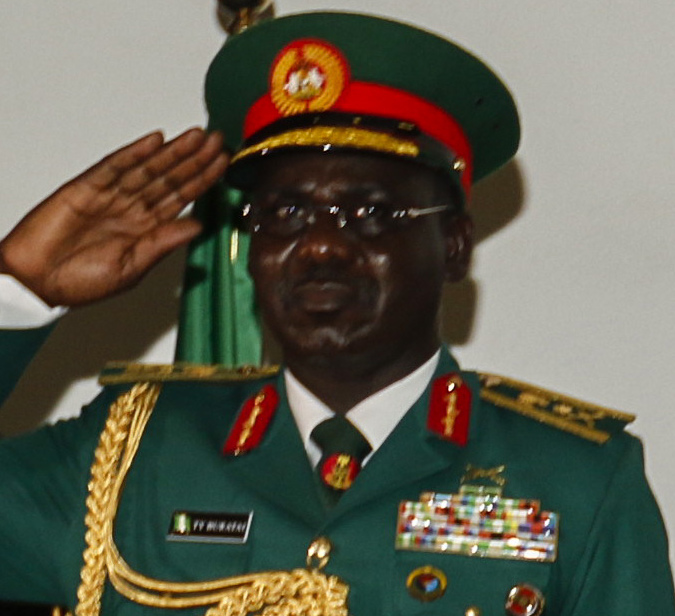
Tukur Yusuf Buratai: A Distinguished Nigerian Military Commander
Tukur Yusuf Buratai (born 1960) is a retired Nigerian Army Lieutenant General and one of the most prominent military figures in modern Nigerian history. Best known for serving as the 21st Chief of Army Staff (COAS) of the Nigerian Army from July 2015 to January 2021, Buratai played a central role in the country’s counter-insurgency operations against Boko Haram and the Islamic State West Africa Province (ISWAP). His tenure was marked by significant tactical shifts, increased military spending, and a controversial yet impactful campaign that drastically reduced the territorial grip of extremist groups in northeastern Nigeria. Beyond his military command, Buratai served as Nigeria’s Ambassador to the Republic of Benin from 2021 to 2023, underscoring his continued relevance in Politics & Government and national security affairs. With a career spanning over three decades, Tukur Yusuf Buratai remains a polarizing yet pivotal figure in Nigeria’s defence establishment.
Early Life & Education
Tukur Yusuf Buratai was born in 1960 in Buratai village, a small community in the present-day Biu Local Government Area of Borno State, northeastern Nigeria. He hails from the Kanuri ethnic group and was raised in a modest, traditional environment that valued discipline and service. His early education began at Buratai Primary School, after which he proceeded to Government Secondary School, Potiskum (now in Yobe State) for his secondary education. He later attended the Nigerian Defence Academy (NDA) in Kaduna, where he was commissioned as a Second Lieutenant into the Nigerian Army in 1983 as part of the 30th Regular Course. His time at the NDA not only provided rigorous military training but also instilled in him a deep sense of patriotism and commitment to national unity.
Buratai further enhanced his professional education through various military courses, both locally and internationally. He attended the Command and Staff College, Jaji (Nigeria), the United States Army Command and General Staff College at Fort Leavenworth, Kansas, and the National Defence College in Abuja. He also holds a Master’s degree in Strategic Studies and a Postgraduate Diploma in International Relations. These formative experiences, combined with his early exposure to leadership in the arid terrains of Nigeria’s northeast, shaped his tactical thinking and resilience—qualities that would later define his approach to asymmetric warfare.
Career & Major Achievements
Tukur Yusuf Buratai joined the Nigerian Army at a time when the nation was transitioning from military rule to democratic governance. His early career saw him serve in various infantry units and peacekeeping missions, including with the United Nations Interim Force in Lebanon (UNIFIL) and the Economic Community of West African States Monitoring Group (ECOMOG) in Liberia and Sierra Leone. These missions honed his operational skills and gave him exposure to complex conflict environments.
His rise through the ranks was steady and based on merit. He commanded the 2nd Brigade in Lagos, served as Director of Military Intelligence, and later became the Commander of the Infantry Corps Centre in Jaji. In 2014, as the Boko Haram insurgency escalated, Buratai was appointed the Force Commander of the Multi-National Joint Task Force (MNJTF), a coalition of troops from Nigeria, Chad, Niger, and Cameroon. Under his command, the MNJTF recorded significant gains, reclaiming territories previously held by insurgents.
In July 2015, President Muhammadu Buhari appointed Tukur Yusuf Buratai as the Chief of Army Staff. His tenure is most remembered for the Operation Lafiya Dole campaign, which aimed to decisively defeat Boko Haram. Buratai relocated the Army’s tactical headquarters to Maiduguri, the epicentre of the insurgency, symbolizing his hands-on leadership. Key achievements during his term include:
- The recapture of the Sambisa Forest stronghold in December 2016, a turning point in the war against Boko Haram.
- Establishment of the Army Cyber Warfare Command and modernization of military hardware, including the acquisition of Super Tucano aircraft and armoured vehicles.
- Launch of the Operation Safe Corridor for deradicalization and reintegration of former combatants.
- Institutional reforms to improve soldiers’ welfare, including the construction of new barracks and a health insurance scheme.
Despite these successes, Buratai’s leadership was not without controversy. Human rights groups, including Amnesty International, accused the Nigerian Army under his command of extrajudicial killings, arbitrary arrests, and disproportionate force. Buratai consistently defended his troops, insisting that any violations were isolated incidents and that the military operated within the rules of engagement. His tenure also witnessed the #EndSARS protests in 2020, during which the Army was deployed to quell civil unrest, further drawing criticism.
Upon retirement in January 2021, Tukur Yusuf Buratai was appointed as Nigeria’s Ambassador to the Republic of Benin, a role he held until 2023. His diplomatic posting allowed him to foster regional security cooperation, especially in trans-border counter-terrorism efforts. His career remains a subject of intense study within military and political circles, reflecting both the challenges and complexities of modern African security governance.
Personal Life & Legacy
Tukur Yusuf Buratai is married and has children. He is known to be a devout Muslim who maintains a relatively private family life. Away from the battlefield, Buratai has engaged in philanthropic activities, particularly in education and health, in his home community of Buratai and Yobe State. He established the Buratai Foundation, which provides scholarships to underprivileged students and supports primary healthcare initiatives.
Buratai’s legacy is deeply intertwined with Nigeria’s fight against terrorism. Supporters regard him as a courageous commander who restored territorial integrity and morale in the Nigerian Army during a period of unprecedented threat. Critics, however, point to allegations of human rights abuses and the heavy-handedness of military operations. Regardless of perspective, his impact on Nigeria’s security architecture is undeniable. He has received several national honours, including the Companion of the Order of the Federal Republic (CFR) and multiple Distinguished Service Stars. His name is often invoked in discussions about the future of the Nigerian Army and the ongoing need for reform in the region’s Military sector.
In retirement, Tukur Yusuf Buratai has remained active in public discourse, authoring articles on defence policy and occasionally advising the government on security matters. He is also a sought-after speaker at military academies and policy forums across Africa and beyond.
Net Worth & Business Holdings
As a retired senior military officer and former ambassador, Tukur Yusuf Buratai has accumulated wealth through salary, pensions, and legitimate investments. While exact figures are not publicly disclosed, his net worth is estimated to be in the range of $5 million to $10 million, according to speculative analyses by Nigerian financial blogs. He is known to own several properties in Abuja, Maiduguri, and his native Buratai. Buratai also has interests in agriculture and real estate, with a farm in Yobe State that produces grains and livestock. He is a silent partner in a security consultancy firm that advises private and government entities on risk management. It is important to note that Buratai has consistently denied allegations of corruption, and no court has convicted him of any financial wrongdoing. His financial holdings are considered part of the broader ecosystem of retired senior military officers in Nigeria who invest in post-service livelihoods while maintaining a public profile in Politics & Government.
In conclusion, Tukur Yusuf Buratai remains a defining figure in Nigeria’s military history. From his early days in Buratai village to commanding the largest army in West Africa, his journey reflects the complexities of leadership in a volatile region. Whether remembered as a hero or a controversial commander, his imprint on the military personnel landscape of Nigeria is indelible, and his story continues to be written in the annals of the nation’s defence.
```Frequently Asked Questions
What is Tukur Yusuf Buratai's estimated net worth?
Tukur Yusuf Buratai has an estimated net worth of $5.0 Million.
What is Tukur Yusuf Buratai's role and nationality?
Tukur Yusuf Buratai is a military personnel from Nigeria.
How did Tukur Yusuf Buratai make their money?
Tukur Yusuf Buratai built their fortune primarily through As a former Nigerian Army Chief of Staff and later ambassador, his net worth is estimated based on known public service salaries and assets declarations, without evidence of significant private business holdings..
How old is Tukur Yusuf Buratai?
Tukur Yusuf Buratai was born in 1960 (66 years old).
Which category is Tukur Yusuf Buratai listed under?
Tukur Yusuf Buratai is featured under the Politics & Government category on NetWorth Africa.
How is Tukur Yusuf Buratai's net worth calculated?
NetWorth Africa estimates financial valuations using publicly available stock equity holdings, company ownership records, real estate assets, and verified market data.
Net Worth Analysis
As a former Nigerian Army Chief of Staff and later ambassador, his net worth is estimated based on known public service salaries and assets declarations, without evidence of significant private business holdings.
Quick Stats
Related People
Aaron Motsoaledi
LP; Minister of Home Affairs • South Africa
Abane Ramdane†
FLN Leader & Strategist • Algeria
Abdalla Hamdok
Ex-Prime Minister • Sudan
Abdallah Kigoda
Ex-Minister of Natural Resources • Tanzania