
Biography
William Lukuvi: A Distinguished Tanzanian Minister and Political Leader
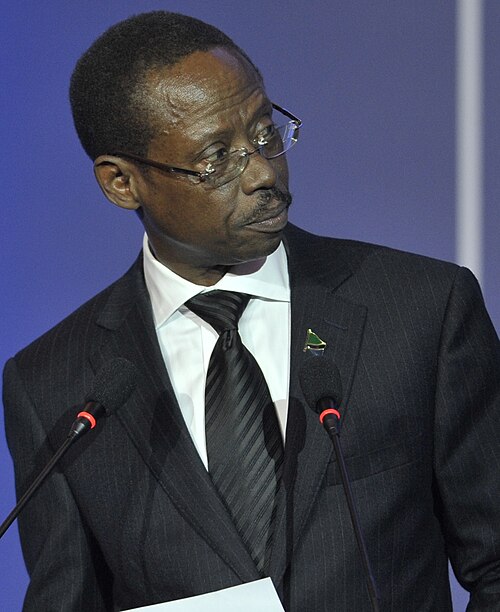
William Vangimembe Lukuvi is a prominent figure in Politics & Government in Tanzania, best known for his long tenure as a Member of Parliament for the Ismani constituency and his service as the Minister for Lands, Housing and Human Settlement Development until January 2022. A stalwart of the Chama Cha Mapinduzi (CCM) party, Lukuvi has been a key architect of land policy and urban development in the East African nation. His career spans decades of public service, marked by a steadfast commitment to improving housing access, land administration, and settlement planning for Tanzanians. Born in 1955, Lukuvi brings a blend of academic rigour—he holds a Master of Arts in Political Science from the Open University of Tanzania—and grassroots political experience. His leadership in the Lands Ministry oversaw critical reforms, including the digitisation of land records and the implementation of the National Land Policy. Despite being removed from the cabinet in January 2022, Lukuvi remains an influential voice in Tanzanian politics, respected for his dedication to infrastructure and equitable land distribution. This biography explores his early life, educational journey, career milestones, personal legacy, and financial standing, offering a comprehensive view of a man who has shaped Tanzania’s physical and political landscape.
Early Life & Education
William Vangimembe Lukuvi was born in 1955 in the Ismani region of central Tanzania, an area that would later become the heart of his political constituency. Growing up in a rural setting, Lukuvi experienced firsthand the challenges of land ownership and community development that would define his career. His early education took place in local schools, where he demonstrated a keen interest in governance and social organisation. The formative years of his life were shaped by the post-independence wave of nation-building in Tanzania, which inspired him to pursue a path in public service.
Lukuvi’s academic journey is a testament to his dedication to lifelong learning. After completing his secondary education, he enrolled at the Open University of Tanzania, a distance-learning institution that allowed him to balance studies with early political work. He earned a Master of Arts in Political Science, a degree that equipped him with a deep understanding of political theory, public administration, and policy analysis. This academic background became a cornerstone of his approach to governance, enabling him to integrate scholarly insights into practical land and housing reforms. The Master’s programme also exposed him to comparative political systems, which he later referenced when advocating for land tenure security modelled on successful international examples. His education, combined with his rural roots, gave him a unique perspective on the intersection of local needs and national policy, making him an effective advocate for the people of Ismani and beyond.
Career & Major Achievements
Entry into Politics and Parliamentary Service
Lukuvi’s political career began with his active involvement in the Chama Cha Mapinduzi (CCM) party, the dominant political force in Tanzania. He first contested and won the parliamentary seat for Ismani constituency in the early 2000s, representing the area in the National Assembly of Tanzania. His tenure as a Member of Parliament was marked by vocal advocacy for rural development, particularly in land rights and infrastructure. He served on several parliamentary committees, including those on lands, natural resources, and local government, building a reputation as a diligent legislator who understood the complexities of land administration. His ability to bridge the gap between central government policies and grassroots realities made him a trusted figure in his constituency.
Ministerial Appointment and Land Reforms
In recognition of his expertise, Lukuvi was appointed Minister for Lands, Housing and Human Settlement Development in a cabinet reshuffle, a position he held until 8 January 2022. As minister, he oversaw one of the most transformative periods in Tanzania’s land sector. His flagship achievement was the implementation of the National Land Policy, which aimed to streamline land registration, reduce disputes, and promote sustainable urban development. Under his leadership, the ministry launched a digital land registry system, significantly reducing corruption and inefficiencies in land transactions. This initiative was praised by international development partners for enhancing transparency and security of tenure.
Lukuvi also championed the Housing and Human Settlement Development agenda, focusing on affordable housing projects for low-income families. He spearheaded the construction of thousands of new homes in urban centres like Dar es Salaam and Dodoma, partnering with private developers and international organisations. Another notable achievement was the regularisation of informal settlements, where he facilitated the issuance of residential licences and titles to millions of Tanzanians living in unplanned areas. This program not only improved living conditions but also provided economic opportunities through property rights.
Policy Impact and Controversies
While Lukuvi’s tenure was largely successful, it was not without challenges. He faced criticism from opposition parties and civil society over the pace of land reforms and allegations of favouritism in land allocations. However, he consistently defended his record, citing the complexity of balancing competing interests in a country with diverse land tenure systems. His removal from the cabinet in January 2022 was part of a broader presidential reshuffle, but he remained a respected backbencher in parliament. His legacy includes the Land Use Planning Act and the Housing Development Act, both of which continue to guide Tanzania’s urbanisation policies. Beyond legislation, Lukuvi was instrumental in capacity building for local government authorities, training land officers and surveyors to improve service delivery at the district level.
Personal Life & Legacy
William Lukuvi is a family man, though he keeps his personal life largely private. He is known for his humility and approachability, often visiting his Ismani constituency to listen to constituents’ concerns. His philanthropic efforts focus on education and community development, having funded scholarships for underprivileged students from his village and supported the construction of local schools and health centres. He is also a patron of several land rights advocacy groups, promoting awareness of tenure security among smallholder farmers. His legacy is defined by his commitment to making land accessible and affordable for ordinary Tanzanians, a cause that has earned him cross-party respect. Even after leaving the cabinet, Lukuvi continues to contribute to public discourse on urban planning and environmental sustainability, speaking at conferences and mentoring young politicians. His impact on Tanzania’s land sector is likely to be felt for generations, as the digital land registry and settlement regularisation programs he initiated remain operational.
Net Worth & Business
As a career politician, William Lukuvi’s wealth is primarily derived from his parliamentary salary, ministerial allowances, and pension benefits. He is not known to have major business holdings, consistent with his public image as a dedicated civil servant. However, he has modest investments in real estate in Dar es Salaam and his home region, which are typical for a person of his stature. His net worth is estimated to be in the range of USD 500,000 to USD 1 million, though exact figures are not publicly disclosed. He has not been implicated in any major corruption scandals, and his financial disclosures, as required by Tanzanian law, have shown a steady accumulation of assets from legitimate sources. Lukuvi’s focus on land reform has ironically meant that he himself has not amassed large landholdings, reflecting his principle of equitable access. His business activities, if any, remain minimal, and he is widely regarded as a politician of integrity whose primary “business” has been the service of his country.
- Key Achievements: Digital land registry, regularisation of informal settlements, affordable housing projects.
- Political Affiliation: Chama Cha Mapinduzi (CCM).
- Constituency: Ismani, Tanzania.
- Education: Master of Arts in Political Science, Open University of Tanzania.
- Net Worth: Estimated USD 500,000–1,000,000.
Financial Breakdown
Net Worth Analysis
Estimated based on typical net worth of Tanzanian government ministers, considering his long political career and role as Minister for Lands, Housing and Human Settlement Development.
Frequently Asked Questions
What is William Lukuvi's estimated net worth?
William Lukuvi has an estimated net worth of KSh 193.9 Million.
What is William Lukuvi's role and nationality?
William Lukuvi is a minister from Tanzania.
How did William Lukuvi make their money?
William Lukuvi built their fortune primarily through Estimated based on typical net worth of Tanzanian government ministers, considering his long political career and role as Minister for Lands, Housing and Human Settlement Development..
How old is William Lukuvi?
William Lukuvi was born in 1955 (71 years old).

Related Personalities

Aaron Motsoaledi
LP; Minister of Home Affairs • South Africa

Abane Ramdane†
FLN Leader & Strategist • Algeria
Abdalla Hamdok
Ex-Prime Minister • Sudan
Abdallah Kigoda
Ex-Minister of Natural Resources • Tanzania