Financial Breakdown
Asset Distribution
Assets vs Liabilities
Assets
Liabilities
Disclaimer: These financial estimates are based on publicly available information and should be considered approximate. Last updated: 7/31/2026
Biography
Introduction
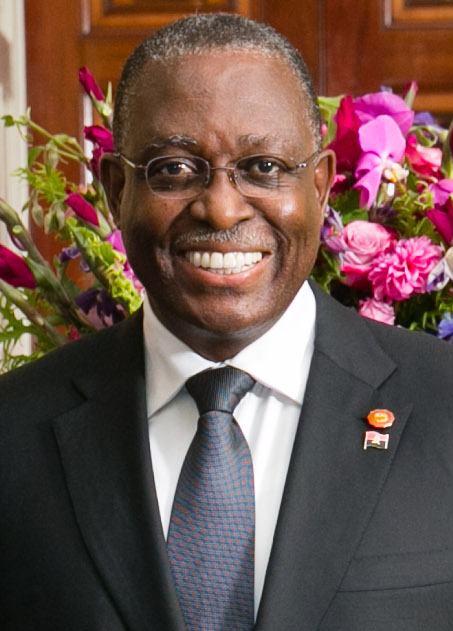
Manuel Domingos Vicente stands as one of the most influential figures in modern Angolan history — a technocrat whose career traversed the heights of both state-owned enterprise and national government. Born in 1956, Vicente served as the chief executive officer of Sonangol, Angola’s state oil company, from 1999 to 2012, overseeing a period of immense growth in the country’s hydrocarbon sector. In September 2012, he was appointed as the second vice president of Angola, a role he held until September 2017, while also chairing the board of Sonangol. His trajectory from corporate leadership to the vice presidency illustrates the deep interweaving of Business & Economics with Oil & Politics in Angola. Before his vice presidency, he briefly served as minister of State for Economic Coordination in 2012, cementing his reputation as a key architect of Angola’s post-war economic strategy. Today, Vicente remains a towering yet often controversial symbol of the nexus between petroleum wealth and political power in Africa’s second-largest oil producer.
Early Life & Education
Manuel Vicente was born in 1956 in Angola, then a Portuguese overseas territory. Growing up during the final years of colonial rule, he witnessed the dawn of Angola’s independence movement and the subsequent civil war that shaped the nation’s trajectory. Little is publicly documented about his earliest childhood, but like many Angolans of his generation, his formative years were marked by profound political transformation.
Vicente pursued higher education in engineering, a field that would prove foundational to his future career. He earned a degree in electrical engineering from the University of Angola (now Universidade Agostinho Neto), where he developed a strong technical grounding. He later obtained a postgraduate degree in petroleum engineering and management, equipping him with the specialized knowledge needed to navigate the complex world of hydrocarbon extraction. These academic credentials, combined with a disciplined work ethic, opened the door to a career at Sonangol, Angola’s national oil company. His early professional years were spent in various technical and managerial roles within the company, where he gained hands-on experience in exploration, production, and logistics. This period of on-the-ground learning proved invaluable: by the time he ascended to the CEO position in 1999, Vicente knew Sonangol’s operations inside out. His education and early career reflect a deliberate path toward mastering the oil & governance dynamics that would define his life’s work.
Career & Major Achievements
Manuel Vicente’s professional ascent is inseparable from the story of Sonangol itself. He joined the state oil company in the 1980s and rose steadily through the ranks, holding positions in engineering, project management, and executive leadership. In 1999, he was appointed CEO of Sonangol, a role he held for 13 consecutive years — a tenure that coincided with Angola’s emergence as a major global oil exporter. Under his stewardship, Sonangol expanded its upstream portfolio, formed strategic joint ventures with international majors such as Chevron, TotalEnergies, ExxonMobil, and BP, and oversaw production growth that pushed Angola past the 1.8 million barrels per day mark. Vicente also championed Sonangol’s vertical integration, steering the company into refining, logistics, and international exploration across the Gulf of Guinea and beyond.
In 2012, Vicente transitioned from corporate to political leadership. He was appointed minister of State for Economic Coordination, a powerful portfolio that effectively made him the chief economic czar of the government. Within months, he was elevated to vice president of Angola, serving under President José Eduardo dos Santos from September 2012 to September 2017. As vice president, Vicente oversaw economic policy, energy sector governance, and infrastructure development. His dual identity as Ex-Vice President & Sonangol Chair (he remained chairman of Sonangol’s board during part of his vice presidency) underscored the revolving door between state oil leadership and high government office in Angola. During his tenure, the country grappled with falling oil prices, corruption allegations, and calls for greater transparency. Vicente was a central figure in the Angola Sovereign Wealth Fund and negotiated key infrastructure-for-oil deals with China, helping to finance roads, railways, and housing projects. His career exemplifies the complex oil & politics landscape of resource-rich African states, where corporate and state interests are deeply entwined.
After leaving office in 2017, Vicente remained a significant behind-the-scenes figure in Angolan business and politics. He has been involved in advisory roles and continues to be referenced in discussions around African oil governance. While his tenure at Sonangol and the vice presidency drew both praise for driving growth and criticism for opacity, his impact on Angola’s economic architecture is undeniable.
Key Achievements at a Glance
- CEO of Sonangol (1999–2012): Led Angola’s state oil company through a boom period, doubling production and expanding international partnerships.
- Minister of State for Economic Coordination (2012): Oversaw macroeconomic policy and cross-ministerial economic planning.
- Vice President of Angola (2012–2017): Second-highest office in the country, responsible for economic governance and energy sector oversight.
- Chairman of Sonangol Board: Held concurrent chairmanship during vice presidency, reinforcing the oil-state nexus.
- Infrastructure-for-Oil Deals with China: Played a key role in securing Chinese credit lines for Angola’s post-war reconstruction.
- Angola Sovereign Wealth Fund: Contributed to the creation and early strategy of the country’s sovereign wealth fund.
Personal Life & Legacy
Manuel Vicente is known within Angola as a reserved, low-profile public figure who shunned excessive media attention despite occupying the highest echelons of power. He is married and has children, though he has kept his family life largely private — a trait that has sometimes fueled speculation but also reflects a deliberate preference for discretion. Colleagues describe him as methodical, technically adept, and intensely focused on results. In terms of philanthropy, Vicente has been involved in initiatives supporting education and vocational training in Angola, particularly in technical fields related to engineering and petroleum. He has also contributed to community development programs in oil-producing provinces such as Cabinda and the Zaire region.
Vicente’s legacy is complex and multifaceted. Supporters credit him with modernizing Sonangol, building a cadre of Angolan petroleum professionals, and positioning Angola as a serious player in global energy markets. Critics, however, point to the lack of transparency in Sonangol’s finances during his tenure and the broader governance challenges that accompanied Angola’s oil wealth. In the Business & Economics category, he is studied as a case study in state-led resource nationalism and the challenges of managing petro-states. In the Oil & Governance subcategory, his career raises enduring questions about accountability, diversification, and the relationship between corporations and the state. Regardless of perspective, Manuel Vicente remains a pivotal figure in Angola’s post-independence story — a technocrat who helped shape the country’s economic destiny from both the boardroom and the vice president’s office.
Net Worth & Business
Precise figures regarding Manuel Vicente’s net worth are not publicly available, as Angolan public officials and former executives have historically disclosed limited financial information. However, given his 13-year tenure as CEO of Sonangol — a company generating tens of billions of dollars in annual revenue — and his subsequent high-level government roles, his wealth is widely considered substantial. He has been named in various investigative reports and leaked documents (including the Luanda Leaks and Panama Papers) that allege offshore holdings and opaque business structures, though Vicente has consistently denied any wrongdoing. His business interests beyond Sonangol have included holdings in real estate, banking, and telecommunications, often through partnerships with international investors. It is important to note that no formal charges have been brought against him in Angolan or international courts. The lack of verified data underscores the broader challenges of transparency in Angola’s business and political elite. What is clear is that Vicente’s career placed him at the center of Angola’s oil-driven economy, affording him considerable influence and financial opportunity.
Manuel Vicente’s journey from electrical engineer to CEO of Sonangol and then to the vice presidency of Angola offers a powerful lens through which to understand the intersection of Business & Economics and Oil & Politics in modern Africa. His story is one of ambition, technical mastery, and political acumen — but also of the controversies that accompany concentrated resource wealth. As Angola continues to grapple with economic diversification, transparency, and post-oil transition, Vicente’s legacy will remain a reference point for debates on governance, leadership, and the true cost of petroleum.
```Frequently Asked Questions
What is Manuel Vicente's estimated net worth?
Manuel Vicente has an estimated net worth of €26.0 Million.
What is Manuel Vicente's role and nationality?
Manuel Vicente is a Ex-VP & Sonangol Chair; Ex-Vice President & Sonangol Chair from Angola.
How did Manuel Vicente make their money?
Manuel Vicente built their fortune primarily through Based on his long tenure as CEO of Sonangol and Vice President of Angola, combined with typical wealth accumulation in high-level Angolan politics, his net worth is estimated in the tens of millions of USD..
How old is Manuel Vicente?
Manuel Vicente was born in 1956 (70 years old).
Which category is Manuel Vicente listed under?
Manuel Vicente is featured under the Business & Economics category on NetWorth Africa.
How is Manuel Vicente's net worth calculated?
NetWorth Africa estimates financial valuations using publicly available stock equity holdings, company ownership records, real estate assets, and verified market data.
Net Worth Analysis
Based on his long tenure as CEO of Sonangol and Vice President of Angola, combined with typical wealth accumulation in high-level Angolan politics, his net worth is estimated in the tens of millions of USD.
Quick Stats
Related People
Abbas Bonfoh
Governor BEAC Gabon • Gabon
Abdel Kader Taleb Ould Abderrahmane
Governor Central Bank • Mauritania
Abdelmoumen Ould Kaddour
Ex-CEO Sonatrach • Algeria

Abderrahmane Benhamadi
CEO Saidal • Algeria